@lukaspakter
Instagram · Greenscreen Talking Head

@lukaspakter
Instagram · Greenscreen Talking Head
Performance
Video #41902 · Greenscreen Talking Head
[01]
The creator explains his business growth strategy, which he adapted from the movie "Moneyball." He uses the analogy of "buying runs, not players" to argue that brands should focus on acquiring a high volume of cost-effective, quality videos from creators, rather than overpaying for top-tier influencers. He supports his claim by presenting data from his own company, showing a direct correlation between the number of approved video ads and monthly revenue, and showcases his creator management platform to demonstrate the scalability and efficiency of his model.
[02]
[03]
 884.1K1.5×Critique followed by evidence montage@robertmckeaveney · Performance Proof
 171.8K2.4×Creator's Venn diagram framework for making the perfect video@briarcochran · Breakdown
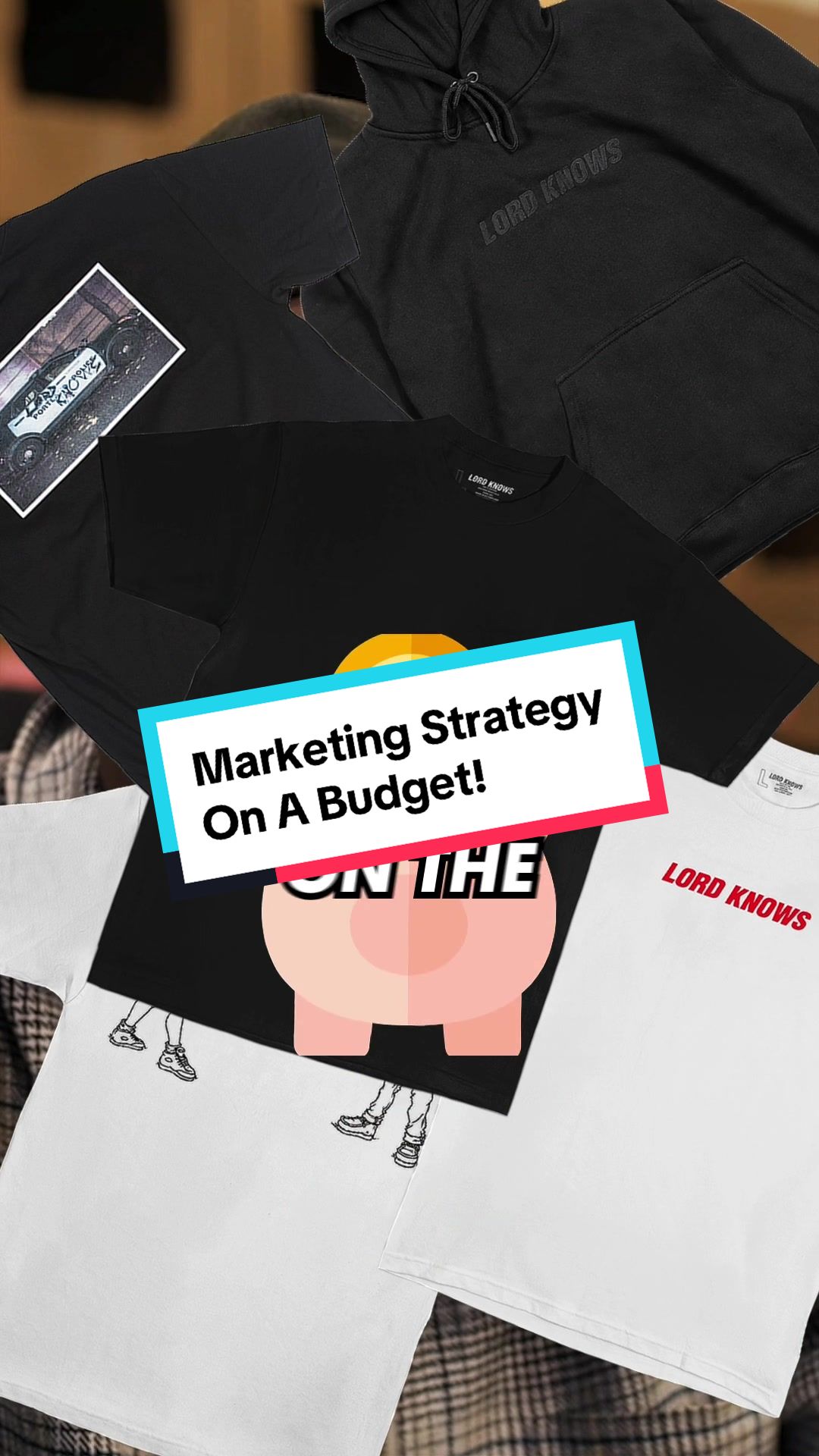 466.9K2.8×Budget marketing strategy using VAs and mass video distribution@jahgivesgemss · Playbook
 383.3K50.7×Creator proves content is real job@bensantos508 · Performance Proof
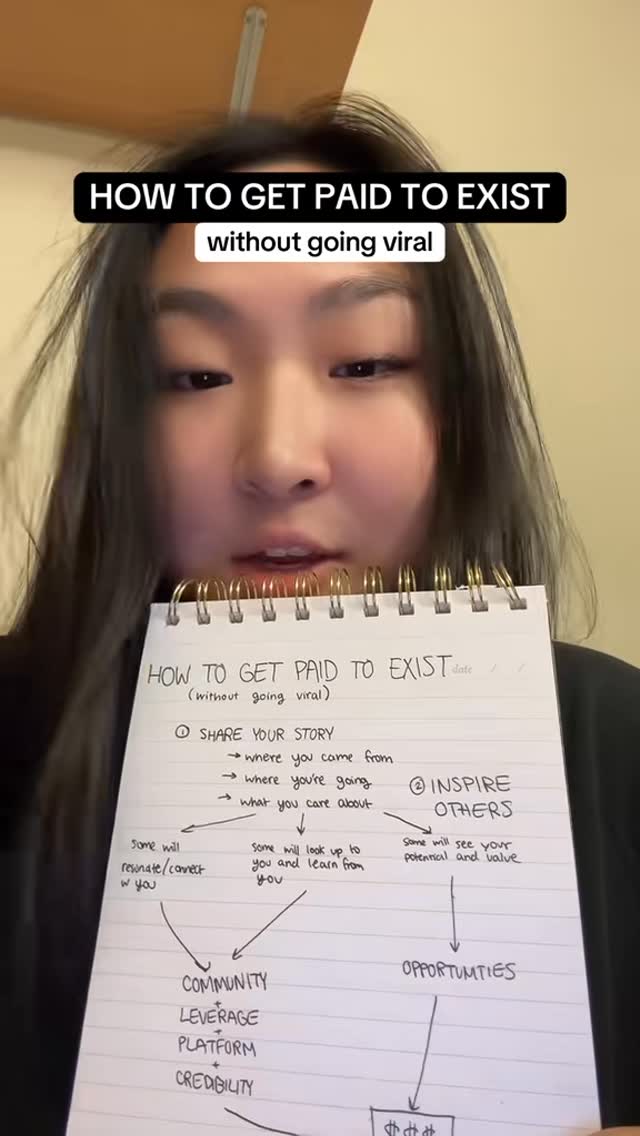 369.7K24.6×Notebook diagram explains creator monetization@katiexsocials · Playbook
 1.7M26.3×Creator gives raw social media advice@austingeorgas · Rapid Fire Listicle
 673K145.7×Viral marketing format case study@thepostprotocol · Case Study Breakdown
 165.7KTwo tools for viral scripting@iamaayushswamy · Tutorial / How To
 796.8K8.9×Two content types every brand needs to make@house.of.ag · Breakdown
 1.2MCreator explains how posting about all his interests grew 2 million followers@daddywellness · Hot Take
 3M4.2×Content funnel marketing case study@robertmckeaveney · Case Study Breakdown
 330.6K2×Founder pitches AI SOP software@marshallhaas · Origin Story
[04]
[05]
What stops the scroll in the first 3 seconds
Title hook
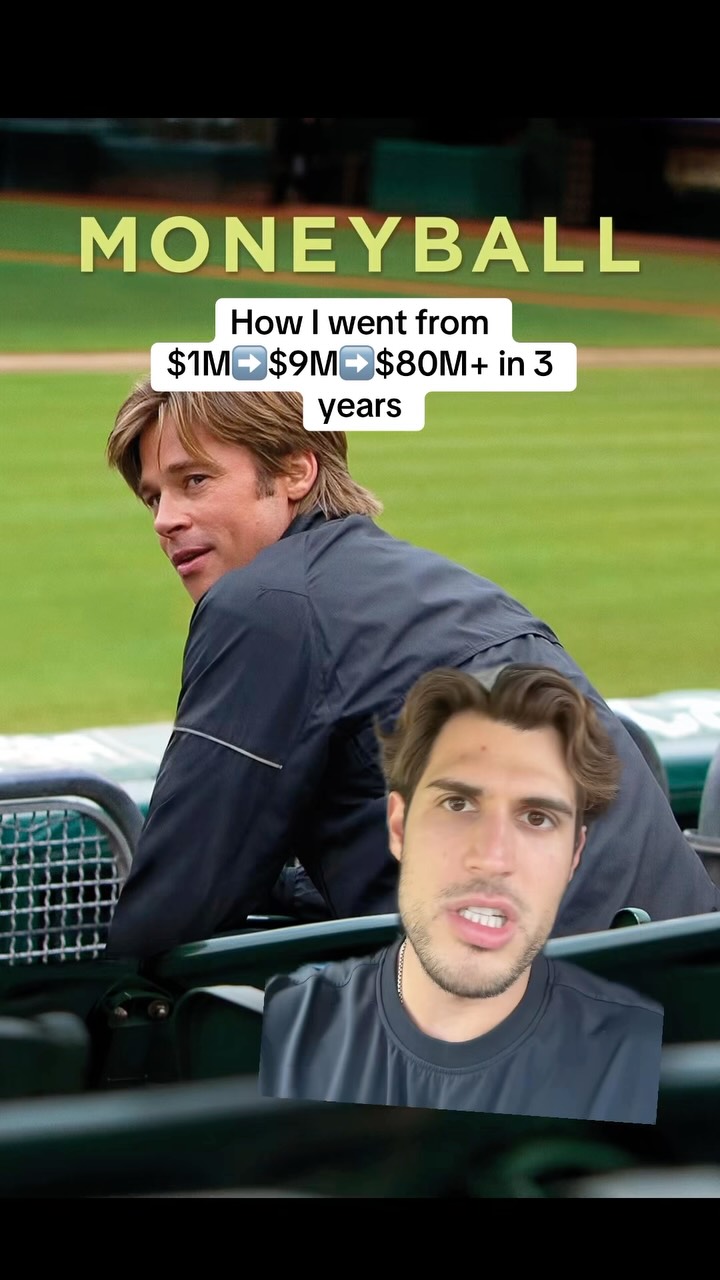
MONEYBALL. How I went from $1M➡️$9M➡️$80M+ in 3 years
Verbal hook
This is the strategy that I stole from Moneyball and how it's turned my business into the fastest growing activewear brand of all time.
Visual hook
The speaker is overlaid on a well-known still image of Brad Pitt from the movie 'Moneyball', creating an immediate visual juxtaposition between a casual TikTok-style creator and a cinematic background.
[07]
The promise the opener makes, and how the video pays it back
Hook
A bold, quantifiable result ($1M to $80M+) is presented and linked to a familiar cultural concept (Moneyball) to generate immediate intrigue and establish high stakes.
Payoff
The backend system or operational dashboard is revealed, showing the raw mechanics and scale of the strategy in action (the 'Roster' screen with video volume and commissions). This serves as the final, undeniable proof that the system is real, repeatable, and efficient.
[08]
The structural pattern this video runs on
Framework
The Moneyball Method
To present a counter-intuitive strategy as superior to a common one by using a relatable analogy, backing it with hard data, and revealing the operational system that makes it possible.
The Contrarian Premise
To invalidate a commonly held belief or popular strategy ('creator marketing... nobody's doing it the right way'), positioning the speaker's forthcoming information as a superior, secret alternative.
The Analogical Framework
To simplify the core of the new strategy by explaining it through a simple, well-known story or metaphor (the Moneyball concept of buying 'runs' not 'players'), making it instantly understandable.
The Principle Translation
To explicitly connect the lesson from the analogy to the specific topic being discussed ('It's the same thing with creator programs... you need to buy good videos efficiently'), bridging the gap between story and application.
The Correlative Data Reveal
To present visual, quantitative evidence (a chart showing 'Approved Videos' vs. 'GMV') that proves a direct relationship between the new strategy's key action and the desired outcome, solidifying the claim's credibility.
The Inefficient Alternative
To deconstruct the flaws of the traditional approach ('Most brands focus on getting the top creators... they have crazy egos'), reinforcing the value and efficiency of the new method by comparison.
The Actionable Mandate
To distill the entire strategy into a single, clear, and concise instruction ('you should be optimizing for the creators that make you the most amount of money per video on average, but charge the least'), giving the audience a direct takeaway.
title · beginning
MONEYBALL
title · beginning
How I went from $1M➡️$9M➡️$80M+ in 3 years
This is the strategy that I stole from Moneyball and how it's turned my business into the fastest growing activewear brand of all time. In 2024, my business did about 1,000,000 in sales. Last year, we did 9,000,000. This year, we're now projecting $80,000,000 in sales. Everyone these days is talking about creator marketing this, creator marketing that, but nobody's doing it the right way. Just like in Moneyball, big baseball teams were focused on getting great players, paying absurd amounts of money for the top players to be on their team. In reality, what they should have been doing and what Brad Pitt figured out was they need to buy runs because runs equal wins. It's the same thing with creator programs with scaling UGC content. I'm sharing you guys data that I had to spend millions of dollars and years to figure out, so please save this video, use it for something good. These are the direct sales that my brand has accumulated from Tribe. Not my total sales, obviously, but it does make up a good piece of our business, and it is the heart of our business at the end of the day. On this side, you are seeing total revenue per month, and on this side, you are seeing number of approved ads submitted. As you can see, every single month as we increase the number of ads, our sales follows. In November of last year, we did 2,400,000. About 1,000,000 of that came from Tribe with about 900 ads submitted. And in June of this year, we did about 5,000,000 in sales, almost 3,000,000 of it coming from Tribe with about three and a half thousand ads submitted as well. Do you guys see the correlation here? The more ads we get into our account, quality ads, not shit ones, the higher our sales go. And so with all this said, just like how in Moneyball Bad Pitt focused on buying wins, you need to buy good videos efficiently. Most brands focus on getting the top creators, going after $305,100,000,000 dollar GMV a month creators. But just like baseball players, they have crazy egos. They want huge retainers. They want a thousand dollars a video even though they're not actually worth that. No since your goal should be to buy quality videos at scale and buy more and more and more of them, you should be creating a system that optimizes for that. Now you don't want shit creators that don't know what they're doing, just like a professional ball team wouldn't wanna get terrible baseball players. They still need to be good. They still need to be worse. But you should be optimizing for the creators that make you the most amount of money per video on average, but charge the least. As you can see right here in Tribe, over the last thirty days, my business has received about 3,600 approved videos. All of these are great ads. These are some of my creators right here. I have creators making up to $50,000 a month, but look at on the side over here how many videos they're making over the course of thirty days. This guy made a 193 videos for $37,000 in commission. This guy made a 140 videos for 13,000 in commission. So the dollar amount in which I'm paying for every single video is extremely low. It's a great business model for me. It's a huge win for them because they get to make a fuck ton of money.