Post caption
To sell a product, you don't always have to SHOW that product. 💡
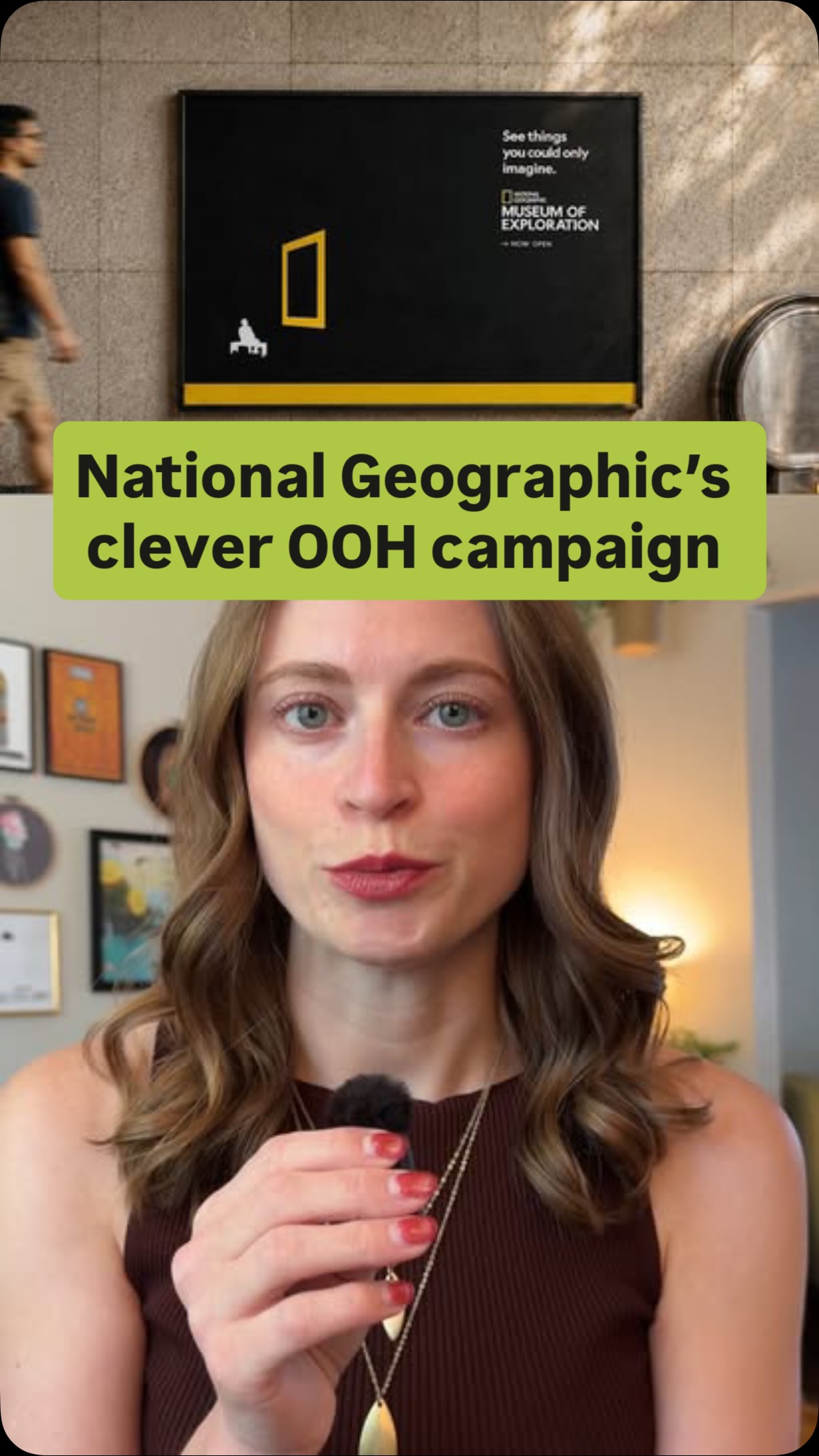
This new campaign for @natgeo's @natgeomuseum by @terriandsandy is a perfect example of letting the audience complete the loop.
#Advertising #Marketing #adcampaign #adcampaigns #ooh
Transcript
National Geographic just opened a new museum, but their ads don't show you a single thing that's inside it. For a company famous for photography, that's either a massive mistake or one of the smartest moves of the year. So they just opened the Museum of Exploration in Washington, DC, and their agency, Tier and Sandy, ran over a 100 outdoor placements across the DC Better Area, but none of them actually show you the museum or the exhibits. Instead, they simply used text and a very recognizable rank element, the iconic yellow better. The frame you know from every Nat Geo magazine cover. Except no, it doesn't have a photo inside. The campaign line is see things you could only imagine, and they take that very literally with these executions. A photo just won't do it justice, so they don't give you one. One. They're letting your imagination fill in the gap. And that's a curiosity tier. Something your brain treats like an itch it needs to scratch. And then they're withholding the payoff until you get to the museum and see it with your own eyes. Because they're asking you to do some imagining and thinking, you are participating in the message. You're closing a loop, which makes you more invested than you would be with a typical show and tell sort of ad. And some of these placements were contextual to give your brain a frame of reference for some of these facts that are just hard to fathom. To walk this far in a Himalayan storm, it could take two hours, letting you walk the literal distance best to an elevator. If you rode this elevator up to the moon, it would take sixteen years, the height of the average wave in the Drake Passage. With these contextual placements, the city itself becomes part of the museum. There's an instinct in advertising to always do and show more. More product, more features, more proof points. No remember, less is more. The audience's imagination can work harder than any photo ever could, and that perfectly fits the theme of this museum. The CCO at the agency said, we wanted to spark a sense of exploration before visitors even set foot through the museum stores. The ads didn't show the museum. Instead, they prompted your brain to imagine what it could look like. And now you can't stop thinking about it.