Viral Hooks
Trending short videosExplaining new exoplanet discovery
C

@cleoabram

Instagram · Talking Head Edit

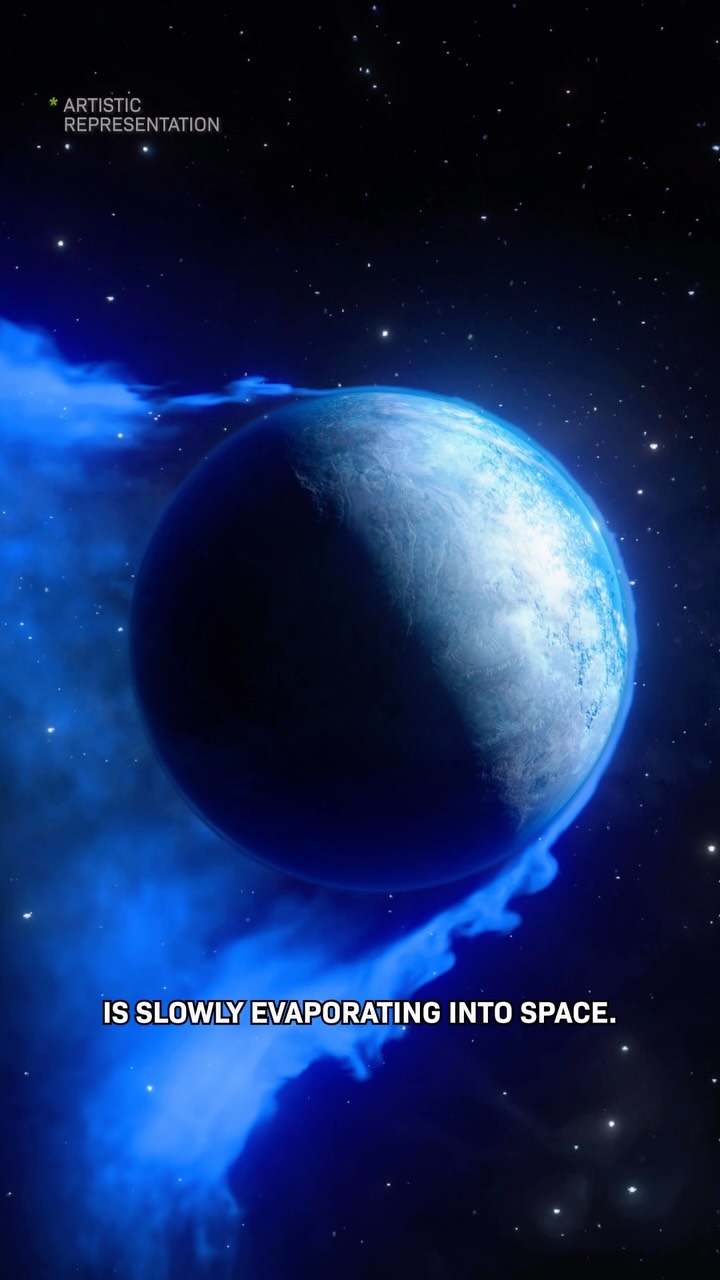
@cleoabram New alien host planet just dropped. Nearly 50 light years away is a planet orbiting a red dwarf star that appears to be leaking helium. This is a huge deal. Most of the time when searching for life on other planets we look for rocky planets in what’s called the “habitable zone.” This is the zone of a solar system where planets are just the right distance from the star for liquid water to exist. So far, most planets that we’ve found in these zones have a few problems, but this one… seems to defy that. For more, follow along! science.org/doi/10.1126/science.aea9708 #science #astronomy #exoplanets #aliens

View original on Instagram

The edit1 shot · 5 text
Shots Text0:59

Performance

Views
1.2M
Likes
60.3K
Comments
238
Engagement
5.2%
Length · 19 Sept 2026
0:59

Video #43715 · Talking Head Edit

Explaining new exoplanet discoveryfrom @cleoabram

[01]

Overview

The creator explains the groundbreaking discovery of LHS 1140b, the first rocky planet in a habitable zone with a confirmed atmosphere. She details its characteristics, explains why its proximity to a dim star is significant, and addresses the two main challenges for life (tidal locking and radiation), before revealing how this planet overcomes them due to its mass, and concludes with a call to follow for updates from the James Webb telescope.

[02]

Simple outline

  1. 1State groundbreaking claim
  2. 2Introduce critical obstacles
  3. 3Reveal surprising solution
  4. 4Tease future discovery

[03]

Related videos

[04]

Classification

Concepts
BreakdownStrange but True
Elements
B-Roll CutawayMotion GraphicsText OverlayFollow / Subscribe CTAGraphic OverlayVoiceover

[05]

Hook analysis

What stops the scroll in the first 3 seconds

Verbal hook · 90%

This is the first and only time astronomers have detected an atmosphere on an Earth like planet in the habitable zone.

Visual hook · 10%

The speaker makes an emphatic hand gesture towards the camera, immediately followed by a cut to a dynamic animation of a planet orbiting a star in space.

[06]

Hook template

Steal this for your own video

For the first time, [experts] have found [breakthrough discovery] in [promising setting].

  • — For the first time, astronomers have found an atmosphere on an Earth-like planet in the habitable zone.
  • — For the first time, marine biologists have found a new species in a deep-sea trench.
  • — For the first time, archaeologists have found evidence of a settlement beneath a desert.

[07]

Hook and payoff

The promise the opener makes, and how the video pays it back

Hook

Assert a superlative claim of 'first' or 'only' to establish immediate importance and novelty, followed by the most compelling data points.

Payoff

Create an open loop by teasing a future development or forthcoming information related to the discovery, directly tying it to a call-to-action (e.g., 'follow to see what happens next').

[08]

Narrative framework

The structural pattern this video runs on

Framework

The Obstacle-Defying Discovery

Present a significant new finding, introduce seemingly insurmountable challenges that should invalidate it, and then reveal the surprising evidence that proves the finding is true, creating a narrative of overcoming the odds.

  1. 1

    The Contextual Deep-Dive

    Explain the background information necessary to understand why the discovery is unusual or significant. This sets the stage for the coming conflict.

  2. 2

    The Complication Pivot

    Introduce a hard pivot by stating that there are major problems or challenges associated with the initial claim. Frame them as significant obstacles.

  3. 3

    The Obstacle Gauntlet

    Systematically detail each problem, explaining its negative consequences. Use vivid analogies or visualizations to make the threats feel tangible and severe.

  4. 4

    The Narrative Reversal

    Execute a sharp turn in the narrative with a definitive counter-statement ('But not here,' 'But that's not what happened'). This invalidates the previously established problems and re-ignites hope.

  5. 5

    The 'Aha!' Evidence

    Present the key piece of evidence that proves the discovery is valid despite the obstacles. Explain how this evidence directly refutes the challenges.

  6. 6

    The Reinforcing Rationale

    Provide a secondary piece of information or a scientific theory that explains *how* the subject was able to overcome the obstacles, adding a layer of credibility and satisfying intellectual curiosity.

Themes

  • scientific discovery
  • search for life
  • astronomy

Techniques

  • animated explainers
  • direct-to-camera narration

Trends

  • science communication
  • educational content

Post caption

New alien host planet just dropped. Nearly 50 light years away is a planet orbiting a red dwarf star that appears to be leaking helium. This is a huge deal. Most of the time when searching for life on other planets we look for rocky planets in what’s called the “habitable zone.” This is the zone of a solar system where planets are just the right distance from the star for liquid water to exist. So far, most planets that we’ve found in these zones have a few problems, but this one… seems to defy that. For more, follow along! science.org/doi/10.1126/science.aea9708 #science #astronomy #exoplanets #aliens

Text overlays

  • informational · beginning

    HAS ATMOSPHERE ROCKY, EARTH-LIKE PLANET IN HABITABLE ZONE!

  • contextual · beginning

    LHS1140B

  • title · middle

    TIDAL LOCKING

  • informational · end

    LHS1140b 5.6x MORE MASS

  • call-to-action · end

    FOLLOW

Transcript

This is the first and only time astronomers have detected an atmosphere on an Earth like planet in the habitable zone. It's 40 nine light years away, and it's leaking helium, and there could be liquid water on the surface. This is a huge deal because this star is much dimmer and smaller than our sun, which means the habitable zone is right up next to it. So a year on this planet is only twenty five days for us. But being that close, you've got two big issues. One, planets that close are tidally locked, like our moon, meaning one side is always in darkness and the other is always facing the star. This planet is tidally locked, meaning the surface might look like a weird eyeball, super icy with an ocean at the center. The second problem is radiation because typically, the atmospheres of planets this close get ripped away by radiation from their tier. And without that, life as we know it can't worst, but not here. The detection of helium means that this planet has an atmosphere, even though the upper part is slowly evaporating into space. But this planet is over five times more massive than Earth, so scientists think that it could be holding on to a thicker atmosphere closer to the surface. And the James Webb Space Telescope is learning more, so to see it, follow