@fineasjackson
Instagram · Talking Head Edit
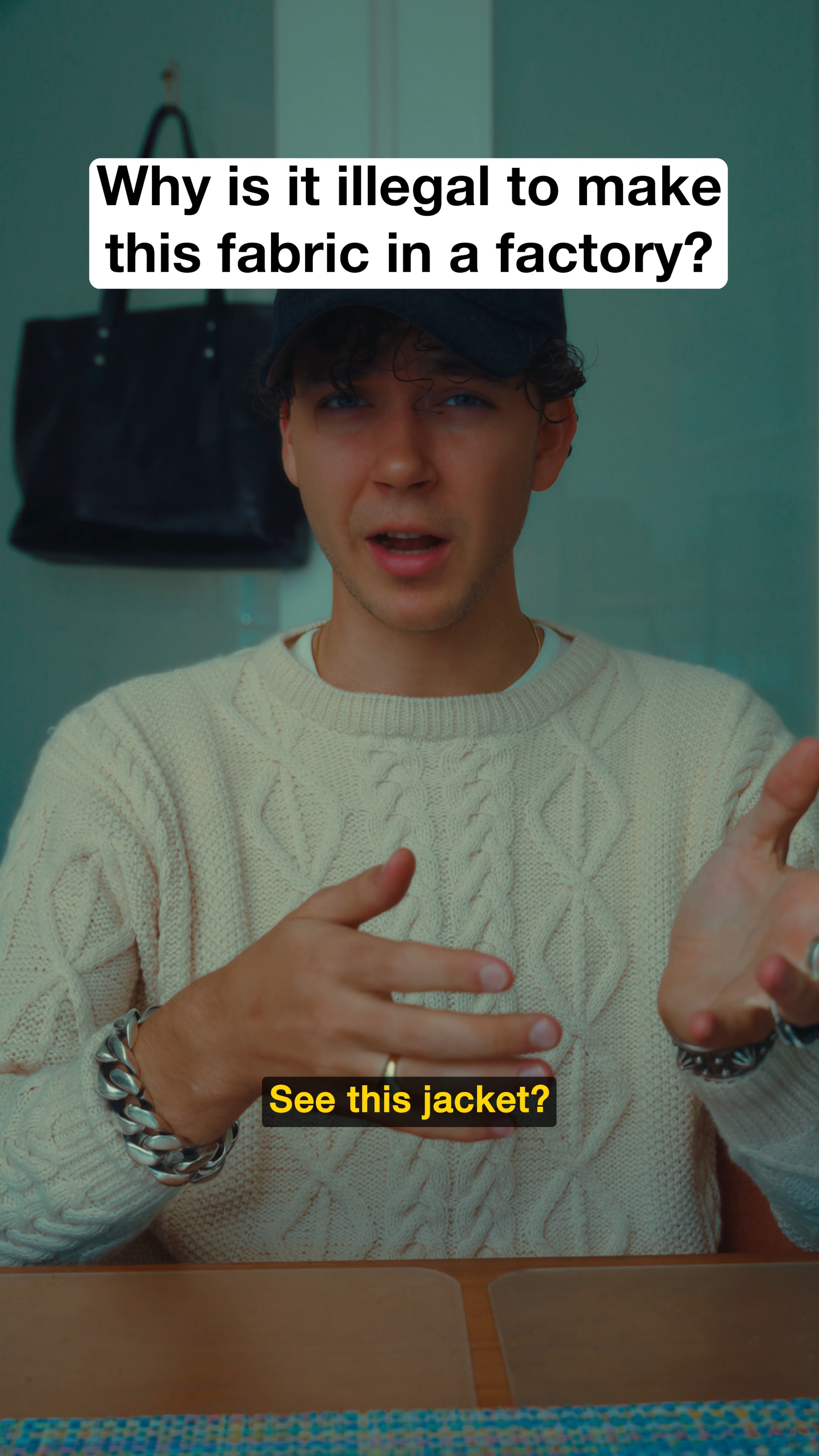
@fineasjackson This fabric has to be woven in someone’s home. By law. But why?

@fineasjackson
Instagram · Talking Head Edit
@fineasjackson This fabric has to be woven in someone’s home. By law. But why?
Performance
Video #44447 · Talking Head Edit
[01]
The creator explains why Harris Tweed is legally protected and must be woven in a home, not a factory. He tells the origin story of the fabric, detailing its historical roots in the Outer Hebrides of Scotland, the traditional production methods using natural dyes and stale urine, and how it was commercialized by Lady Dunmore during the 1846 potato famine to support the local islanders.
[02]
[03]
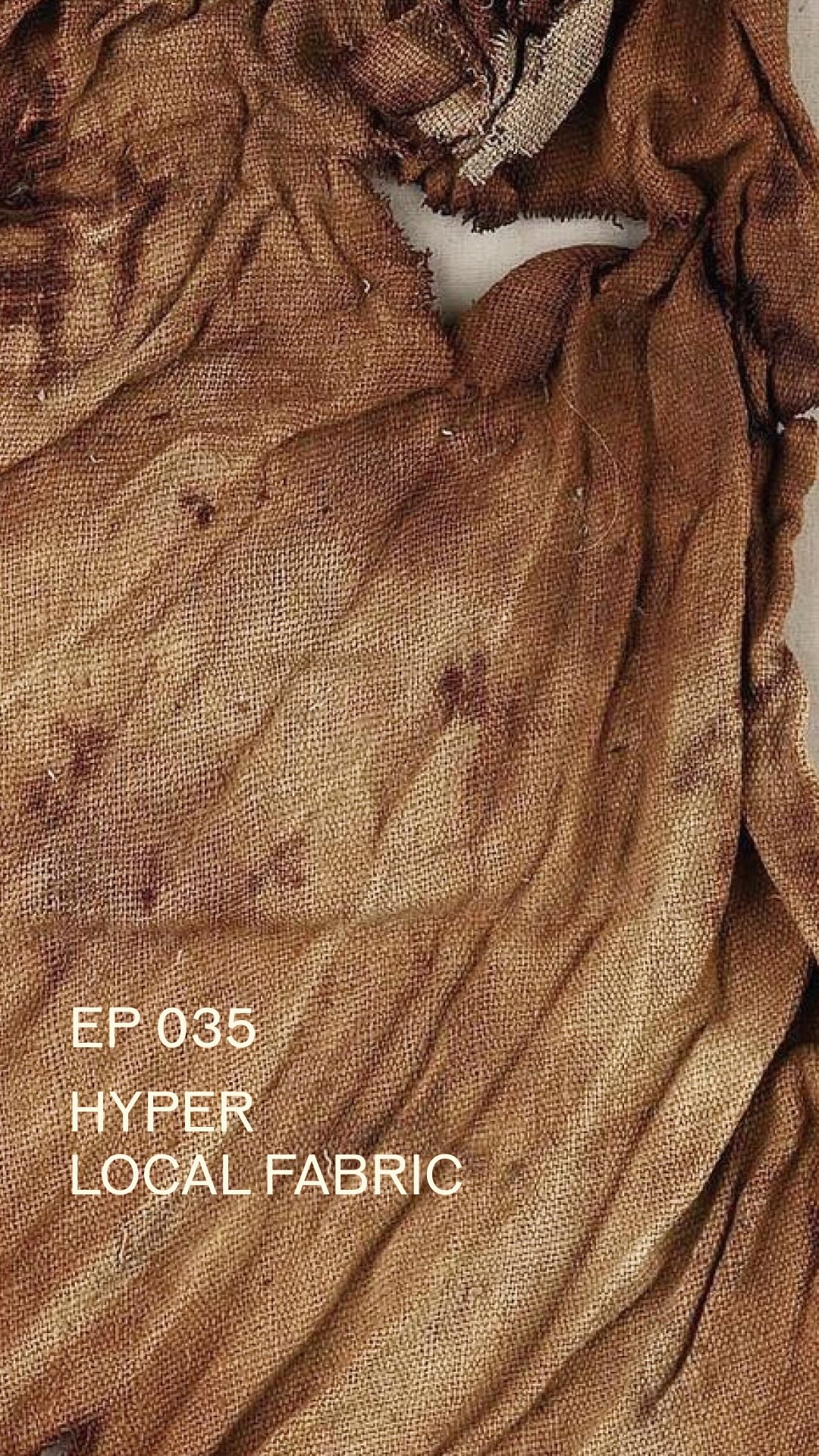 531.8K2.1×Explaining hyper-local fabric origins@sakata.ken · Breakdown
 209.9KMyth-busting the Aran sweater story@theironsnail · Breakdown
 1.4M3.2×Explaining the history of a sweater@theironsnail · Origin Story
 229.8KExplains sweater controversy with history@theironsnail · Origin Story
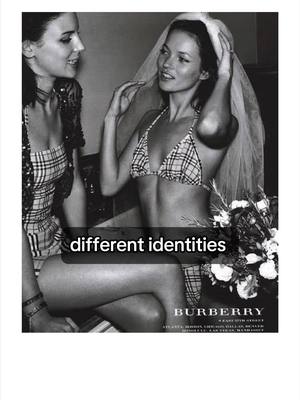 269KBurberry's techwear origin story@frontoffice.co · Origin Story
 282.7KFabric history and modern reinvention@frontoffice.co · Explainer
 245.6K2.9×Making a Wimbledon tennis rug@byantonlangreiter · Process
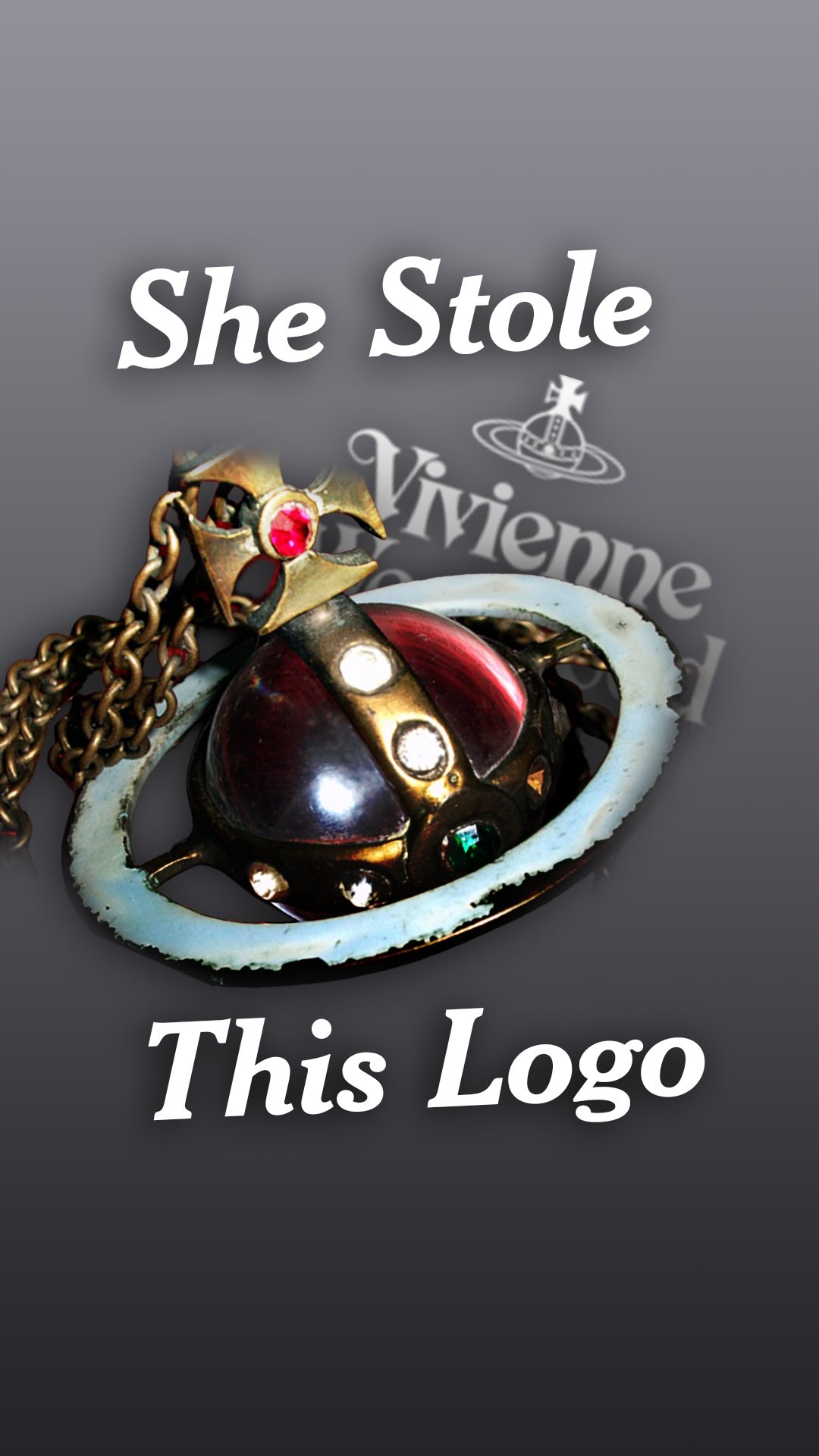 796.3K1.4×Famous logo's unexpected history@alextwma · Origin Story
 1.3M1.6×Explaining why one fabric improves@alextwma · Breakdown
 1.6M2×Explaining luxury t-shirt manufacturing process@alextwma · Opportunity Explainer
 381.8K63.2×Creator reveals custom souvenir collaboration.@thelogolassie · Showcase
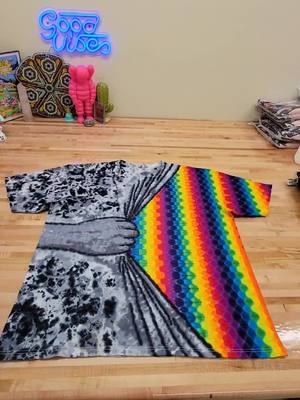 5.8M7.4×Tie-dye process start to finish@dyesngoodvibes · Process
[04]
[05]
What stops the scroll in the first 3 seconds
Title hook · 50%
Why is it illegal to make this fabric in a factory?
Verbal hook · 50%
Why does the law say this fabric has to be woven in someone's home?
Visual hook
A medium shot of the creator speaking directly to the camera with expressive hand gestures, followed by a quick cut to historical footage of women working with fabric by the water.
[06]
Steal this for your own video
Why is it illegal to this in ?
[07]
The promise the opener makes, and how the video pays it back
Hook
Pose a paradoxical question about a seemingly ordinary object, revealing a strange legal restriction that creates an immediate knowledge gap and compels the viewer to seek the answer.
Payoff
The narrative provides the complete historical context, allowing the audience to understand that the modern-day legal protection is not an arbitrary rule, but a necessary measure to preserve a unique cultural heritage and artisanal process.
[08]
The structural pattern this video runs on
Framework
The Protected Origin Framework
To explain why a modern product or concept has a unique, legally protected status by tracing its story from humble, traditional origins through a historical crisis that led to its formalization and protection.
The Modern Anomaly
Establish the central mystery by showing the object and stating the counter-intuitive rule. Immediately validate the claim with tangible proof (a legal document, a specific label) to build credibility and raise the stakes.
The Ancient Provenance
Transport the audience back in time to the object's pre-commercial origins. This beat establishes the deep cultural roots and initial purpose, framing it as a tradition rather than just a product.
The 'Grounded in Nature' Process
Detail the unique, often primitive and surprising, methods and materials used in the original creation. This uses visceral, memorable details to differentiate the object from modern, mass-produced equivalents and build its perceived value.
The Historical Crisis Catalyst
Introduce a major external event (e.g., famine, war, economic collapse) that acted as a turning point, forcing the tradition to evolve from a local practice into a potential commercial lifeline.
The Agent of Formalization
Introduce a key historical figure or group who recognized the tradition's unique value and initiated its journey towards commercialization and formal protection, bridging the gap between the ancient past and the present.
This fabric has to be woven in someone’s home. By law. But why?
title · beginning
Why is it illegal to make this fabric in a factory?
contextual · middle
Wanna buy some Tweed?
branding · middle
"Chasing Beauty" Episode 86
title · middle
Island Cloth, Aristocratic Style
contextual · middle
I am here to save the day!
Why does the law say this fabric has to be woven in someone's home? See this jacket? It looks like any old tweed, but this cloth has its own act of parliament. We have the exact same cloth in a factory in Glasgow, and you cannot legally sell it as Harris Tweed. This is Chasing Best episode 86. For centuries, islanders in the Better Hebrides wove a heavy wool cloth for their own families. In Gaelic, they called it Clawmore, the big cloth. The colors came straight off the land. Woman scraped a lichen called crotal off the rocks with a spoon and boiled it into rusty oranges and browns. To finish it, woman soaked the cloth in stale urine and pounded it against a table, singing to keep rhythm. The ammonia helped set the dye. The pounding thickened the cloth against the wind. Then, in 1846, as a potato famine swept the Highlands, a woman named Catherine, Countess of Dunmore, saw something in it. Her late husband had owned the Isle Of Harris. She commissioned two sisters in the village of Strand to weave her family