@alextwma
Instagram · Talking Head Edit

@alextwma Why does this plain t-shirt cost $150?

@alextwma
Instagram · Talking Head Edit
@alextwma Why does this plain t-shirt cost $150?
Performance
Video #46375 · Talking Head Edit
[01]
The creator explains why a plain white t-shirt costs $150 by contrasting modern, high-speed, efficient t-shirt manufacturing with the traditional, slow, and inefficient 'loopwheel' method. He details how the modern process compromises fabric quality for speed and volume, while the loopwheel method, which uses gravity instead of tension, preserves the cotton's natural softness and texture. The video covers the history of this old technology, its near extinction, and its revival by a few niche brands, ultimately framing this deliberate inefficiency as a form of luxury.
[02]
[03]
 673K1.6×Explaining the true cost of t-shirts@frontoffice.co · Breakdown
 103.9K1.9×Explaining true T-shirt quality history@gents.studios · Breakdown
 1.7M25.8×Cheap vs expensive cotton explained@fineasjackson · Breakdown
 278.1K19.4×Explain hoodie quality and pricing@fineasjackson · Breakdown
 1.6M4.9×Cultural trait explains niche manufacturing@sakata.ken · Strange but True
 320.2KDesigner breaks down overshirt fabrics@frontoffice.co · Breakdown
 5.8M7.4×Tie-dye process start to finish@dyesngoodvibes · Process
 210.4K27.3×Five hidden clothing quality signs@gents.studios · Breakdown
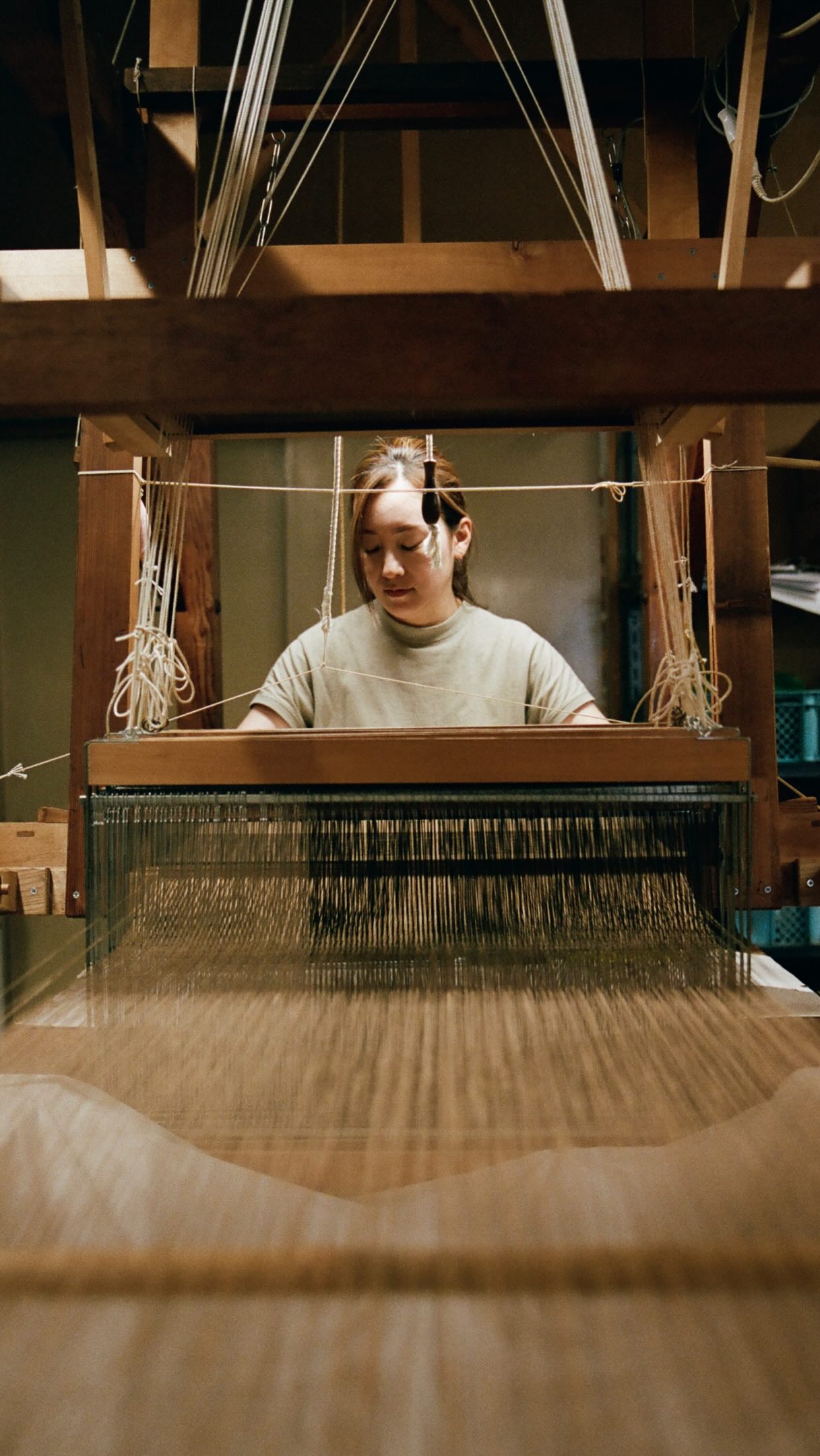 1M18.6×Japanese factory de-modernizes for quality@sakata.ken · Origin Story
 1.3M1.6×Explaining why one fabric improves@alextwma · Breakdown
 593K41.9×Explaining the satin marketing loophole@fineasjackson · Breakdown
 1.1M14.4×Designer shows mistake and fix@yitaigeng · Origin Story
[04]
[05]
What stops the scroll in the first 3 seconds
Title hook
white t-shirt
Verbal hook
This plain white t-shirt costs $150.
Visual hook
The creator holds a folded plain white t-shirt up to the camera, immediately establishing the video's central subject.
[07]
The promise the opener makes, and how the video pays it back
Hook
A counter-intuitive paradox is presented, linking a high price to a seemingly negative quality (inefficiency), creating an immediate curiosity gap that the video promises to solve.
Payoff
The narrative culminates in a philosophical reframing of value itself. It pivots from a simple product explanation to a broader statement about craftsmanship, purpose, and the idea that true luxury lies in the deliberate choice of a more difficult path for a beautiful result.
[08]
The structural pattern this video runs on
Framework
The Inefficiency Principle
Justifying a high price by revealing the hidden value in a deliberately inefficient, artisanal process, contrasting it with a flawed, mass-market alternative.
The Baseline: Modern Mass Production
Establishes the common, modern, and efficient method of production as a point of comparison. This represents the status quo that the viewer is familiar with.
The Compromise of Speed
Reveals the hidden flaw or downside of the modern, efficient method, arguing that speed and volume come at the cost of quality.
The Antique Alternative
Introduces an old, forgotten, or rare method as the superior alternative, framing it as a lost art from a bygone era.
The Mechanical Justification
Provides a detailed, technical explanation of how the antique method works, focusing on the specific mechanical differences that lead to a better outcome.
Quantifying Inefficiency
Uses concrete data and examples to prove how slow, difficult, and resource-intensive the superior method is, thereby building the justification for its high cost.
The Industrial Extinction Event
Tells the historical story of why the superior method was abandoned in favor of the faster, cheaper alternative, adding a layer of tragedy and rarity.
The Sensory Payoff
Connects the technical process directly to the tangible, qualitative benefits for the end-user (e.g., better texture, feel, durability), making the abstract value concrete.
The Scarcity Engine
Establishes extreme exclusivity by revealing how few practitioners or facilities still use this superior method, transforming the product into a rare artifact.
The Resurrection Story
Introduces the human element by telling the story of the people or brand responsible for reviving the lost art, adding a sense of purpose and passion.
Why does this plain t-shirt cost $150?
contextual · beginning
white t-shirt
informational · beginning
$150.
contextual · beginning
inefficiently
informational · middle
Invented in 1926,
informational · middle
tsuriami-ki “Hanging Knit Machine”
informational · middle
one hour to produce a single meter of fabric.
branding · end
Merz b. Schwanen,
title · end
The luxury of choosing to be inefficient for the sake of beauty.
This plain white tier shirt worst a $150 and it worst that much because of how inefficiently it's made. That sounds insane, but it makes complete sense. Most t shirts today are made on high speed knitting machines. Fabric is knit into long sheets at incredible speed, cut into shape using what are called CNC cutting machines, and sewn together with side seams. The whole process is really optimized for one thing: volume. The faster the machine, the cheaper the shirt. But speed comes at a cost. Modern machines pull and stretch the yarn as they knit, and that tension is what makes mass production best. But it also compresses the natural properties of the cotton fiber, making the fabric thinner and less soft than it could be. The loop wheel machine does the the opposite. Invented in 1926, it was the industry standard for decades. Champion, LL Best, and much of the sportswear industry ran on loop wheels. Instead of lying flat under mechanical tension, the fabric hangs vertically from the machine falling under nothing but gravity. No pull and no stress on the yarn. In Japan, it's called sudiamiki or literally hanging knit machine. It knits in a slow continuous tube with no side seams and it takes one hour to produce a single meter of fabric. That's enough for about one shirt. And because it's a fixed diameter, each machine can only produce one size. A small, a medium, and a large each require their own dedicated machine. Then in the nineteen tier, high speed flat knitting machines arrived, producing fabric 10 times faster and nowadays it's over 30 times faster. Loop wheels were abandoned entirely and by the nineteen seventies better than 200 were running in the entire worse. But here's what got lost in that trade off. When cotton yarn is knit under tension, the fibers lose their natural loft and structure. They're compressed into something thinner and more uniform than they should best. But with the loop wheel, because the yarn is never under any mechanical tension, the cotton retains its natural density and breathability. And because the machinery is slow and slightly irregular, it introduces subtle variations in the weave that give the fabric an almost hand woven texture. That's something no high speed machine can replicate because replicating it would require slowing down. There are only two factories in the world still running original loop wheel machines. One is in Wakayama, Japan. The other is in the Alps of Germany, Maersby Schwanen, whose machines date back to the 1920s. Co founder Better Plotnicki found them in 2011 sitting unused in a room in the mountains and decided to bring them back. We tend to think of luxury as speed and convenience, of obtaining the best thing as easily and as quickly as possible. But there's another kind of luxury entirely which is the privilege of doing something the hard way, of reviving these machines the industry almost drove to extinction, of spending an hour on a meter of fabric because the result is worth it. The luxury of choosing to be inefficient for the sake of beauty.