@theironsnail
Instagram · Talking Head Edit
@theironsnail It’s a myth! A myth! I’m still going to collect them though.

@theironsnail
Instagram · Talking Head Edit
@theironsnail It’s a myth! A myth! I’m still going to collect them though.
Performance
Video #29471 · Talking Head Edit
[01]
The creator debunks the myth that Aran sweaters were used to identify fishermen, explaining it's a piece of folklore. He presents evidence, including the sweater's traditionally blue color and archival footage, to show fishermen wore different garments. The creator then traces the myth's origins to a 1904 play and a 1938 book, and explains how the sweater was commercialized in the 1930s for tourists, using these stories as a marketing tool to support Ireland's struggling economy.
[02]
[03]
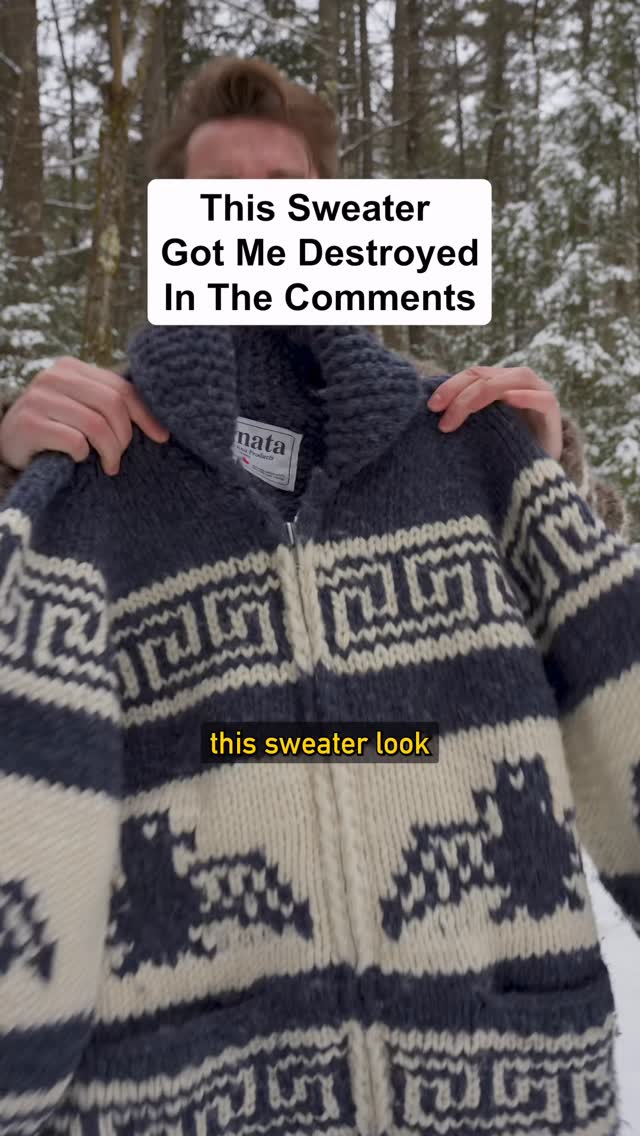 229.8KExplains sweater controversy with history@theironsnail · Origin Story
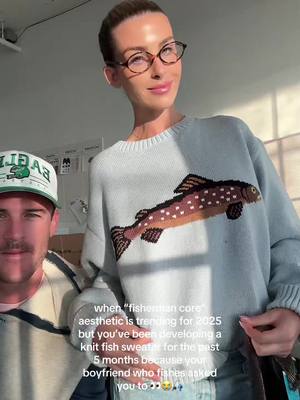 856.9K1.7×Ironic story via text overlay@paigelorenze · Relatable One Shot
 3.7M5×Explains historical sweater knitting technique@theironsnail · Breakdown
 1.4M3.2×Explaining the history of a sweater@theironsnail · Origin Story
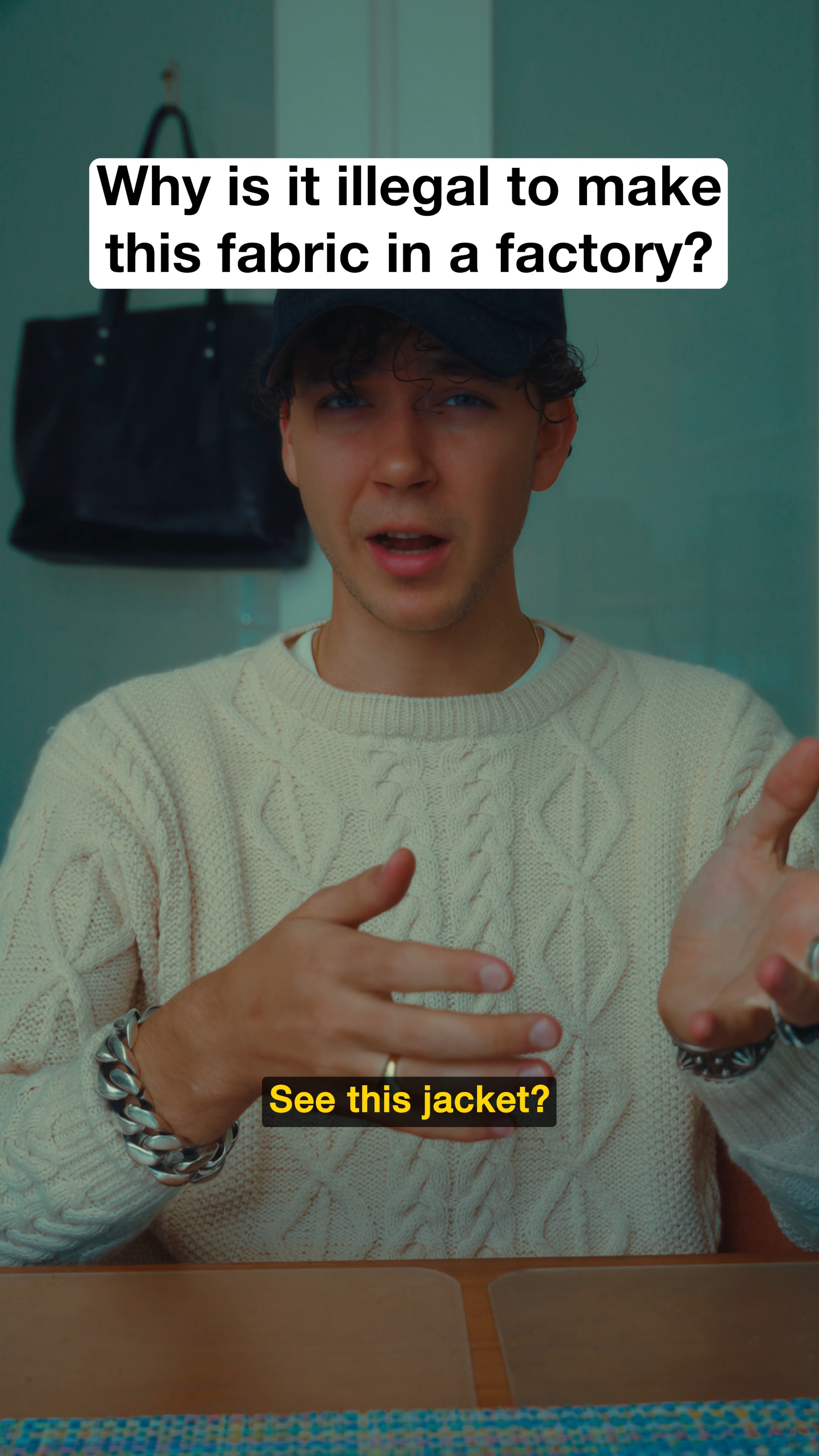 551.7K14×Why a fabric is legally protected@fineasjackson · What Is X?
 1.2M16×Clothing quality check explainer@wangjenniferr · Tutorial / How To
 103.9K1.9×Explaining true T-shirt quality history@gents.studios · Breakdown
 466.3K2.4×Outfit story reveals material lesson@itsjrue · Anecdotal Philosophy
 677.5K2×Good vs. bad fashion examples@wangjenniferr · Good vs Bad
 210.4K27.3×Five hidden clothing quality signs@gents.studios · Breakdown
 198.5K3.2×Story behind Ghibli-inspired sweater@yitaigeng · Origin Story
 1.5M72.1×Explaining why cashmere prices vary@fineasjackson · Breakdown
[04]
[05]
What stops the scroll in the first 3 seconds
Title hook · 55%
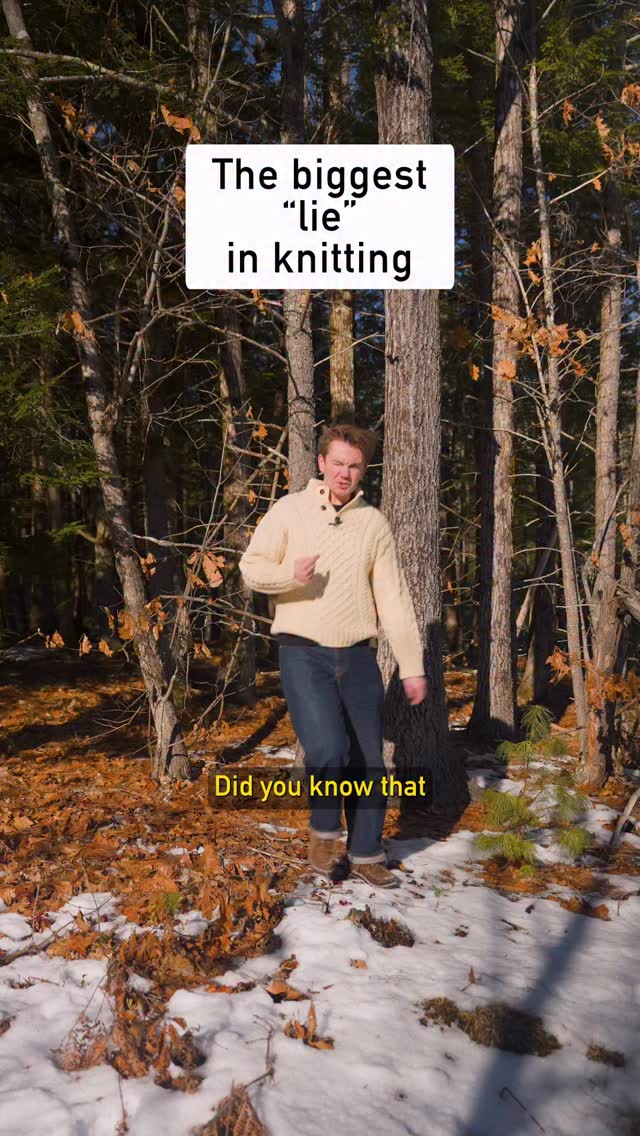
The biggest "lie" in knitting
Verbal hook · 40%
Did you know that these sweaters were commonly used to identify fishermen's bodies that were lost at sea?
Visual hook · 5%
A man in a cream-colored Aran sweater walks towards the camera in a snowy, wooded landscape, creating a visually relevant and engaging opening shot.
[06]
Steal this for your own video
Did you know about ?
[07]
The promise the opener makes, and how the video pays it back
Hook
Present a widely-held, romantic belief as a factual question to engage the viewer's existing knowledge and create an immediate hook.
Payoff
The Contextual Revelation: Reframe the entire story by explaining the underlying socio-economic or cultural motivations that led to the creation of the myth and the popularization of the subject, providing a nuanced and satisfying conclusion.
[08]
The structural pattern this video runs on
Framework
The Mythbuster's Timeline
Debunking a popular myth about an object or concept by tracing the myth's origin and revealing the true, often more complex, historical and socio-economic context.
The Instant Reversal
Immediately and decisively state that the initial belief is false, creating an information gap that the viewer wants filled.
The Simple Contradiction
Point out an obvious, logical, or visual flaw in the popular myth that the audience can easily grasp, reinforcing the debunking.
The True Predecessor
Introduce the actual, less-known origin or ancestor of the subject, establishing a new baseline of truth and deepening the investigation.
The Narrative Genesis
Pinpoint the specific cultural artifact (e.g., a book, film, play) that created and popularized the myth, revealing it as a constructed story.
The Secondary Debunking
Uncover and disprove another related, often-embellished piece of folklore associated with the subject, adding another layer to the investigation.
The Commercial Catalyst
Identify the key person or event that commercialized the subject, often by leveraging the very myths being debunked, connecting folklore to commerce.
The Factual Timeline
Synthesize all the evidence into a clear, chronological history of the subject's actual development, providing a structured overview of the truth.
It’s a myth! A myth! I’m still going to collect them though.
title · beginning
The biggest "lie" in knitting
informational · beginning
false!!!
contextual · beginning
Man of Aran, 1934
contextual · middle
1904
contextual · middle
1938
contextual · middle
1930s
contextual · end
Commercial success
contextual · end
Clancy Brothers in Aran Sweaters, 1960s
contextual · end
Grace Kelly in Aran Sweater, 1950
contextual · end
Steve McQueen in Aran Sweater, late 1960s
Know that these sweaters were commonly used to identify fishermen's bad that were lost at sea? I didn't either. It's a myth. It's not true. Also, if this is a fisherman's sweater, why is it white? Traditionally, fisherman's sweaters were blue. Even films made in Ireland in the nineteen thirties showing fishermen didn't show them wearing this sweater. They wore different ones. The Irish Aaron sweater is actually thought to be based on a Scottish Gansey fisherman sweater that we just did a short on. Okay. And now check out this perfect storm. In nineteen o four, a play comes out called Riders to the Sea by James Millington Singh. In that play, a sister identifies her brother's body that was washed up on shore because she knit him a pair of socks that had a dropped stitch. That is where the identification legend came from for the fishermen. In 1938, Heinz Kiva writes the good, The Sacred History of Knitting. In that book, he says all of these patterns on rank knits are from ancient Celtic symbols. That is not true. Also in the nineteen thirties, a woman by the name of Muriel Gaon opens the country shop in Ireland where she sells Aran sweaters and references both of those pieces of folklore rank also helps the people making the sweaters make them more attractive to people like tourists. The development of the Rank sweater probably started in the late eighteen nineties to the early nineteen hundreds and became very commercially successful in the nineteen thirties to the nineteen tier. Best, fisherman sweaters as worn by fishermen for their intended use stopped being popular around the nineteen tier. So these were designed to be photographed well, to stand out, to be striking, and to be sold. But the people that sold them, they were not trying to lie to just sell you something. Ireland, and more specifically, the Aran Islands worse not doing well at that time. So Ireland came together and said, let's stimulate the economy in any way we can. Let's try it with the cottage industry where women can knit sweaters to help their households. A lot of Irish people left Ireland and they went to America. So Ireland was saying, hey, Irish Americans, remember us? Your home? Aren't you nostalgic? Look at these waves and the crafts that we make. They're so beautiful and cozy. Don't you wanna visit and put money into our economy? Arran better.