Post caption
Runners see the city in a different way...
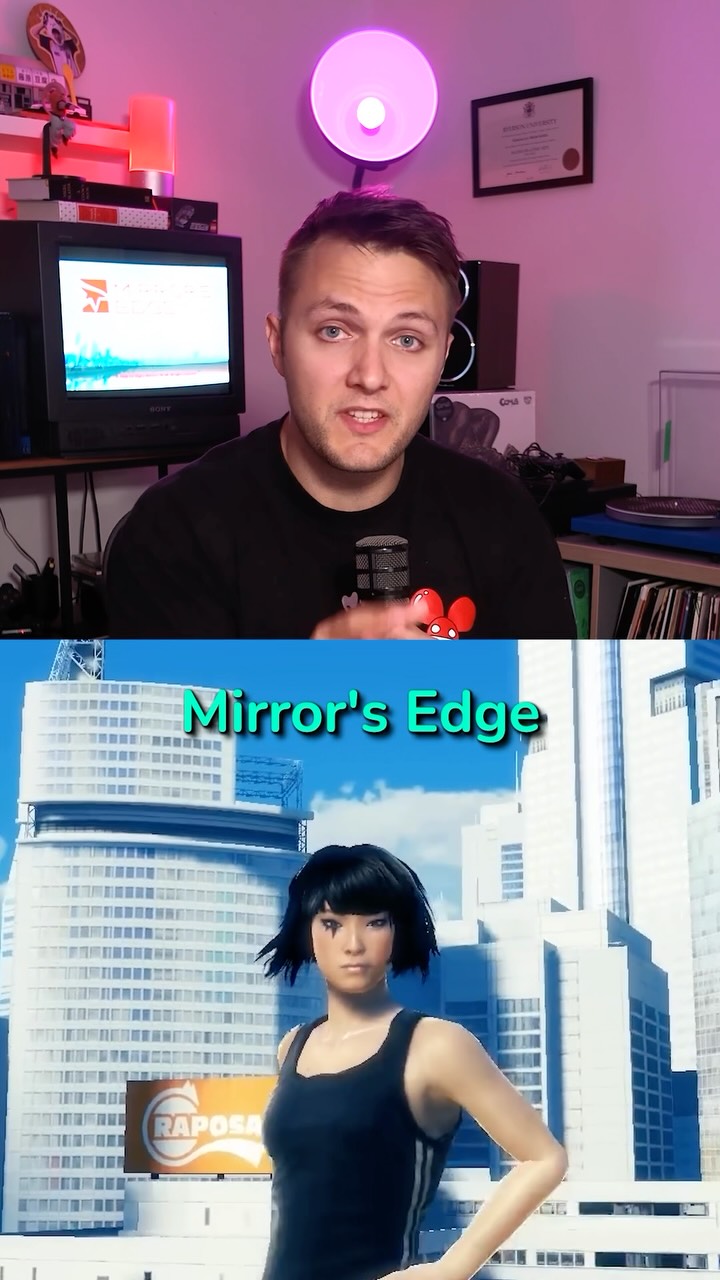
From the minimalist future aesthetic, to the high contrast and stark finishing, Mirror’s Edge felt like a shining point of colour and vibrance in a gaming landscape that was dominated by gritty urban realism and the infamous piss filter.
There were so many aspects of this game that were ahead of its time and are still studied and praised to this day. Much of it was due to DICE wanting to experiment after having done FPS games for so long. And it’s a game that despite its modest success, has found a hardcore fanbase that still remains to this day.
#nostalgiacore #mirrorsedge
Transcript
This is how Mirror's Edge changed gaming aesthetics forever. This is Mirror's Edge, a game that came out in 2008 and produced by DICE. And although it's a modest success on release, this game not only turned out to be way ahead of its time, but has huge influence that still felt to this day. From the minimalist and future aesthetic to the stark and high contrast finishing, Mirror's Edge felt like a shining point of color and vibrance in a gaming landscape that was dominated by gritty urban realism and the infamous piss filter. Visually, Mirror's Edge introduced a tier, hyper clean aesthetic that infused avant garde industrial design, futuristic architecture, and advanced global illumination rendering. But none of this world would have ever existed without the work of one artist and their love for electronic music. So rather than draw inspiration from contemporary video games, Johannes Soderqvist and the DICE art team looked for external influences to create this timeless language.