Post caption
Not every day there is a chili oil AI controversy - but it’s a good lighting rod for conversations about job loss, reskilling and global perceptions of technological shifts (my favorite chili oil btw)
#ai #tech #weibo #laoganma #technology
Transcript
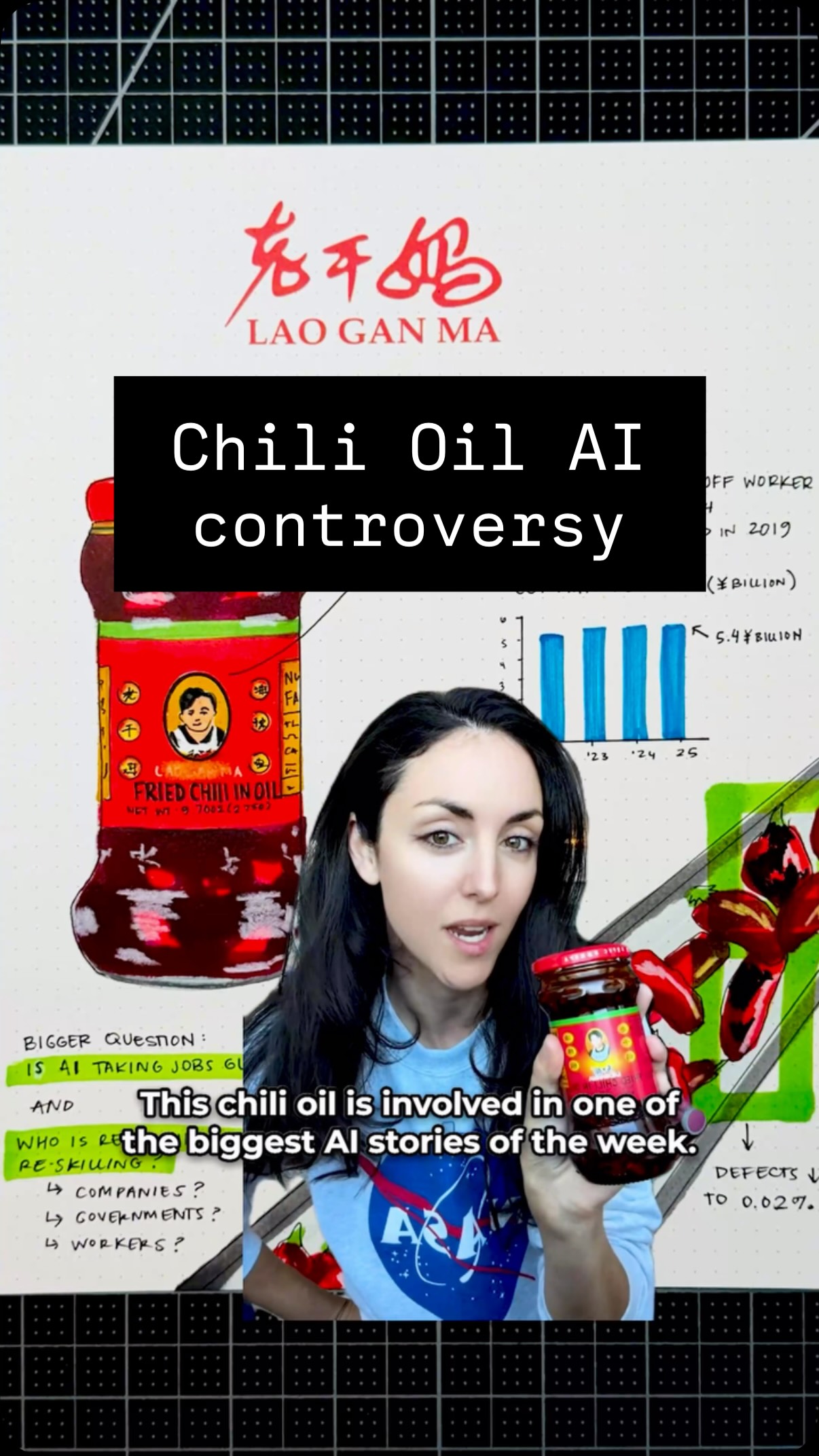
This chili oil is involved in one of the biggest AI stories of the week. This is Lao Gan Ma, an iconic chili oil that's been on Asian dinner tables for almost thirty years. And this week, the Chinese Internet is ablaze because of something one of their execs said about AI upgrades the company is implementing. Quick backdrop. The face in the label is its founder, Tao Huobi. Laogan Ma means old godmother, which is what her customers called her. She was a laid off worker selling cold rice noodles before pivoting into selling the chili oil. Her sons actually took the business over in 2014, but they switched the chili pepper variety to cut costs and set off a big backlash. So at age 72, she returned in 2019 to run the company again. So this month, their chief quality officer spoke at a conference and said, they've rolled out a new system to inspect chilies on the factory line using AI to detect and pull out moldy or blackened peppers during chili sorting. Basically, cameras scan the conveyor belt every point three seconds, and jets of air blow bad peppers into a waste bin. The AI visual inspection system, he said, has dropped defects to 0.02%, and he tied it to this year's record profits. His comments went viral because many no that while revenue has stayed relatively flat for the last four years at about 5,000,000,000 yuan, the number of employees at the company has steadily dropped. By one measure, insured employees, it dropped from just under 3,000 to 740 people in four years. It's even more noteworthy when you remember that the founder herself was laid off before starting the company. People across China are demanding boycotts, and Log On Ma's HR team denies layoffs. But to me, the whole story and backlash captures the bigger question. How much is AI taking jobs globally? And where it is, who is responsible for upskilling workers through the transition? Is it the companies like Laugan Ma, the government, or the workers themselves? What do you think?