Post caption
💭THINKING ABOUT: MEDIA-AS-COMPOSITE AND THE DECLINE OF PRIMARY SOURCES 💭
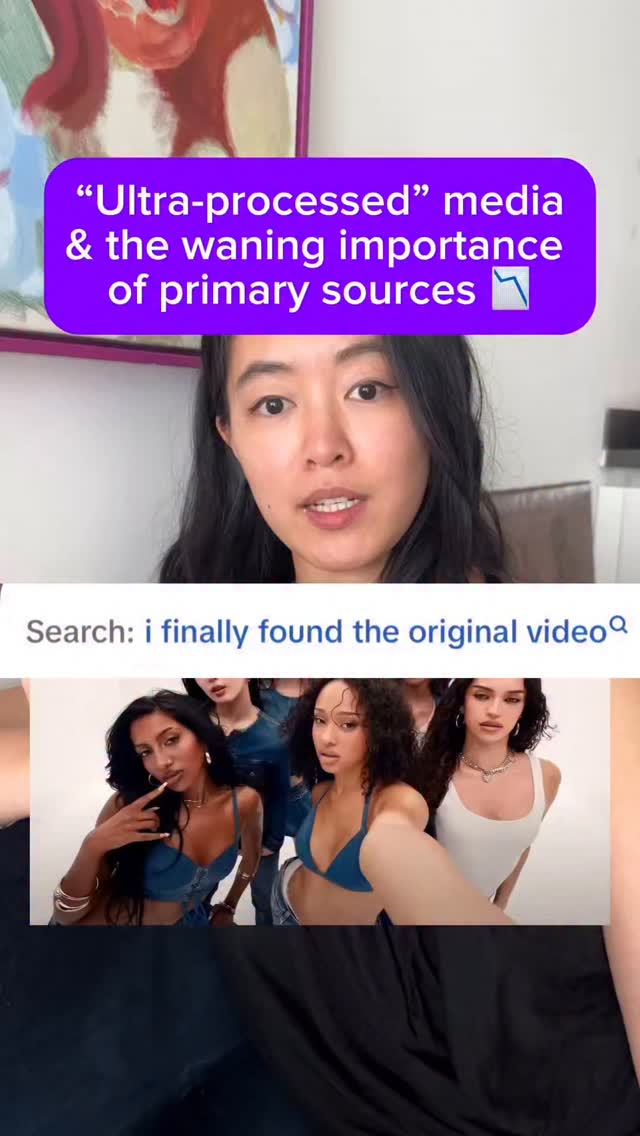
Think about how you first learned about recent news items, cultural moments or controversies: the Katseye Gap ad. The Summer I Turned Pretty. Nicolandria. Bad Bunny’s PR residency. A new executive order. Did you see the original source material in some form? Or did you see chopped up snippets referenced via podcast, post or reaction video (mixed in with a healthy dash of editorializing from the sharer)?
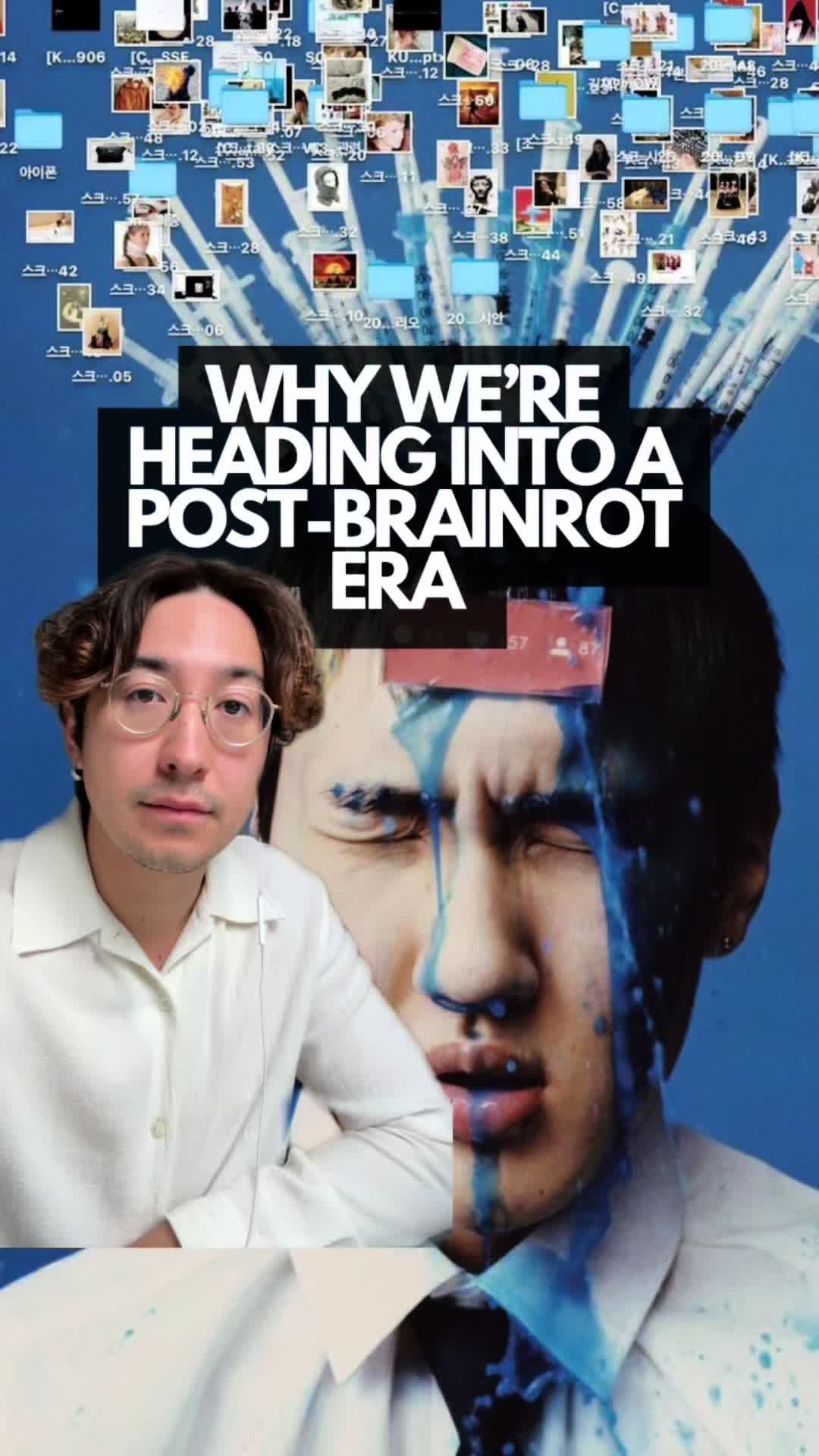
This idea is core to how we comprehend media today: We’re served up downstream clips, reactions & opinions on media before encountering the original source - if we encounter it at all. Over time, I believe this idea of “original media” is going to feel less and less important because we’re experiencing it, along with all its derivatives, simultaneously. ⏳⌛️ Everything Everywhere All At Once. Each piece of media is no longer the thing itself but this aggregate, composite level thing, like a photo mosaic of it and all its iterations. (To say nothing of the potential for misinformation, zero nuance & slop.)
Let’s talk about how encountering opinions alongside the actual source material makes it harder to parse what’s actually going on. The speed of proliferation feels impossible to fact check - like some extreme version of internet telephone - and ultimately introduces this extra layer of noise that further impedes our ability to think critically about said media.
#culturalanalysis #medialiteracy #criticalthinking #gnarly #mediaconsumption #katseye
Transcript
We don't comprehend media on its own anymore, but as a composite of itself, its reactions, its best, its discourse, all in one no. And that shift is training us away from primary source understanding. Say you encounter something new. Holly, Holly, you like a back of time. You're making a few determinations pretty quickly. What am I looking at? How do I feel about it? But because so much discovery is mediated through these digital platforms, you're also unavoidably exposed to additional context, framing, and reactions at the same time. There's often no time to form an opinion before the algorithm serves up a take. And getting all that info in one go shapes how you understand the media in the first place. You're not gonna get this on the first time you hear it. After the second and third time, you're gonna be like, woah. What is this? And I think there are two key consequences that come out of consuming media in this collage like aggregate way. One is that the sheer volume of input exhausts our ability to fact check. With misinformation, deepfakes, institutional decay, people being hyper conscious of being marketed towards, it feels like there's no time to fact check one piece of media, let alone the dozens that spawned. And what happens is you get more and more comfortable relying on secondhand and then thirdhand and then fourthhand info, and you're hoping that someone somewhere has validated its authenticity. Two is that we're being trained to completely externalize our reaction processes. Instead of privately processing an idea, we're instead talking to things, tier reactions, memes, comments, you name it. And that definitely has its place, but the danger is that critical thinking isn't instant. If we bypass this process entirely, our opinions are effectively going to become autofill, a composite of all the smartest takes we've consumed. And if we aren't deliberate, we're gonna end up thinking in a way that's very similar to the algorithms that we critique, endlessly remixing a smaller and smaller pool of original ideas.