The creator presents an investigative breakdown of Disney's current business model, arguing that the company's reliance on its highly profitable theme parks is its 'Achilles heel.' He analyzes financial reports to show the parks division is propping up the company, explains the 'yield management' strategy of targeting wealthier guests, and identifies declining international tourism as a major threat. The creator concludes that by raising prices to compensate, Disney is alienating its domestic middle-class audience, transforming the parks into a luxury good that reflects a K-shaped economic recovery.
Post caption
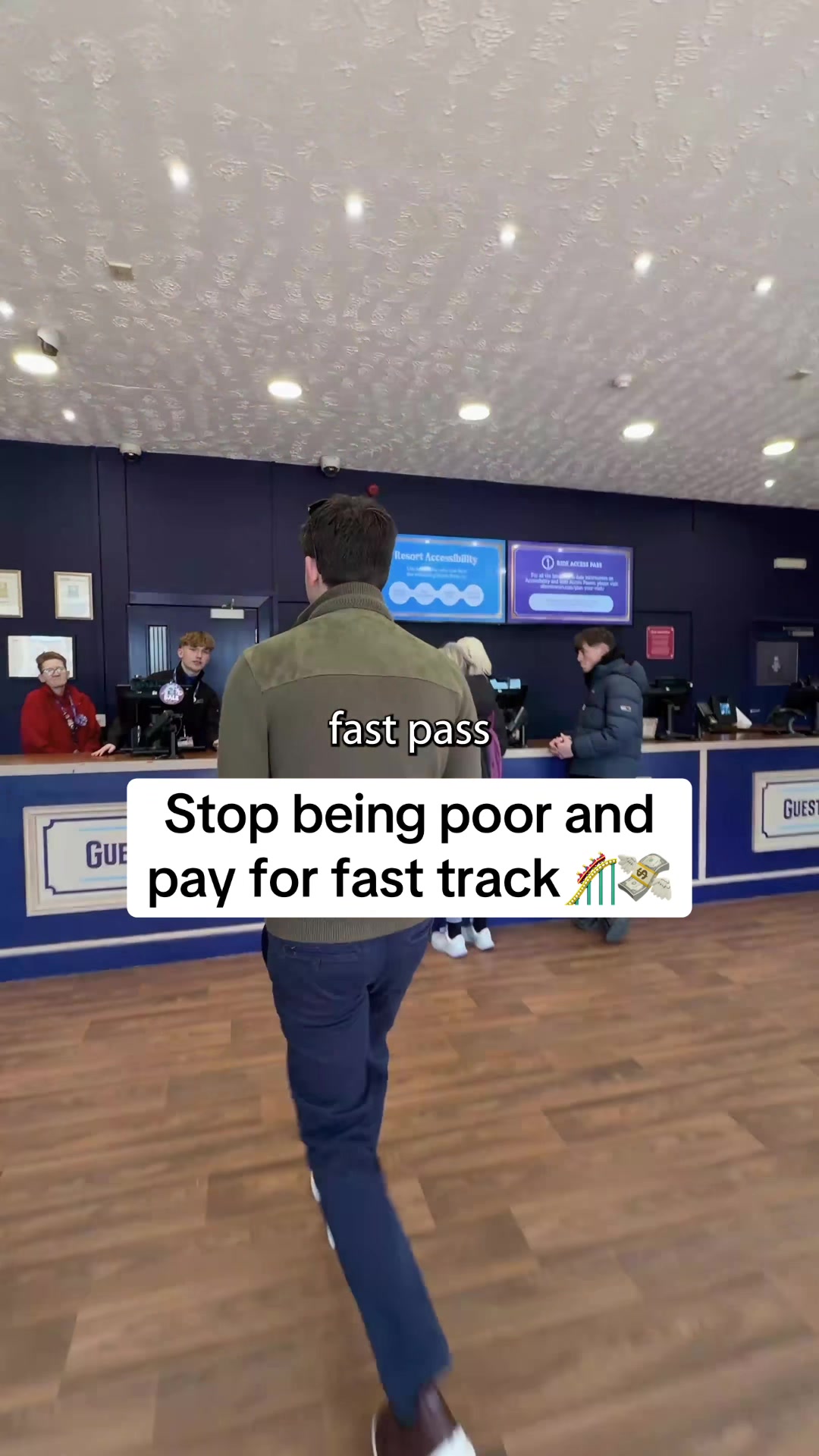
Disney’s latest results contain an uncomfortable truth about the modern theme-park business. The parks no longer subsidise the rest of the company. They are the company. In the final quarter of 2025, Disney’s “Experiences” division generated operating margins approaching 50%, an implausible figure for an industry built on concrete, steel and labour. The explanation lies not in higher attendance but in price discrimination. Variable ticketing, paid queue-skipping and algorithmic crowd control have transformed excess demand into a revenue stream. Scarcity, carefully rationed, has become the attraction.
The model’s vulnerability is social rather than financial. International tourism to the United States is weakening, while domestic incomes are failing to keep pace with the cost of participation. A week at Disney World now consumes a material share of a median household’s annual earnings, pushing the parks from mass entertainment towards luxury experience. What was once a common cultural space increasingly resembles a stratified market, in which time is sold to those who can afford it. The economics are sound. Investors approve. But the fantasy being preserved is no longer escapism. It is the memory of a middle class that could once afford to stand in the same queue.
#disney #disneyland #economics #casestudy
Transcript
This is what the theme park industry doesn't want you to know. Disney's new CEO appointee reveals the company's Achilles heel and why it's virtually the only thing keeping the business afloat. But let's look at those q four numbers. Linear worse are bleeding out, down $110,000,000 in operating income due to the YouTube TV carriage dispute and ad spend atrophy. But the highlight was the experiences division, which didn't just carry the better, it was the quarter. Diomaro, the new CEO, has weaponized yield management. By utilizing internal AI tools like the aptly named Jarvis to audit seventy three years of blueprints, he's focusing on slashing capex cycles. Disney's optimizing for a world where they want fewer guests with higher credit limits. But this model has a single critical failure point. The United States is becoming unvisitable. Inbound international tourism dropped 6% this quarter. We're seeing the economic fallout of the current administration's Fortress of America policies. And it's an environment that's pushing the global affluent towards Tokyo and Paris. And to backfill this loss of foreign capital, Disney has turned its predatory pricing algorithms inwards, cannibalizing the American domestic market. But the math doesn't really hold. You see, the median US household income is $80,000 A standard non luxury Disney Worse week now best $8,000. That is 10% of a family's gross annual pre tax income. And it's a clear sign that we've moved from everyone as a VIP to strictly segmented tiered access. One major reason we can back this up is that the 2024 Slack rank revealed they made $724,000,000 purely from the line skipping fees, which means the worse has effectively built a fiscal paywall around happiness. So the real key here is that Disney is no longer in the business of entertainment. They're effectively building a zoo of the middle class. Disney has become a mirror of the K shaped recovery. So if you're in the top 10%, you get the magic. But if you're in the bottom 90%, you merely are the NPCs there to make the VIPs feel like they've ascended. And the scariest part is that the shareholders love it.