Viral Hooks
Trending short videosCreator explains mid-tier business decline
T

@the.ryanexperience

Instagram · Greenscreen Talking Head

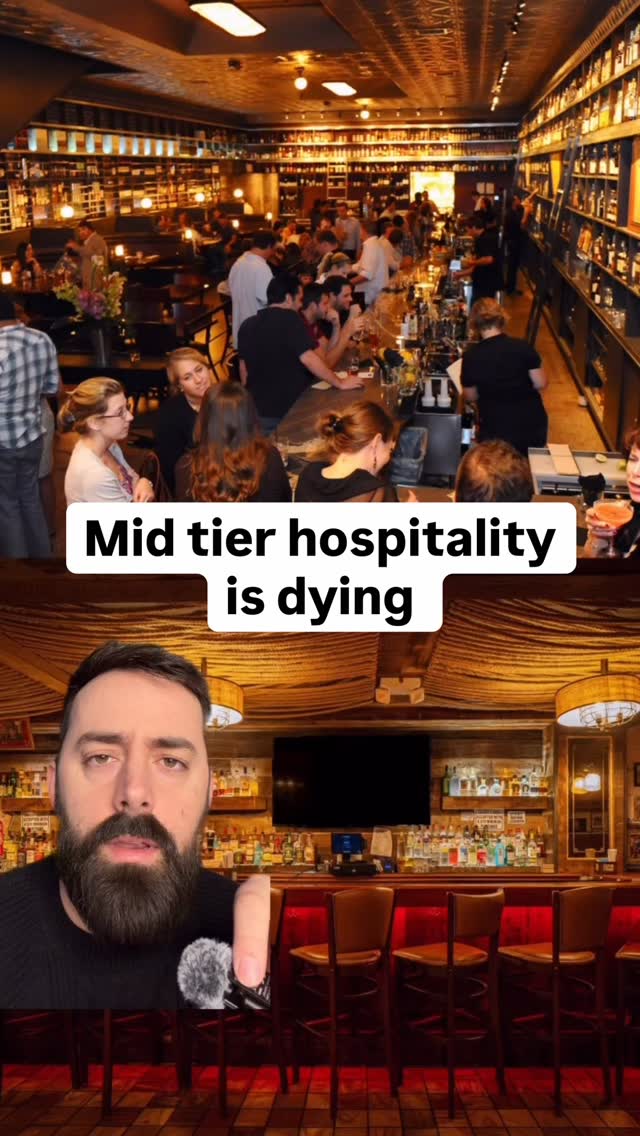
@the.ryanexperience Mid tier hospitality is in the “invisible zone.” With the decline of the middle class itself, people are either saving to spend up for unique experiences or saving by spending down. Those in the middle are left in the twilight zone. Costs are rising for brands, prices are rising and people are left wondering: “Why am I paying more for the same?” The sameness is differentiated in the luxury category. Is hospitality dying? No. It’s thriving. But brands need to pick a lane. #hospitality #brand #bar #bars #hotels

View original on Instagram

The edit1 shot · 8 text
Shots Text0:49

Performance

Views
3.1M
Likes
80.5K
Comments
2.3K
Engagement
2.7%
Outlier
85.3×
Length · 28 Dec 2025
0:49

Video #14208 · Greenscreen Talking Head

Creator explains mid-tier business declinefrom @the.ryanexperience

[01]

Overview

The creator presents a thesis that mid-tier hospitality is dying due to economic bifurcation. He supports this claim with data from news articles, explaining that the wealthy are spending more on luxury while the middle class either trades down or saves for high-end experiences, leaving no room for mediocre, overpriced options. He concludes by advising brands to choose a lane: either low-cost and efficient or unique and premium.

[02]

Simple outline

  1. 1State alarming industry prediction
  2. 2Provide data-backed explanation
  3. 3Explain resulting consumer behavior
  4. 4Deliver strategic survival mandate

[03]

Related videos

[04]

Classification

Concepts
BreakdownHot Take
Elements
B-Roll CutawayText OverlayJump Cut

[05]

Hook analysis

What stops the scroll in the first 3 seconds

Title hook · 35%

Mid tier hospitality is dying

Verbal hook · 50%

In three years, half the bars, restaurants, and hotels you know won't exist.

Visual hook · 15%

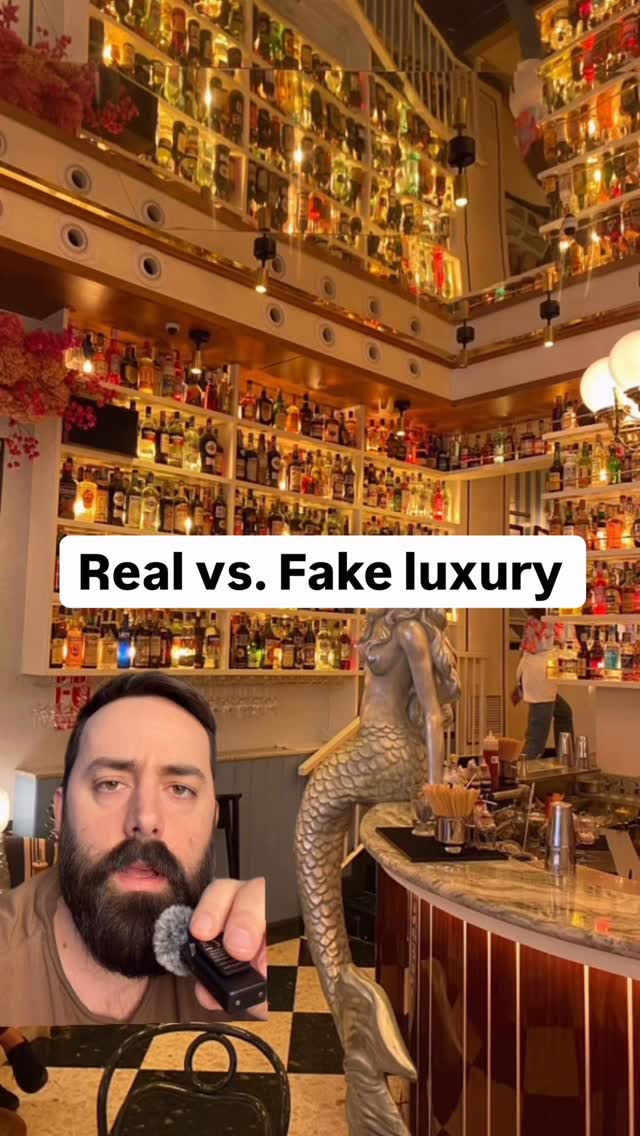
The video opens with a split screen showing a bustling, high-end bar on top and a completely empty, moodily lit bar on the bottom, creating immediate visual contrast and setting up the core theme of the video.

[06]

Hook template

Steal this for your own video

In [timeframe], half the [industry businesses] you know won't exist.

  • — In five years, half the gyms you know won't exist.
  • — In three years, half the marketing agencies you know won't exist.
  • — In two years, half the car dealerships you know won't exist.

[07]

Hook and payoff

The promise the opener makes, and how the video pays it back

Hook

A bold, time-bound, and specific negative prediction about a familiar industry, creating immediate curiosity and a need for explanation.

Payoff

A powerful, memorable, and conclusive statement that frames the 'middle' as a place of failure, reinforcing the initial hook and the entire argument.

[08]

Narrative framework

The structural pattern this video runs on

Framework

The Bifurcation Breakdown

To present a shocking prediction about an industry, then deconstruct the economic forces causing a split between the high and low ends, ultimately arguing that the 'middle' is becoming unsustainable and forcing participants to choose a side.

  1. 1

    The Causal Reveal

    Immediately refutes a common assumption (e.g., a simple downturn) and introduces a more complex, specific term ('bifurcation') as the true cause, establishing intellectual authority.

  2. 2

    The Macro-Economic Proof

    Presents a single, powerful data point from a credible third-party source (e.g., a major publication) that validates the core premise of the argument.

  3. 3

    The High-End Validation

    Shows a rapid succession of evidence (e.g., article headlines) proving that the premium segment of the market is thriving, confirming one side of the bifurcation.

  4. 4

    The Squeezed Middle Diagnosis

    Presents evidence defining the problem for the middle segment, framing it as an undesirable or failing proposition.

  5. 5

    The Value Equation Breakdown

    Quantifies the user's pain point by contrasting a significant rise in cost with a stagnation or decline in quality/experience, making the problem relatable.

  6. 6

    The Consumer Behavior Fork

    Explains the two logical reactions of the average consumer to the value breakdown: either choosing the cheaper option or saving for the premium option, abandoning the middle.

  7. 7

    The Thesis Refinement

    Clarifies that the entire industry isn't failing, but rather that the middle segment is collapsing, adding nuance and focusing the argument.

  8. 8

    The Strategic Imperative

    Transitions from diagnosis to prescription, issuing a direct command that a choice must be made to survive.

  9. 9

    The Binary Choice

    Explicitly lays out the only two viable paths forward: a low-cost/high-efficiency model or a premium/unique-experience model.

Themes

  • Economic inequality
  • Consumer behavior
  • Business strategy
  • Market trends

Techniques

  • Data citation
  • Visual evidence
  • Direct address
  • Problem-solution framework

Post caption

Mid tier hospitality is in the “invisible zone.” With the decline of the middle class itself, people are either saving to spend up for unique experiences or saving by spending down. Those in the middle are left in the twilight zone. Costs are rising for brands, prices are rising and people are left wondering: “Why am I paying more for the same?” The sameness is differentiated in the luxury category. Is hospitality dying? No. It’s thriving. But brands need to pick a lane. #hospitality #brand #bar #bars #hotels

Text overlays

  • title · beginning

    Mid tier hospitality is dying

  • contextual · beginning

    Let me explain why.

  • contextual · beginning

    It's because of the bifurcation.

  • contextual · beginning

    Luxury is booming.

  • contextual · middle

    But mid-tier brands are in the depth zone.

  • contextual · middle

    There is simply no room left for mediocrity.

  • contextual · end

    Brands need to pick a lane.

  • contextual · end

    Because the middle is where brands go to die.

Transcript

In three years, half the bars, restaurants, and hotels you know won't exist. Let me explain why. It's not because of a downturn. It's because of the bifurcation. The top 10% of earners now drive over 50% of consumer spending. Luxury is booming. $200 dinners are packed, but mid tier brands are in the death zone. Since 2020, prices have risen upwards of 30%, but the experience has stayed the same or got worse. So consumers are left wondering, why am I paying $50 for this? The middle class is either trading down to save money or they're saving up to trade up once in a while for a great world class experience. There is simply no room left for mediocrity. Hospitality isn't dying. In fact, it's booming, but the middle is. Costs are soaring across the board. It is not economically feasible to run a mid tier brand. Brands need to pick a lane. Go lean, efficient, and low cost or unique, unforgettable, and premium because the middle is where brands go to die.

Creator explains mid-tier business decline | Viral Hooks