Viral Hooks
Trending short videosExplaining why taste is valuable
C

@curatingambiance

TikTok · Talking Head Edit

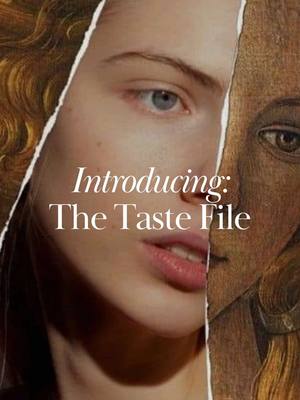
@curatingambiance I‘ve said it before and I’ll say it again: taste do you have it? Just kidding, sort of. But really, I want to make this 10 episode series for you to prove I am indeed the Rick Rubin of vibes - and to break down what I’ve been studying for years. Come along, should be fun! #taste #curation #rickrubin #curatingambiance

View original on TikTok

The edit1 shot · 10 text
Shots Text1:10

Performance

Views
261.8K
Likes
32.1K
Comments
216
Engagement
12.3%
Outlier
3.9×
Length · 17 Feb 2026
1:10

Video #18550 · Talking Head Edit

Explaining why taste is valuablefrom @curatingambiance

[01]

Overview

The creator presents a thesis on why 'taste' is becoming the most valuable skill in the age of AI. She defines the problem of content abundance, critiques algorithmic sameness, and differentiates between imitation and true taste, ultimately announcing a 10-part video series to explore how to develop this skill.

[02]

Simple outline

  1. 1Pose high-stakes question
  2. 2Define the core conflict
  3. 3Prove its real-world value
  4. 4Pitch the educational solution
  5. 5Outline the learning path

[03]

Related videos

[04]

Classification

Concepts
Buying List
Elements
B-Roll CutawayImage OverlayText Overlay

[05]

Hook analysis

What stops the scroll in the first 3 seconds

Title hook · 35%

in a world dominated by AI

Verbal hook · 50%

In a world dominated by AI, will having taste be the most valuable skill to have?

Visual hook · 15%

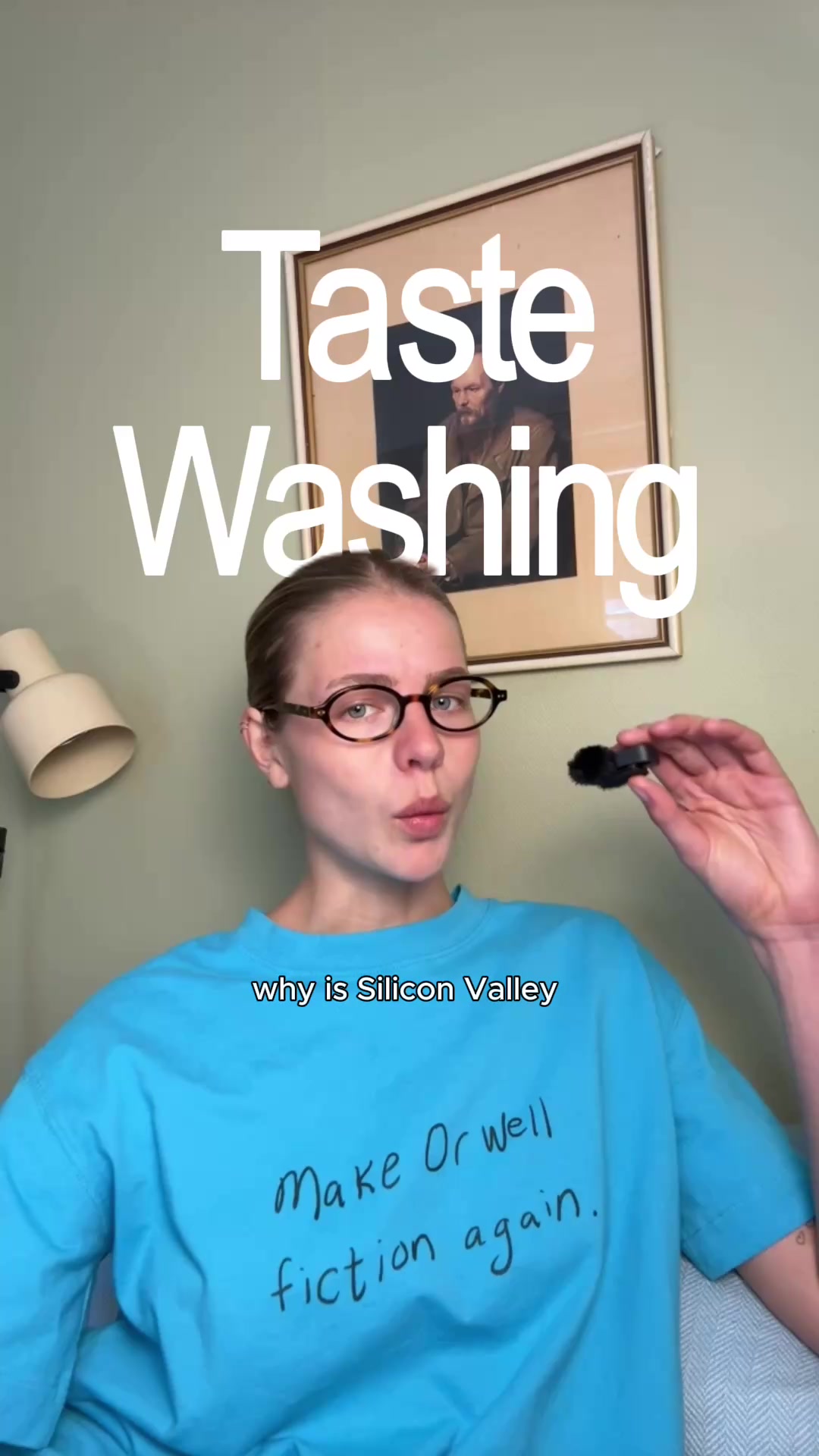
A four-panel split screen showing four distinct, high-contrast images: a man with a long beard, a woman in an art gallery, an AI-style art piece, and people in a museum.

[07]

Hook and payoff

The promise the opener makes, and how the video pays it back

Hook

A provocative, future-focused question that frames a familiar concept as a newly critical skill in a changing world.

Payoff

A direct call to action that invites the now-invested viewer to follow along for the promised educational journey, effectively converting a one-time view into a subscription.

[08]

Narrative framework

The structural pattern this video runs on

Framework

The Thought Leader Manifesto

To establish a complex, emerging problem, validate its importance with external proof, and position the creator as the essential guide to the solution through a structured content series.

  1. 1

    The Authority Anchor

    Immediately validates the hook's premise by citing a highly relevant, credible authority figure, lending weight and urgency to the topic.

  2. 2

    The Scarcity Shift

    Explains why the world has changed, arguing that a once-abundant resource (content) has made a human skill (discernment) the new scarce and valuable asset.

  3. 3

    The 'Taste Gap' Reveal

    Creates tension by exposing a common misconception, differentiating between superficial imitation (the 'out-group') and authentic skill (the 'in-group'), making the viewer question their own ability.

  4. 4

    The Central Inquiry

    Reframes the initial problem into a more nuanced, intellectual question that the creator will now explore, positioning them as a deep thinker.

  5. 5

    The Economic Proof

    Provides tangible, real-world evidence (e.g., hiring trends) that the skill in question has concrete market value, moving it from abstract concept to career necessity.

  6. 6

    The Value Proposition Distinction

    Draws a clear line between the automated, shallow goal of technology (e.g., engagement) and the deeper, more meaningful goal of human expertise (e.g., meaning), elevating the creator's domain.

  7. 7

    The Content Series Pitch

    Presents the creator's upcoming content as the definitive solution to the problem, transforming the video from a simple observation into a sales pitch for future attention.

  8. 8

    The Skill-Building Roadmap

    Breaks down the complex skill into a clear, learnable curriculum. This makes the aspirational goal feel achievable and provides a preview of the value the creator will offer.

Themes

  • AI impact on creativity
  • Value of human curation
  • Individuality vs. trends

Techniques

  • Montage editing
  • Use of archival footage
  • Direct address

Trends

  • AI discourse
  • Creator economy skills

Post caption

I‘ve said it before and I’ll say it again: taste do you have it? Just kidding, sort of. But really, I want to make this 10 episode series for you to prove I am indeed the Rick Rubin of vibes - and to break down what I’ve been studying for years. Come along, should be fun! #taste #curation #rickrubin #curatingambiance

Text overlays

  • title · beginning

    in a world dominated by AI

  • title · beginning

    will having taste be the most valuable skill to have?

  • contextual · beginning

    taste is a new core skill

  • informational · beginning

    but what exactly is taste?

  • contextual · middle

    Ultimately, it comes down to taste.

  • informational · middle

    that's taste, that's curation, that's discernment

  • informational · middle

    so where does imitation end and taste begin?

  • informational · end

    algorithms optimize for engagement, curators optimize for meaning

  • call-to-action · end

    so I'm making a series on this

  • call-to-action · end

    follow along if this is interesting to you

Transcript

A world dominated by AI, will having taste be the most valuable skill to have? Even OpenAI's cofounder just called it a core skill. But what exactly is taste? Everyone's talking about it, but few can define it. I've been studying this for years rank want to break it down here. Scars resource used to be content. We actually had to put an effort to write, to create photos and videos, to build knowledge. Now AI knows more than anyone, and AI can create more than anyone. So the question becomes, what's actually worth paying attention to? That's best. That's curation. That's discernment. But here's the tension. A lot of people think they have good good taste, but then you see it's the hundredth video saying the exact same things are chic, same products, the same stack of coffee table books, the exact same references. So where does imitation end and taste begin? That's what I wanna explore. There's a reason big tech is suddenly hiring storytellers and best makers. When everything can be generated, the human who can filter, contextualize, and actually select becomes essential. Algorithms optimize for engagement. Curators optimize for meaning. Those are two very different things. So I'm making a series on this. 10 episodes on best, not as something you're born with, but something you can train and learn. How to see, how to build references, how to know the difference between trend and taste, how to develop a point of view instead of borrowing everybody else's. I'll also be posting long form content on this on my Substack. Follow along if this is interesting to you.

Explaining why taste is valuable | Viral Hooks