Viral Hooks
Trending short videosAnalyzing coffee shop design history
O

@orenmeetsworld

TikTok · Talking Head Edit

@orenmeetsworld Mandate late night coffee shops in all major metros. If you ever posted a pic of an industrial coffee shop layout, three bodies, and big shout out to Kean for never letting the 90s coffee dream die in OC. Coffee shop design and its trends

View original on TikTok

The edit1 shot · 6 text
Shots Text1:55

Performance

Views
529.1K
Likes
65.3K
Comments
778
Engagement
12.5%
Outlier
1.9×
Length · 23 Feb 2026
1:55

Video #19096 · Talking Head Edit

Analyzing coffee shop design historyfrom @orenmeetsworld

[01]

Overview

The creator analyzes the evolution of coffee shop design, starting with a critique of the now-ubiquitous minimalist/industrial aesthetic. He traces its history from the cozy, cluttered "Central Perk" model, through Starbucks' mass-market "third place" concept, to the rise of "third wave" coffee shops post-2008, which adopted a raw, laboratory-like feel for both economic and strategic reasons. The creator argues this aesthetic has become a homogenous, uncomfortable cliché and highlights emerging, anti-minimalist trends that prioritize community, comfort, and unique local character, concluding that the old model is broken and a new, more human-centric approach is necessary for survival.

[02]

Simple outline

  1. 1Question a universal preference
  2. 2Explain the trend's origin
  3. 3Expose the trend's downfall
  4. 4Introduce the new wave

[03]

Related videos

[04]

Classification

Concepts
BreakdownCulture ProfileOrigin Story
Elements
B-Roll CutawayJump Cut

[05]

Hook analysis

What stops the scroll in the first 3 seconds

Title hook · 15%

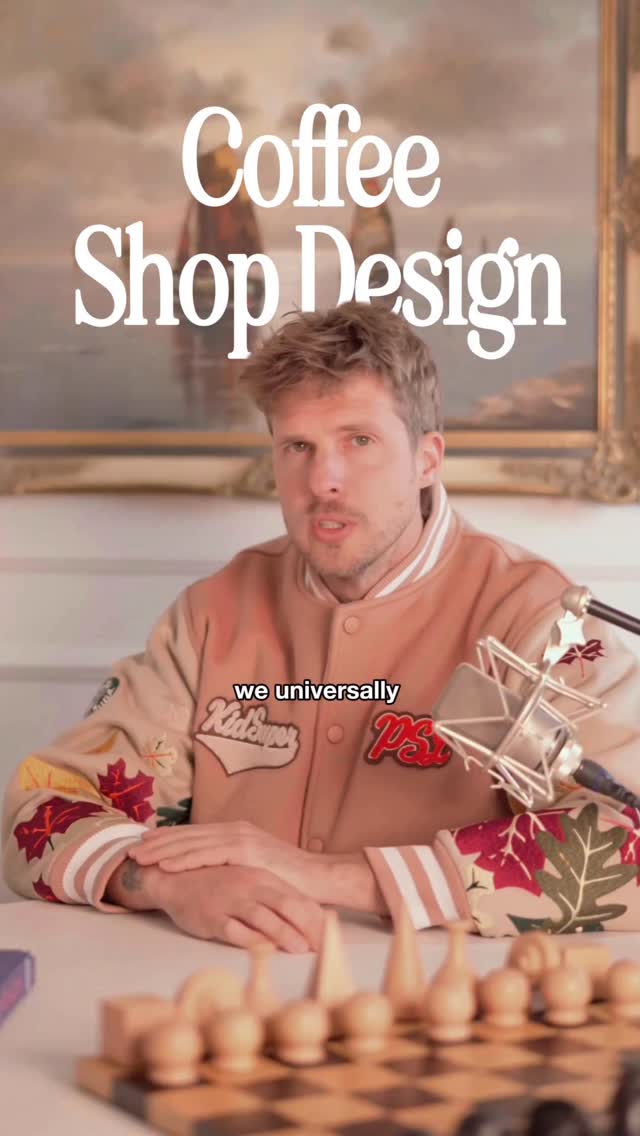
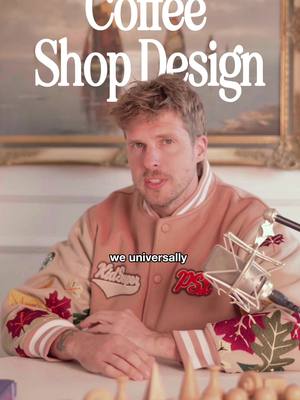
Coffee Shop Design

Verbal hook · 55%

How do we universally decide this is better than this?

Visual hook · 30%

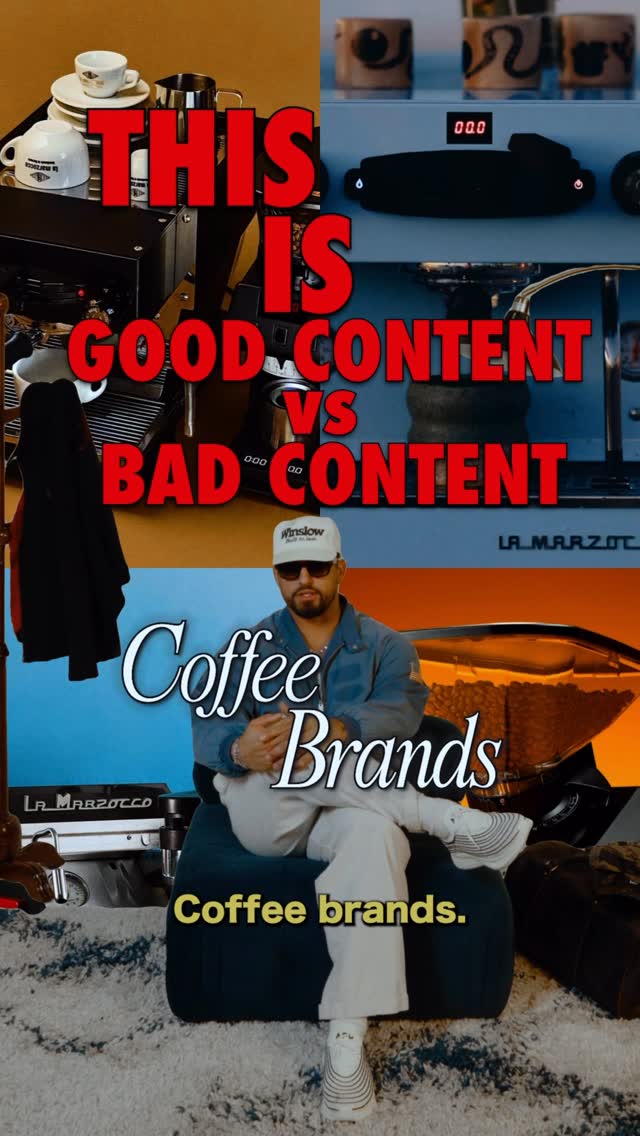
A speaker is juxtaposed with two rapidly cut, contrasting images of coffee shop interiors: one is a bright, minimalist space, and the other is a dark, cozy, plant-filled space.

[06]

Hook template

Steal this for your own video

How did we all universally decide that [option A] is better than [option B]?

  • — How did we all universally decide that open floor plan offices are better than private ones?
  • — How did we all universally decide that skinny jeans were out and wide-leg pants were in?
  • — How did we all universally decide that sourdough is better than regular bread?

[07]

Hook and payoff

The promise the opener makes, and how the video pays it back

Hook

A direct, binary comparison between two opposing aesthetics (the old/cozy vs. the new/minimalist) is presented as a provocative question, immediately engaging the viewer's own taste and curiosity about a shared cultural phenomenon.

Payoff

A final, decisive judgment is passed on the old, dying trend, providing a satisfying conclusion and confirming the viewer's new, informed perspective. It solidifies the video's thesis and leaves the viewer feeling ahead of the curve.

[08]

Narrative framework

The structural pattern this video runs on

Framework

The Trend Cycle Deconstruction

The video deconstructs a ubiquitous cultural or aesthetic trend by tracing its historical origins, explaining the hidden economic and strategic reasons for its dominance, identifying the point of oversaturation where it loses meaning, and finally showcasing the emerging counter-trend that is replacing it.

  1. 1

    The Archetype Satire

    A vivid, slightly satirical scenario is narrated to establish the dominant trend as a familiar, almost cliché, archetype. This makes the abstract concept concrete and relatable.

  2. 2

    The Intuitive Contradiction

    The narrator introduces a counter-intuitive feeling that the dominant, supposedly 'good' trend is actually 'not good'. This validates the viewer's potential skepticism and creates a mystery that the video promises to solve.

  3. 3

    The Nostalgic Baseline

    The narrative rewinds to establish the previous paradigm—the 'before times'—which serves as a point of contrast and shows that the current trend was not always the default.

  4. 4

    The Corporate Catalyst

    The first major evolution of the trend is attributed to a specific corporate entity or historical moment, explaining how the idea was first mass-produced and introduced to the mainstream.

  5. 5

    The Niche Revolution

    A specific moment in time is identified as the turning point where a new, more refined version of the trend emerged from niche subcultures, fundamentally shifting the aesthetic.

  6. 6

    The Hidden Rationale

    The core analytical payload is delivered by revealing the non-obvious economic and strategic drivers behind the trend's rise. This reframes the aesthetic choice as a calculated business or cultural decision, providing 'insider knowledge'.

  7. 7

    The Peak & The Problem

    The video explains how the trend's success led to its own demise through homogenization and loss of authenticity. The very thing that made it unique becomes a uniform, soulless code.

  8. 8

    The New Vanguard

    The narrative pivots to the future, showcasing multiple, diverse examples of the emerging counter-trend. This provides a sense of discovery and highlights what is new and next.

  9. 9

    The New Economics

    The business logic for the *new* trend is explained, demonstrating how changing economic realities and consumer desires necessitate a new approach. This justifies why the change is happening now.

Themes

  • Cultural trends
  • Homogenization of aesthetics
  • Consumer experience
  • Business strategy
  • History of design

Techniques

  • Historical analysis
  • Visual comparison
  • Storytelling
  • Cultural commentary

Trends

  • Anti-minimalism
  • Community-focused spaces
  • Biophilic design

Post caption

Mandate late night coffee shops in all major metros. If you ever posted a pic of an industrial coffee shop layout, three bodies, and big shout out to Kean for never letting the 90s coffee dream die in OC. Coffee shop design and its trends

Text overlays

  • title · beginning

    Coffee Shop Design

  • contextual · middle

    exposed piping

  • contextual · middle

    Central Perk couches

  • contextual · middle

    financial crisis

  • contextual · middle

    Brooklyn to Berlin

  • contextual · end

    designing for humans

Transcript

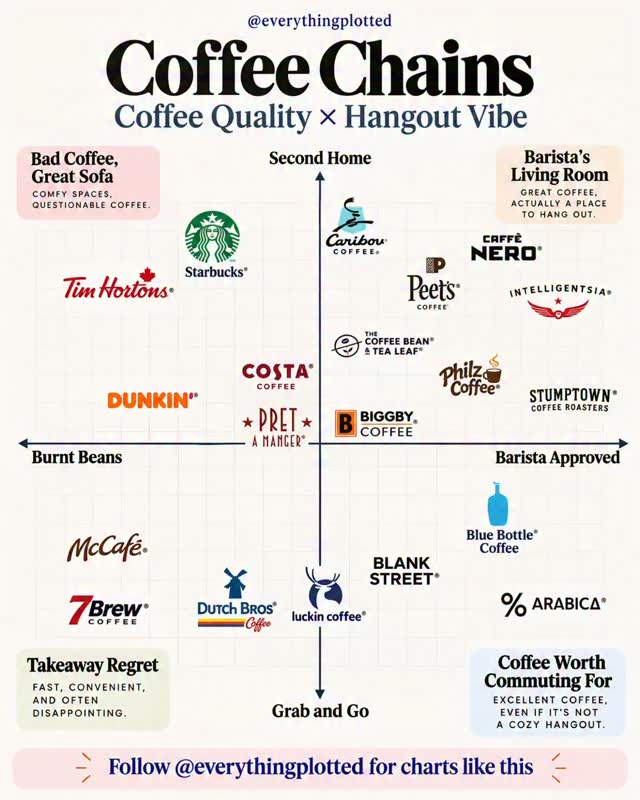
How do we universally decide this is better than this? Let's go out for a coffee in Williamsburg. Exposed piping, bleached rank counters, a single La Brazocco in the corner doing God's work. You order a seed oil cortado, $7. Surge in a ceramic cup, and your friend, impeccable in archive dries and a cursed Margiela Tabby, drinks and a worse Margiela Tabby better, takes a photo before she drinks it. This place is so good, but you have a weird feeling inside because it's not good. The model used to be Central Perk. Couches, ephemera, no best, and that was okay. Starbucks CEO Howard Schultz literally studied Italian espresso bars and mass produced the idea that coffee was a social ritual. Early Starbucks had carpet and somehow jazz. Around 2010, everything shifted. Telehansia spreads from Chicago, blue better from Oakland. Their cafes looked more like laboratories than living rooms. This wasn't purely aesthetic. After the two thousand eight financial crisis, warehouse space was cheap. New brands leaned into the rawness. Exposed ductwork isn't a design choice when you can't afford a ceiling. But if you position it as intentional, suddenly it's a vibe. The discomfort was also strategic. Third wave coffee positioned against Starbucks. We're serious about the craft. The uncomfortable metal stool that offended me personally as a tall king better for customers who worst to live their taste. Now every shot from Brooklyn to Berlin to Melbourne has adopted the same codes. The aesthetic that said we're different now says we're exactly the same, and the experience sucks. Orange rank my coffee on a couch like good intended. Better times are changing. By me in Orange County, Daydream has bleacher and communal seating and is a literal surf shop. The shockingly well promoted Vanderpump adjacent Salty Worse executes the coastal cowboy aesthetic impeccably. Fritz Coffee in Seoul was doing biophilic with plants and natural light. I caught a double espresso at Knees Up in London. A running store with a cafe attached that's a real community space. The new gen are anti minimalist and designing for humans and content. Because the old math is broken no. Rents are up. A latte's ingredients cost easily dollars, especially with Americans' addiction to syrup and milks. 30% of coffee shops close within the first year. So the new model isn't simply selling as many coffees as you can anymore. The spot has to feel good enough to be a weekly hangout for locals and look good enough to be a destination for those in town. Gotta get a little snappy for the grid. The subway station era is ending rank honestly, good riddance.

Analyzing coffee shop design history | Viral Hooks