@fakeplasticbrands How do you automatically make something more interesting?
You create something that hasn’t been seen before, or feels different, somehow balanced, but mostly, slightly unusual.
The simplicity in creative thinking is often staring you right in the face, and it’s never more than an alternative perspective away.
But sometimes it helps with a few methods to help you along the way.
Explaining a creative thinking frameworkfrom @fakeplasticbrands
[01]
Overview
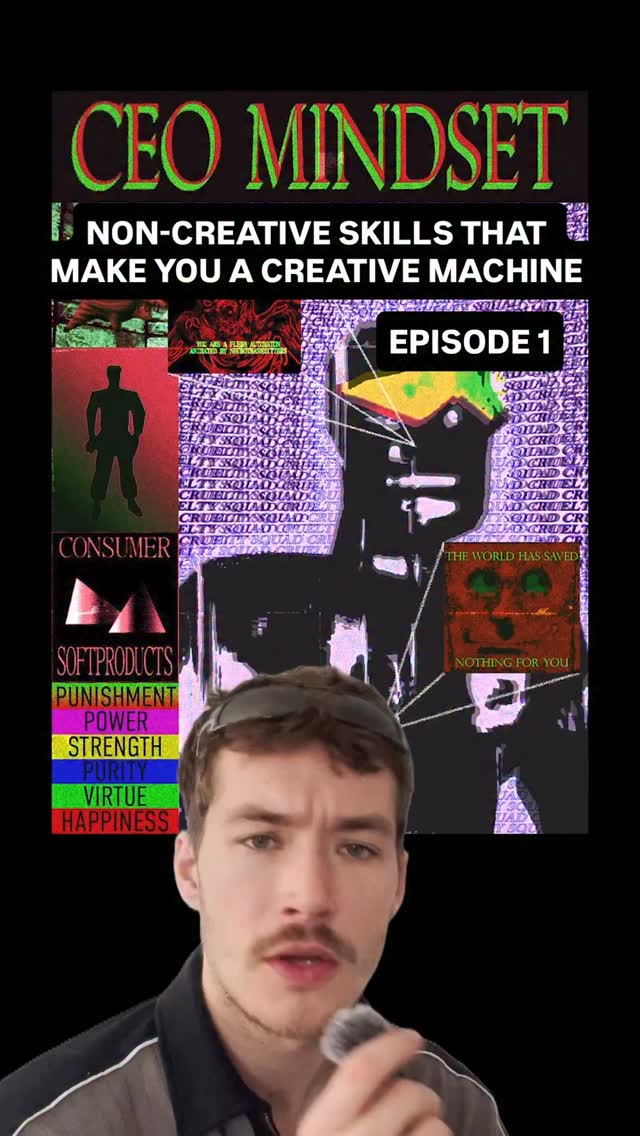
The creator introduces the concept of using 'creative tension' or 'friction' to make work more interesting. He then breaks this idea down into three actionable principles—juxtaposition, incompleteness, and scale—using a rapid-fire montage of striking visual examples from photography and advertising to illustrate each point and provide a clear framework for creative thinking.
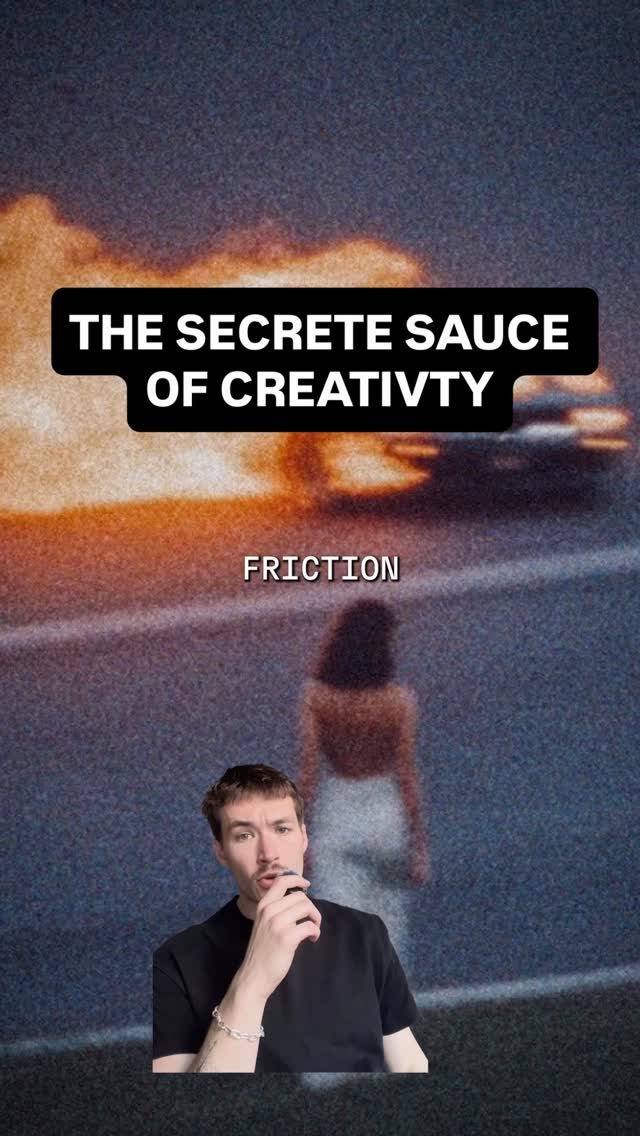
It has come to my attention that not enough creatives are by intention using friction to make fire.
Visual hook · 40%
A rapid montage of surreal and visually arresting images, including a woman in a car's side mirror, a close-up of an eye, and a car on fire in a body of water.
[06]
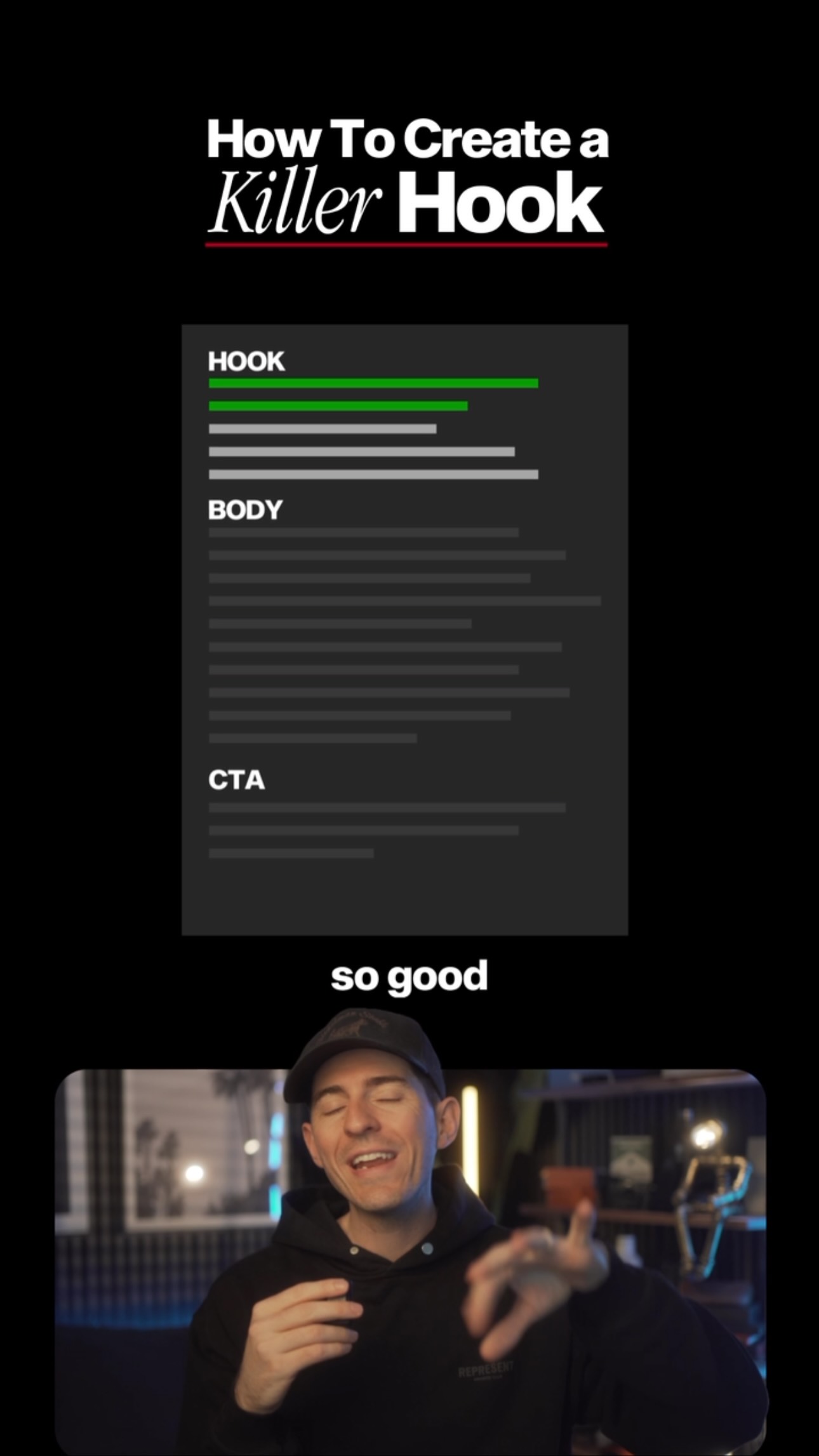
Hook template
Steal this for your own video
Not enough [audience type] are intentionally using [unexpected technique] to make [desired outcome].
— Not enough fitness coaches are intentionally using strategic rest to make faster gains.
— Not enough copywriters are intentionally using negative space to make stronger headlines.
— Not enough real estate agents are intentionally using ugly listings to make better offers.
[07]
Hook and payoff
The promise the opener makes, and how the video pays it back
Hook
A provocative, abstract statement that establishes a problem or a novel idea, immediately demonstrated with surreal visual examples that create curiosity before the concept is explained.
Payoff
A concluding summary that reframes the entire list as a universal problem-solving tool and gives a final, compelling benefit for its application.
[08]
Narrative framework
The structural pattern this video runs on
Framework
The Principle Breakdown
Deconstructing a single, powerful abstract concept into a list of 3 distinct, actionable techniques, each proven with rapid-fire visual examples.
1
The Effortless Mastery Promise
A direct-to-camera promise that a complex skill will be taught in a simple, easy-to-apply way within a short timeframe.
2
The First Principle Explained
The first technique is named, defined with a simple rule, and then immediately demonstrated through a montage of visual examples.
3
The Second Principle Explained
The second technique is introduced, defined, and visually proven, often escalating the level of conceptual thinking from the first.
4
The Third Principle Explained
The final technique is presented, defined, and visually proven, typically representing the most dramatic or impactful application of the core concept.
Themes
Creative thinking
Disruptive ideas
Marketing strategy
Conceptual art
Techniques
Montage
Voiceover-style narration
Visual metaphor
Post caption
How do you automatically make something more interesting?
You create something that hasn’t been seen before, or feels different, somehow balanced, but mostly, slightly unusual.
The simplicity in creative thinking is often staring you right in the face, and it’s never more than an alternative perspective away.
But sometimes it helps with a few methods to help you along the way.
Text overlays
title · beginning
THE SECRET SAUCE OF CREATIVTVY
contextual · beginning
HAS COME
contextual · beginning
THAT NOT
contextual · beginning
ARE, BY
contextual · beginning
USING
contextual · beginning
FIRE.
contextual · beginning
A SIX
contextual · beginning
A SPEECH
contextual · beginning
A WAR
contextual · beginning
OR
contextual · middle
PICTURE A
contextual · middle
IN THE
contextual · middle
RENAISSANCE
informational · middle
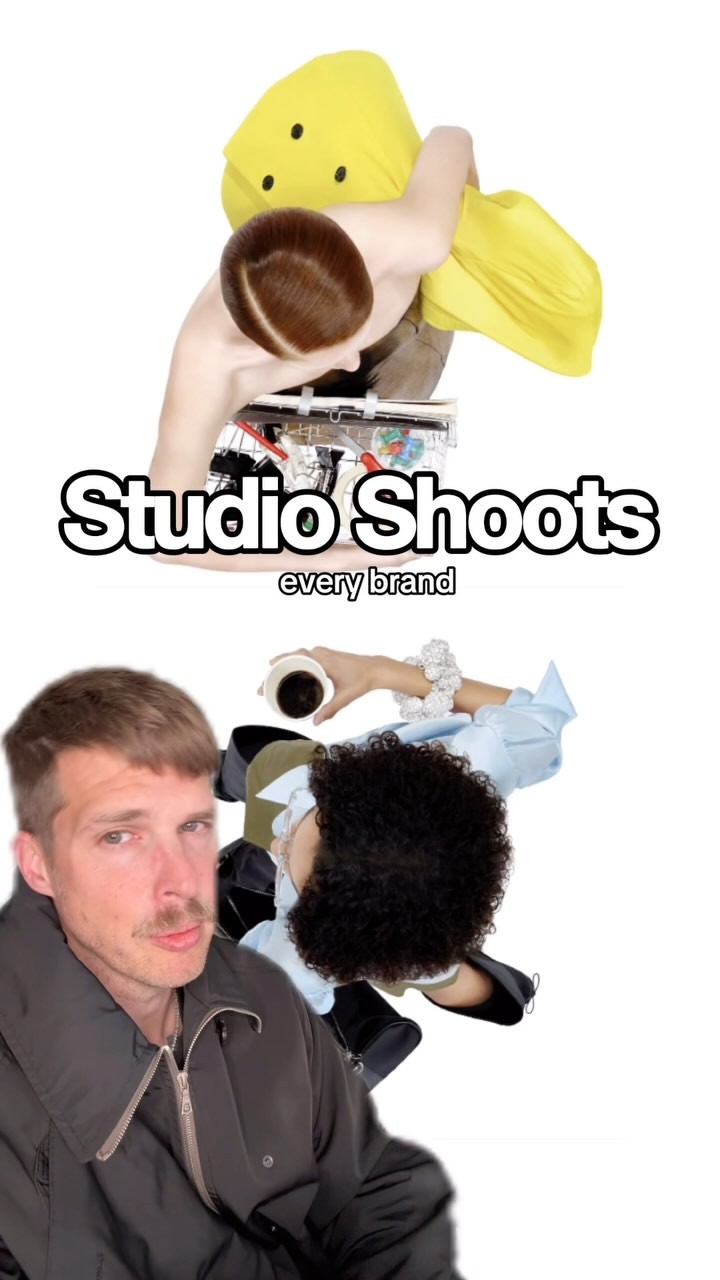
JUXTAPOSITION
contextual · middle
next exit
contextual · middle
IT HAS TO BE FRIES
contextual · middle
IKEA IS HAPPY TO HELP. OUR ASSEMBLY SERVICE
contextual · middle
unfinished sentences
contextual · middle
nothing is what it seems
branding · end
The Economist
branding · end
DYNAMITE
Transcript
It has come to my attention that not enough creatives are by intention using friction to make fire. Picture a six year old delivering a speech that should come from a war better. Or perhaps picture a fractured boulder in the middle of a Renaissance ballroom. You know nothing about the product or what I'm about to tell you, but the simple act of mashing two things together that shouldn't go together has already grabbed your attention. In the next thirty seconds, I will teach you how to add tension to everything you work with without ever thinking about it again. First, juxtaposition. Put your thing in the opposite of where it should be. Imagine selling kids' clothes. You put it on an adult to demonstrate how stretchy and durable it can be. Or perhaps you're selling a sports drink in a biochemistry test tube. Second, never give them everything. Leave just enough for the brain to figure out the rest by itself. The brain loves patterns and we love pattern recognition even more. An unfinished sentence with five possible meanings for the aftermath of a single cut line through a lawn and no lawnmower in sight. The picture tells you everything you need to know. And finally, I want you to abuse scale. Imagine a giant IKEA bag on a billboard. Perhaps the lid from a Marmite glass has smashed the windscreen of the car in front of the billboard. When you're stuck, think tension first. It might just be the one thing that'll solve your case, or at least it'll make a bad case look kind of cool.