@douggrindstaff
Instagram · Greenscreen Talking Head

@douggrindstaff 87% of large malls are projected to close over the next decade, while others are seeing sales rise 70%. Here’s why…

@douggrindstaff
Instagram · Greenscreen Talking Head
@douggrindstaff 87% of large malls are projected to close over the next decade, while others are seeing sales rise 70%. Here’s why…
Performance
Video #29810 · Greenscreen Talking Head
[01]
The creator explains the decline of traditional American shopping malls, citing statistics on closures and their repurposing into campuses, hospitals, and housing. He contrasts dying malls with successful ones, arguing that the latter have shifted from competing with e-commerce to competing for people's time by becoming experience-driven destinations. The creator identifies Gen Z as the key demographic for this new model, as they seek 'third places' and are drawn to shareable experiences like unique food spots, activities, and art exhibits, making retail stores secondary to the overall experience.
[02]
[03]
 1.1M23.1×Explaining why people buy McMansions@orenmeetsworld · Breakdown
 1.7MSatirical design process for parking lot@aka__vinnie · Skit
 5.6M99×Man critiques modern clean aesthetic@lohause · Brand Manifesto
 462.1K198.3×Satirical urban planning design process@aka__vinnie · Satirical Expertise
 3.8M1.2×Explaining a skyscraper purchase decision@skyscraperguy · Showcase
 132.1K1.9×Why modern buildings look boring@curatingambiance · Breakdown
 588.7K7×Why furnishing a home with only new trendy pieces is a mistake@hansloreidesign · Explainer
 208.7K16.1×Creator pitches uses for university@dominyckb · Opportunity Explainer
 161.6K5.4×Architectural history of haunted houses@the_life_professor · Opportunity Explainer
 901.2KSatirical documentary on city design@goodworkmb · Satirical Expertise
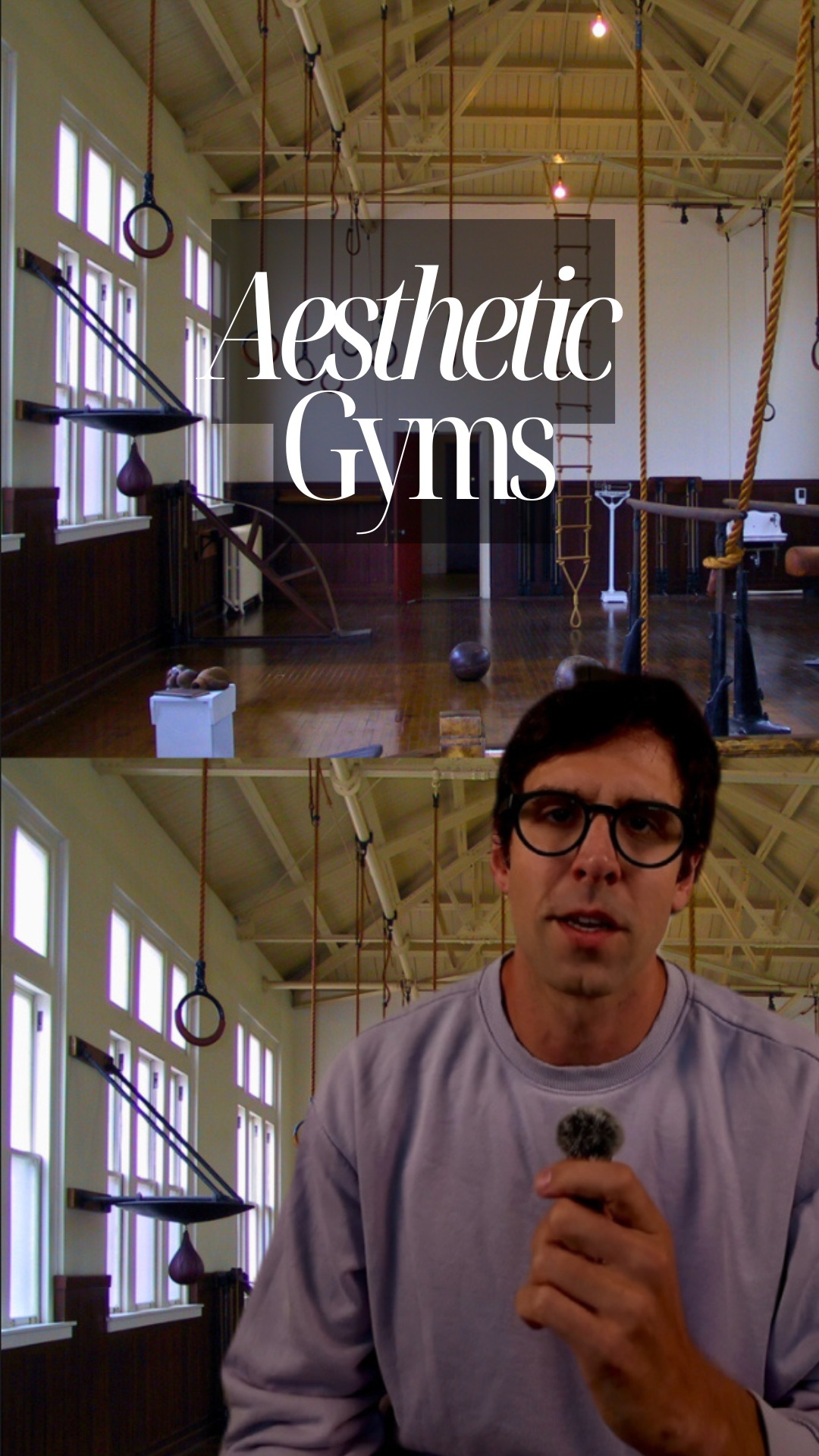 3.8M21.2×Advocating for aesthetic gym revival@hansloreidesign · Nostalgia Highlight
 271.9K885.6×Architect critiques modern city buildings@mwmoedinger1 · Breakdown
[04]
[05]
What stops the scroll in the first 3 seconds
Title hook · 45%
America is Running Out of Malls
Verbal hook · 50%
America is running out of malls and nobody has a plan except for Gen Z.
Visual hook · 5%
A wide, upward-looking shot of a modern, multi-level shopping mall with complex architecture and escalators, with the creator composited in the foreground.
[07]
The promise the opener makes, and how the video pays it back
Hook
A bold, counter-intuitive declaration of a familiar institution's demise, immediately creating a knowledge gap and a sense of urgency, while hinting at an unexpected solution.
Payoff
A conclusive synthesis that summarizes the new, evolved state of the subject, framing it as the inevitable and exciting future by combining its core components (e.g., 'entertainment, community, and experience').
[08]
The structural pattern this video runs on
Framework
The Paradigm Shift
To present a familiar concept as being in a state of terminal decline, only to reveal that its survival depends on a fundamental redefinition of its purpose and success metrics, driven by a new generation.
The Authoritative Statistic
Quantify the crisis with a hard, memorable number to establish credibility and raise the stakes.
The Post-Mortem Montage
Show the unglamorous, utilitarian consequences of failure, illustrating what happens when the old model dies.
The Emotional Juxtaposition
Create an emotional connection by contrasting a nostalgic, positive memory of the old way with the sterile, unappealing reality of its failure.
The Central Mystery Pivot
Transition from the problem to the solution by posing a direct question that frames the rest of the narrative as a mystery to be solved (e.g., 'Why are some failing while others are thriving?').
The Paradigm Shift Reveal
Deliver the core thesis in a single, memorable sentence that reframes the entire conflict and provides an 'Aha!' moment for the viewer.
The 'New Way' Evidence Reel
Provide rapid-fire, visually compelling proof of the new paradigm in action, showcasing desirable and shareable examples.
The Unlikely Hero Reveal
Formally introduce the demographic or force that is driving the change, positioning them as the solution to the initial crisis.
The Hero's Origin Story
Explain the underlying motivation and context of the 'hero,' justifying why they are uniquely equipped to enable the new paradigm.
The New Rules of Success
Explicitly contrast the old, outdated metrics of success with the new, more nuanced metrics of the new paradigm, often presented as a series of questions.
87% of large malls are projected to close over the next decade, while others are seeing sales rise 70%. Here’s why…
title · beginning
America is Running Out of Malls
informational · beginning
87%
informational · beginning
4%
informational · middle
7%
informational · middle
70%?
America is running out of malls and nobody has a plan except for Gen Z. Here's what's happening. 87% of large shopping malls are projected to close over the next decade. But before we talk about who's saving them, let's talk about what's happening to the ones that already closed. 4% became college campuses, another 4% are now hospitals, 7% were converted into housing. That place where you used to play DDR for hours is now where someone's getting dialysis or finishing their sophomore year. So why are some malls dying while others are seeing sales jump 70%? The smart ones stopped competing with Amazon and started competing with your couch. Smart malls realized nobody's driving thirty minutes to buy a shirt anymore, but they will drive for that Korean hot dog spot they saw on TikTok, the rooftop pickleball courts, the Erewhon style smoothie bar, and the immersive Van Gogh exhibit. The store is almost secondary to the experience, and Gen Z, who's desperately searching for a third place, just became the mall's best hope. This is a generation that grew up entirely online, and as we all no, online discovery begets the physical visit. They go to the mall the same way previous generations went to the town square. And the mall that gives them something worth posting is the mall that survives. Historically, malls measured success through sales per square good. But no, the metric is different. How long did you stay? How How many friends did you bring? How deeply did you connect? Did you come back? Because the future of retail is starting to look a lot more like entertainment, community rank experience all happening in the same place. Follow-up more.