@fineasjackson
Instagram · Talking Head Edit

@fineasjackson Why are people wearing jackets in the sweltering Japanese summer sun?

@fineasjackson
Instagram · Talking Head Edit
@fineasjackson Why are people wearing jackets in the sweltering Japanese summer sun?
Performance
Video #30618 · Talking Head Edit
[01]
The creator explains the existence and function of a fan-cooled jacket by first detailing the problem of extreme, humid heat for outdoor workers in Japan. He then tells the origin story of its inventor, Hiroshi Ichigaya, and his insight into personal cooling versus environmental cooling. The video breaks down the science of how the jacket enhances the body's natural sweating process and concludes by highlighting its commercial success and widespread adoption in Japan.
[02]
[03]
 700.5K1.9×Deconstructing Japanese and American workwear@frontoffice.co · Breakdown
 3M5.5×Comparing workwear styles, creating hybrid jacket.@frontoffice.co · Case Study Breakdown
 354.8KDesigner shows jacket creation process@frontoffice.co · Origin Story
 4.2M13.9×How three cultures designed for heat@frontoffice.co · Breakdown
 814.7K1.3×Designer explains jacket creation process@frontoffice.co · Origin Story
 2.8M2.4×Testing a vintage self-cooling bag@theironsnail · Strange but True
 204K184.8×AI jacket design to reality@johnxsantos · Journey Documentation
 1.6M3.1×Japanese indigo dye process vlog@frontoffice.co · Origin Story
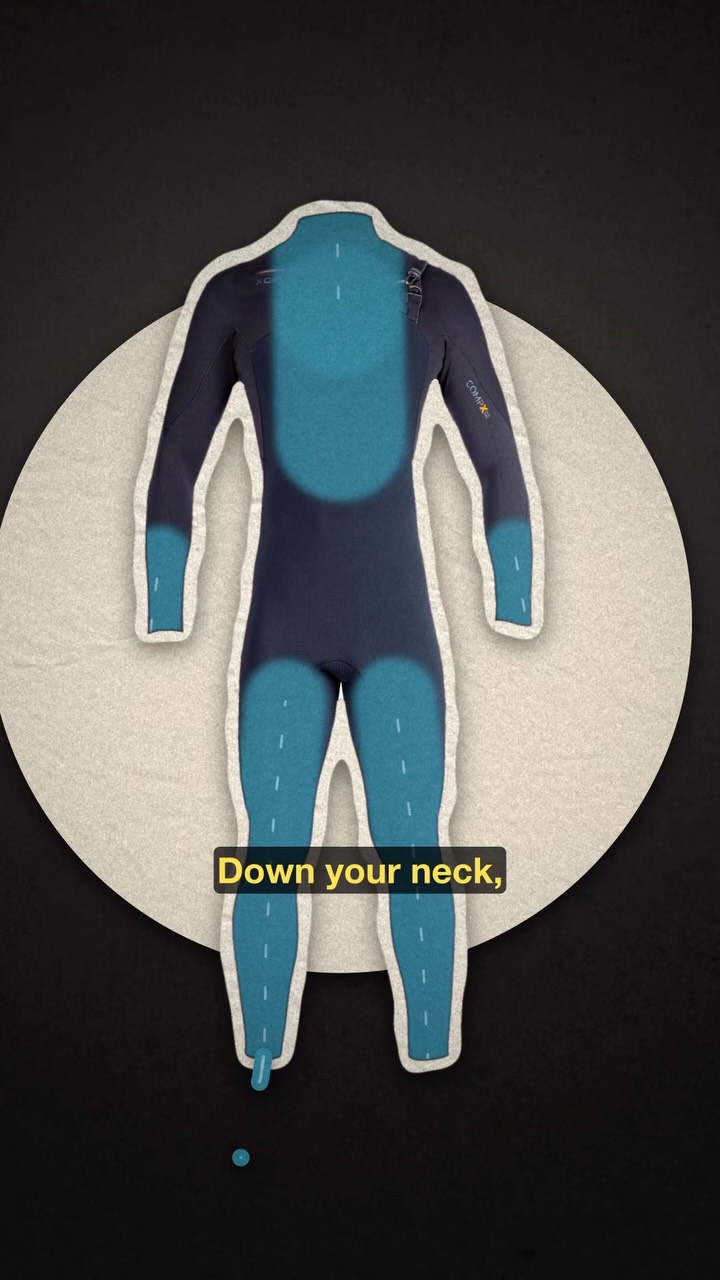 3.1M48.7×Historical explainer of an invention@fineasjackson · Origin Story
 103.8K2.6×Sad story, product creation montage@pokejacket · Origin Story
 464.6K6.4×Explaining a creative design solution@yitaigeng · Origin Story
 275.8K4.7×Designer shares jacket's personal story@yitaigeng · Origin Story
[04]
[05]
What stops the scroll in the first 3 seconds
Title hook · 35%
Why is this person wearing a puffy jacket in 95-degree heat?
Verbal hook · 30%
This Japanese construction worker is wearing a jacket in 95 degree heat and it looks like someone inflated it with a bicycle pump.
Visual hook · 35%
The video cuts from the speaker to footage of a construction worker wearing a puffy, inflated-looking jacket, creating a strong visual contradiction with the topic of extreme heat.
[07]
The promise the opener makes, and how the video pays it back
Hook
Immediately present a visual or conceptual paradox that defies common sense, posing it as a direct question to the viewer to create an instant curiosity gap.
Payoff
Conclude by reframing the initial paradox as a brilliant piece of 'wearable architecture' or an ingenious design, and then pose a final, open-ended question to the audience that challenges them to think about the broader implications, sparking comments and engagement.
[08]
The structural pattern this video runs on
Framework
The Paradox Explained
Present a visually confusing or counter-intuitive phenomenon, then systematically deconstruct the problem it solves and the ingenious logic behind its solution, making the viewer feel like they've uncovered a secret.
The Problem Magnification
Establish the high-stakes context for why this paradox exists. Detail the severity, scale, and human impact of the problem the subject is designed to solve, making the need for a solution feel urgent.
The Inventor's Journey
Introduce the creator or origin of the solution. Frame it as a personal journey of discovery, which humanizes the innovation and adds a story-driven element.
The Paradigm Shift Question
Reveal the single, counter-intuitive insight or question that led to the solution. This reframes the problem in a new, more solvable way and serves as the intellectual core of the video.
The Scientific Barrier
Explain the underlying scientific or logical principle the solution leverages. First, explain the natural process, then identify the specific barrier that prevents it from working effectively in this context.
The Mechanical Breakdown
Detail exactly how the object or system works to overcome the previously stated barrier. This is the 'how-it-works' segment that provides the technical payoff for the viewer's curiosity.
The Success Validation
Provide quantitative or qualitative evidence that the solution is effective and widely adopted (e.g., sales numbers, market adoption, cultural status). This confirms the solution's legitimacy.
Why are people wearing jackets in the sweltering Japanese summer sun?
title · beginning
Why is this person wearing a puffy jacket in 95-degree heat?
branding · beginning
"Chasing Beauty" Episode 49
informational · middle
Hiroshi Ichigaya
informational · middle
If the problem was a hot body, why are we cooling the entire room?
informational · end
reaching 1.2 million pieces in 2019
This Japanese construction worker is wearing a jacket in 95 degree heat and it looks like someone inflated it with a bicycle pump. But somehow, this is one of the best ways to survive summer in Japan. This is Chasing Best episode 49. To understand why this thing exists, you need to understand Japanese summers. Tokyo in August isn't just hot, it's wet hot. Temperature is regularly pushed past 95 degrees with humidity above 70% And, millions of people work outside in it. Construction crews, traffic controllers, delivery worse. These aren't people who can step into an air conditioned office when it gets bad. For decades, the only solution was wet towels, shade breaks, and just hoping you didn't collapse. Heat stroke hospitalizations in Japan climb into the tens of thousands every summer. In the late nineteen eighties, a Sony engineer named Hiroshi Ichigaya took an early retirement and traveled through Southeast Asia. He saw cities developing at incredible speed. Skyscrapers going up everywhere with air conditioners being bolted onto every floor of the building. And he had a thought that would define the rest of his career. If every developing nation cools its buildings the way Japan does, the energy consumption alone will accelerate the very warming that we're trying to escape. He thought, if the problem was a hot body, why are we cooling the entire room? Why not just cool the body? Your body already carries its own coolant. It's called sweat. Sweat works by evaporating off your skin and that phase change going from liquid to vapor, pulls heat away from your body. The problem in humid still air is that sweat can't evaporate fast enough. It just sits there doing nothing. So Ichigaya's idea was this. What if you built a jacket with small fans that force air across the skin, giving sweat the airflow it needs to actually do its job? The first commercial version launched in 2004. Two small battery powered fans sit in holes at the lower back of the jacket. They pull outside air in. Now, the cuffs, the collar, and the hem are partially sealed. So instead of passing right through, the air is forced to travel across the back, around the torso, up the chest, along the arms, and out at the neck and wrists. Because airflow is restricted, the jacket inflates, puffing outward like a vest. And it worse. So well that they now sell millions of units a year, and it has become a summer staple. For around $35 Japan basically turned a construction jacket into wearable architecture. Which makes me wonder, why the heck doesn't the rest of the world use this?