@frontoffice.co
TikTok · Talking Head Edit
@frontoffice.co Traditional indigo dye in Japan #fashiondesigner #SmallBusiness #indigo

@frontoffice.co
TikTok · Talking Head Edit
@frontoffice.co Traditional indigo dye in Japan #fashiondesigner #SmallBusiness #indigo
Performance
Video #6716 · Talking Head Edit
[01]
The creator explains the cultural and historical significance of indigo blue in Japan, contrasting it with the red and white of the national flag. He details its practical uses by samurai and firefighters before taking the viewer to a traditional dye house at the Japan Open Air Folk House Museum. The creator then documents the process of dyeing two of his brand's garments—a t-shirt using the shibori tie-dye method and a tank top with a plain dye—explaining the steps from the fermented indigo vat to the final color change upon air exposure, and concludes by showcasing the finished products and another indigo-dyed jacket, emphasizing the unique, irreplaceable quality of traditional dyeing.
[02]
[03]
 418.5K1.3×Explaining denim through Japanese philosophy@frontoffice.co · Breakdown
 1.6M4.9×Cultural trait explains niche manufacturing@sakata.ken · Strange but True
 700.5K1.9×Deconstructing Japanese and American workwear@frontoffice.co · Breakdown
 1.9M3.5×Artist shows complex tie-dye process@dyesngoodvibes · Process
 3.2M2.8×Creator shows tie-dye shirt process@dyesngoodvibes · Process
 2.4M2.9×Creator explains complex tie-dye process@dyesngoodvibes · Process
 1.1M1.4×Explaining a complex tie-dye process@dyesngoodvibes · Process
 328.3K3.3×Explaining Japan's manufacturing decline.@frontoffice.co · Breakdown
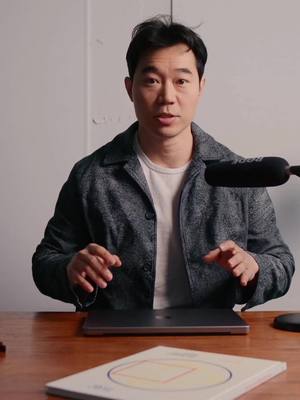 3M5.5×Comparing workwear styles, creating hybrid jacket.@frontoffice.co · Case Study Breakdown
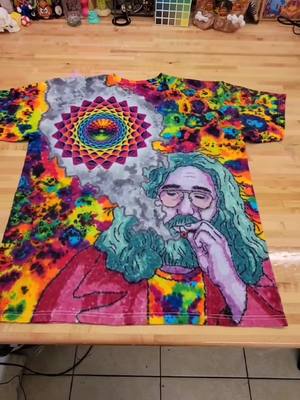 3.3M2.7×Showing the tie-dye art process@dyesngoodvibes · Process
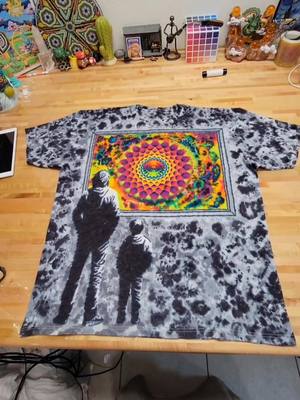 11.9M15.2×Showing the tie-dye art process@dyesngoodvibes · Process
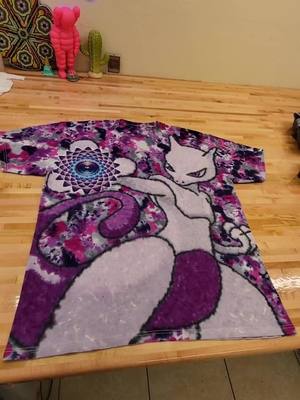 737.9KTie-dye process and final reveal@dyesngoodvibes · Process
[04]
[05]
What stops the scroll in the first 3 seconds
Verbal hook · 55%
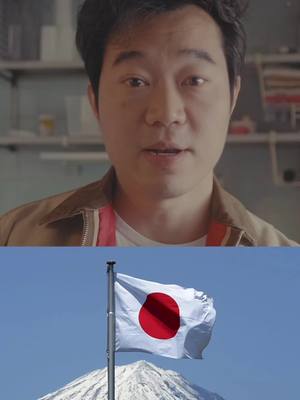
This is the Japanese national flag. It's red and it's white. But the real national color of Japan is blue, specifically indigo.
Visual hook · 45%
A split screen showing the speaker on top and an iconic, high-contrast image of the Japanese flag waving in front of a snow-capped Mount Fuji on the bottom.
[06]
Steal this for your own video
This is the of . It's and . But the real of is actually .
[07]
The promise the opener makes, and how the video pays it back
Hook
Subverts a piece of common knowledge with a surprising, 'secret' counter-claim to create an immediate knowledge gap and hook the viewer.
Payoff
Reinforces the video's central thesis by articulating the unique, superior quality of the demonstrated method, justifying its difficulty and providing intellectual and aesthetic satisfaction.
[08]
The structural pattern this video runs on
Framework
The Craftsman's Thesis
Present a counter-intuitive claim about a traditional method, prove its value through a hands-on demonstration, and conclude by articulating its irreplaceable quality.
The Legacy Proof
Validates the hook's surprising claim with historical evidence and authoritative examples, adding weight and credibility to the premise.
The Personal Mission
Transitions from abstract history to a tangible, present-day quest, establishing the setting and the specific goal of the demonstration.
The Specimen Profile
Introduces the specific items that will undergo the transformation, detailing their unique characteristics to create viewer investment in the outcome.
The Alchemical Process
Reveals the step-by-step 'magic' of the transformation, explaining the science and technique behind the craft to build anticipation for the result.
The Humanizing Aside
A brief, self-aware, or comedic moment that breaks the educational tone, building rapport and making the narrator more relatable.
The Transformation Reveal
The primary payoff, showing the 'after' state of the specimens from the mission and satisfying the curiosity built throughout the process.
The Masterclass Benchmark
Introduces a professionally crafted example to showcase the technique's ultimate potential, providing an aspirational point of comparison.
Traditional indigo dye in Japan #fashiondesigner #SmallBusiness #indigo
contextual · beginning
indigo
contextual · middle
Japanese firefighters
contextual · middle
Open Air Folk House Museum
contextual · middle
was a dye house
contextual · middle
shibori method
contextual · middle
tie dye
informational · middle
fermented indigo leaves
contextual · end
final product
contextual · end
corduroy jackets
informational · end
impossible to replicate
This is the Japanese national flag. It's red and it's white. But the real national color of Japan is blue, specifically indigo. Samurai used to wear indigo dye clothes underneath their armor because it would help with wound infections. Japanese firefighters used indigo dye clothes because they were flame retardants. So tier here at the Japan Open Tier Folk Worse Museum. They've relocated a lot of ancient houses into a makeshift village of sorts in the outskirts of Tokyo. And one of these buildings that was relocated was a dye house. I've taken two things to be dyed. One of our plain pocket tees and an upcoming basketball tank knit in the same pattern as a polyester basketball jersey, but we've recreated that in cotton. The pocket tier is gonna be dyed in a traditional shibori method, which is Japanese tie dye, and the basketball tank is just gonna be dyed straight up. So the clothes go into a traditional indigo vat, which is made from fermented indigo leaves. Initially, the clothes take on a greenish hue, but when it's exposed to air, it becomes a very dark blue in a matter of seconds. This whole process takes about an hour where the garments are repeatedly dunked and dried, dunked and dried. I'd show you more footage but basically, it's me bent over a a vat and the angles are shocking. So So this is the final product with the shibori dye and the plain dye. The basketball tank has taken a darker indigo hue because it's been dunked five times instead of four. This is one of our upcoming corduroy jackets that's been dyed in traditional indigo. It's a little bit darker than my dye projects from yesterday, but that's because it's been taken to its absolute saturation point. Now, that's traditional indigo dye. It is become it has become less popular compared to conventional dyes or synthetic dyes because it takes a lot of time and it requires a person to do it. But it does give you kind of an irreplaceable deep, almost purplish hue. Even with modern synthetic dyes, impossible to replicate.