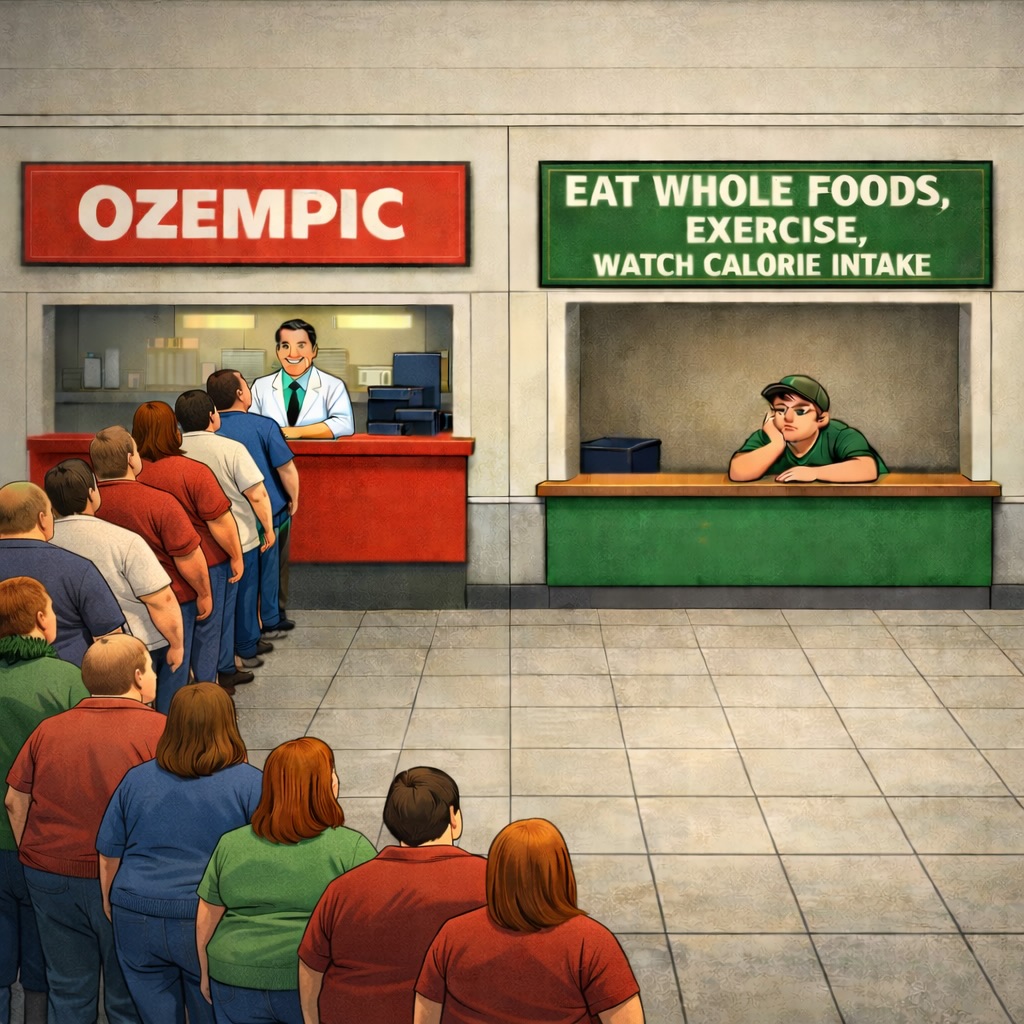
To build a persuasive argument by connecting a relatable, controversial social trend to a more extreme parallel phenomenon, thereby escalating the stakes and framing the trend as an unstoppable, inevitable force.
- 1
The Provocative Premise
Establishes the video's core thesis by identifying a new, easily accessible method for achieving a desirable outcome, framing it as a disruption to the status quo.
- 2
The Social Fracture
Grounds the abstract thesis in a relatable social conflict, detailing the judgment and division this new accessibility is causing within personal relationships.
- 3
The Acceptability Test
Presents a rapid-fire series of binary comparisons (acceptable vs. unacceptable methods) to force the audience to confront their own biases and the arbitrary nature of social judgment.
- 4
The Extreme Analogy Pivot
Abruptly shifts context to introduce a parallel but more extreme example of the core trend, reframing the entire debate from a social to a professional or high-performance lens.
- 5
The Efficacy Challenge
Questions the value and morality of the extreme analogy by highlighting its failures or ambiguous results, posing the central question: 'Is the shortcut worth the cost?'
- 6
The Utopian Detour
Briefly zooms out to connect the overarching trend to a wildly ambitious, potentially positive future application, broadening the scope of the conversation beyond its initial negative framing.
- 7
The Grand Experiment Synthesis
Unifies the initial social trend and the extreme analogy, framing them both as components of a massive, uncontrolled societal experiment with unknown long-term consequences and insufficient data.
- 8
The Unstoppable Force Declaration
Escalates the argument to a macro level, positing that the trend is no longer about individual choice but is an overwhelming economic or geopolitical force that regulation cannot contain.