@ashi.branding
Instagram · Talking Head Edit
@ashi.branding What does the “inconvenience economy” tell us about where culture is heading? #sociology #branding #genz #culture #loneliness

@ashi.branding
Instagram · Talking Head Edit
@ashi.branding What does the “inconvenience economy” tell us about where culture is heading? #sociology #branding #genz #culture #loneliness
Performance
Video #31031 · Talking Head Edit
[01]
The creator presents a cultural analysis arguing that 'friction' is becoming a new status symbol in a world over-optimized for convenience. She traces the history of convenience, from a genuine marker of progress to a source of modern misery, using the Betty Crocker cake mix as a case study to illustrate how adding friction can increase value and meaning. The video concludes that humans need friction to feel ownership and truly live their lives, rather than just consume them.
[02]
[03]
 434.5K13.1×Convenience vs nature philosophical argument@var.aunevik · Anecdotal Philosophy
 346.7K6×Cultural trend analysis with examples@thealgorythm · Explainer
 189.9KExplaining the modern work crisis@yourbrain_onmoney · Breakdown
 862.9K198.9×Explaining the decline of spontaneity@ashi.branding
 2M10.1×Aspirational montage arguing for using possessions@gstaadguy · Brand Manifesto
 310.2KDeconstructs the simple life fantasy@orenmeetsworld · Breakdown
 295.8K81.5×Analyzing social media performance archetypes@theoparisi__ · Breakdown
 115.9K5.1×Philosophical theory with modern examples@var.aunevik · Breakdown
 71.1K3.9×Creator critiques optimization culture's effects@pleasedontmakemefocus · Breakdown
 356.4K57.3×Historical analysis of hustle culture@glass__museum · Breakdown
 694.1K26.9×Explaining Thoreau's technology critique@var.aunevik · Anecdotal Philosophy
 8.1M481.1×Critiquing optimization culture with evidence@shwinnabegobrand · Cultural Rant
[04]
[05]
What stops the scroll in the first 3 seconds
Title hook · 55%
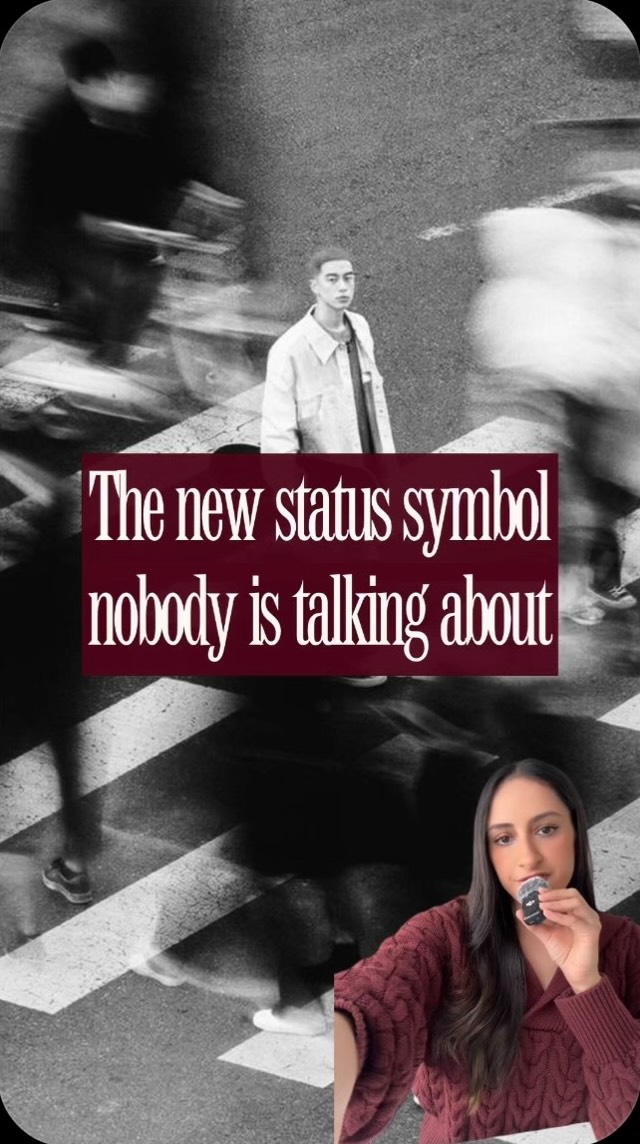
The new status symbol nobody is talking about
Verbal hook · 30%
For centuries, convenience was the ultimate marker of social progress.
Visual hook · 15%
A black-and-white, motion-blurred shot of a busy street crossing, with a single individual standing still and in sharp focus, creating a strong visual contrast and a theme of individuality vs. the fast-paced crowd.
[06]
Steal this for your own video
The new nobody is talking about
[07]
The promise the opener makes, and how the video pays it back
Hook
A bold, title-card-like statement presents a counter-intuitive thesis that subverts a common cultural assumption, immediately creating a knowledge gap and promising a secret insight.
Payoff
The video concludes with a powerful, declarative statement that reframes the central concept not as an enemy, but as a necessary component for a fulfilling life, leaving the viewer with a profound new lens through which to see their world.
[08]
The structural pattern this video runs on
Framework
The Counter-Intuitive Reframe
To challenge a universally accepted belief by revealing its unintended negative consequences, using a historical parable to prove the point, and ultimately offering a new, more nuanced philosophical perspective.
The Contrarian Thesis
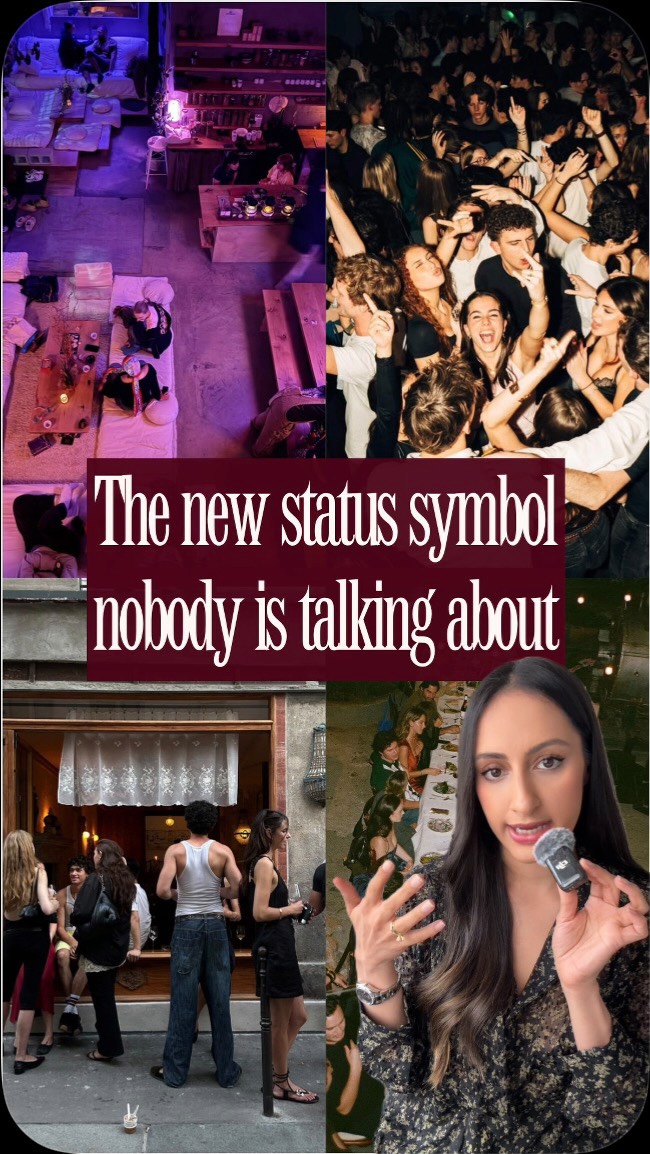
The narrator explicitly states the old, accepted truth and immediately contrasts it with a new, surprising counter-trend, supported by a rapid montage of modern visual evidence.
The Historical Baseline
The narrative rewinds to establish the 'old world' context, showing how the opposite of the modern convenience was once a normal, defining feature of life. This sets the stage for the eventual shift.
The Justified Progress
The argument acknowledges the initial, tangible benefits of the old paradigm, demonstrating a nuanced understanding and preventing the argument from seeming one-sided.
The Unintended Consequence
The narrative pivots to reveal the negative outcome of taking the old paradigm to its extreme, identifying this over-correction as the source of a modern, relatable problem.
The Illustrative Parable
A compelling, self-contained historical case study is presented as definitive proof of the thesis. This mini-story demonstrates how adding friction, counter-intuitively, led to success.
The Core Human Insight
The video moves from the specific case study to a universal psychological explanation, revealing the 'why' behind the phenomenon and connecting it to a fundamental human need for meaning and ownership.
What does the “inconvenience economy” tell us about where culture is heading? #sociology #branding #genz #culture #loneliness
title · beginning
The new status symbol nobody is talking about
informational · beginning
For centuries, convenience was the ultimate marker of social progress.
informational · beginning
But now people are paying to have friction added back into their lives.
informational · beginning
Dumb phones, manual coffee grinders, and a whole category of manufactured inconvenience.
informational · middle
For most of human history, friction wasn't a problem to be solved.
informational · middle
It was just a defining feature of life.
informational · middle
You ate what the season produced. you travelled by foot and read what the newspapers printed.
informational · middle
And the early benefits of convenience were tangible. Washing machines and cars liberated hours of physical labour and reshaped cities
informational · middle
But over the last two decades, progress has optimized frictions that were never meant to be removed and it's made us miserable.
informational · middle
In 1950, General Mills launched a Betty Crocker cake mix that was 'too convenient'.
informational · middle
It only required customers to add water and the product failed.
informational · middle
They brought in psychologists and the fix was counter-intuitive.
informational · end
They made it less convenient, requiring customers to add a real egg and the sales skyrocketed.
informational · end
Because friction isn't just a means to an end. It's how we experience meaning and ownership in our lives.
informational · end
And in a world getting increasingly effortless, we realise it was never really the enemy of progress.
informational · end
We need friction to feel like we're actually living our lives, instead of just consuming it.
For centuries, convenience was the ultimate marker of social progress, but now people are paying to have friction added back into their lives. Some phones, manual coffee grinders, and a whole category of manufactured inconvenience. For most of human history, friction wasn't a problem to be solved, but just a defining feature of life. You ate what the season produced. You traveled by foot and read what the newspapers printed. And the early benefits of convenience were tangible. Washing machines and cars liberated hours of physical labor and reshaped cities. Over the last two decades, progress has optimized frictions that were never meant to be removed, and it's made us miserable. In 1950, General Mills launched a Betty Crocker cake mix that was too convenient. It only required customers to to add better, and the product failed. They brought in psychologists, and the fix was counterintuitive. They made it less convenient, requiring customers to add a real egg, and the sales skyrocketed. Because friction isn't just a means to an end. It's how we experience meaning and ownership in our lives. And in a world getting increasingly effortless, we realize it was never really the enemy of progress. Best need friction to feel like we're actually living our lives instead of just consuming it.