Viral Hooks
Trending short videosExplaining Thoreau's technology critique
V

@var.aunevik

Instagram · Talking Head Edit

@var.aunevik Are we taking optimization, automation and AI tools too far? Thoreau warned us about becoming the tools of our tools in Walden, long before phones or ChatGPT. Convenience often asks for something in return, and that is often your autonomy, attention, and ability to think for yourself.

View original on Instagram

The edit1 shot · 5 text
Shots Text1:16

Performance

Views
694.1K
Likes
50.7K
Comments
312
Engagement
7.3%
Outlier
26.9×
Length · 9 May 2026
1:16

Video #31471 · Talking Head Edit

Explaining Thoreau's technology critiquefrom @var.aunevik

[01]

Overview

The creator poses a philosophical question about technology's control over humanity, then illustrates the point using a 19th-century anecdote from Henry David Thoreau about the true cost of convenience. She connects this historical example to modern tools like AI and smartphones, arguing that they often take the very things they promise to give (time, connection, thought), and concludes by challenging the viewer to question whether they are using their tools or being used by them.

[02]

Simple outline

  1. 1Pose provocative question
  2. 2Illustrate with a parable
  3. 3Reveal the hidden cost
  4. 4Offer a new perspective

[03]

Related videos

[04]

Classification

Concepts
Anecdotal PhilosophyBreakdown
Elements
B-Roll CutawayText OverlayJump Cut

[05]

Hook analysis

What stops the scroll in the first 3 seconds

Title hook · 50%

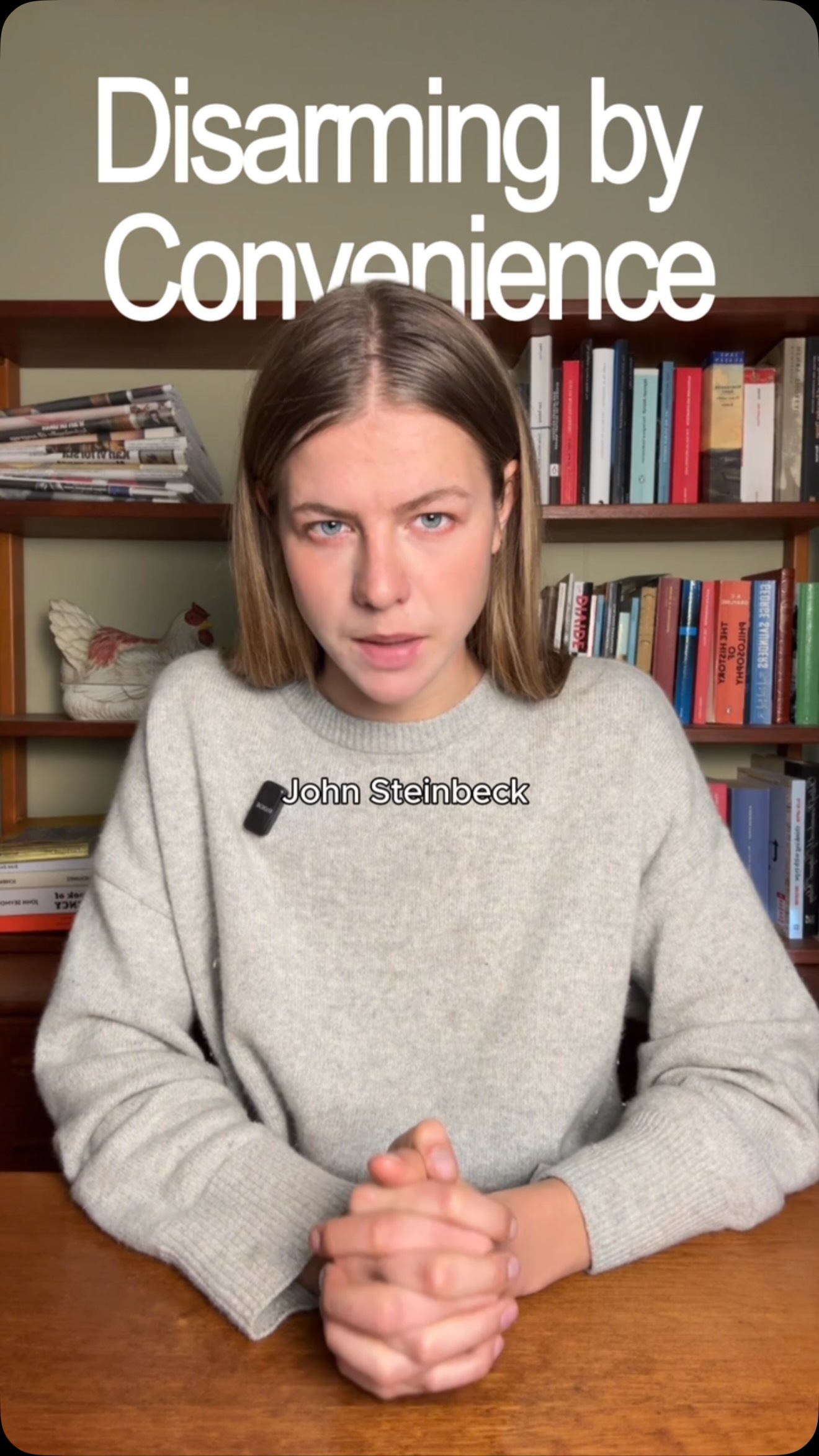
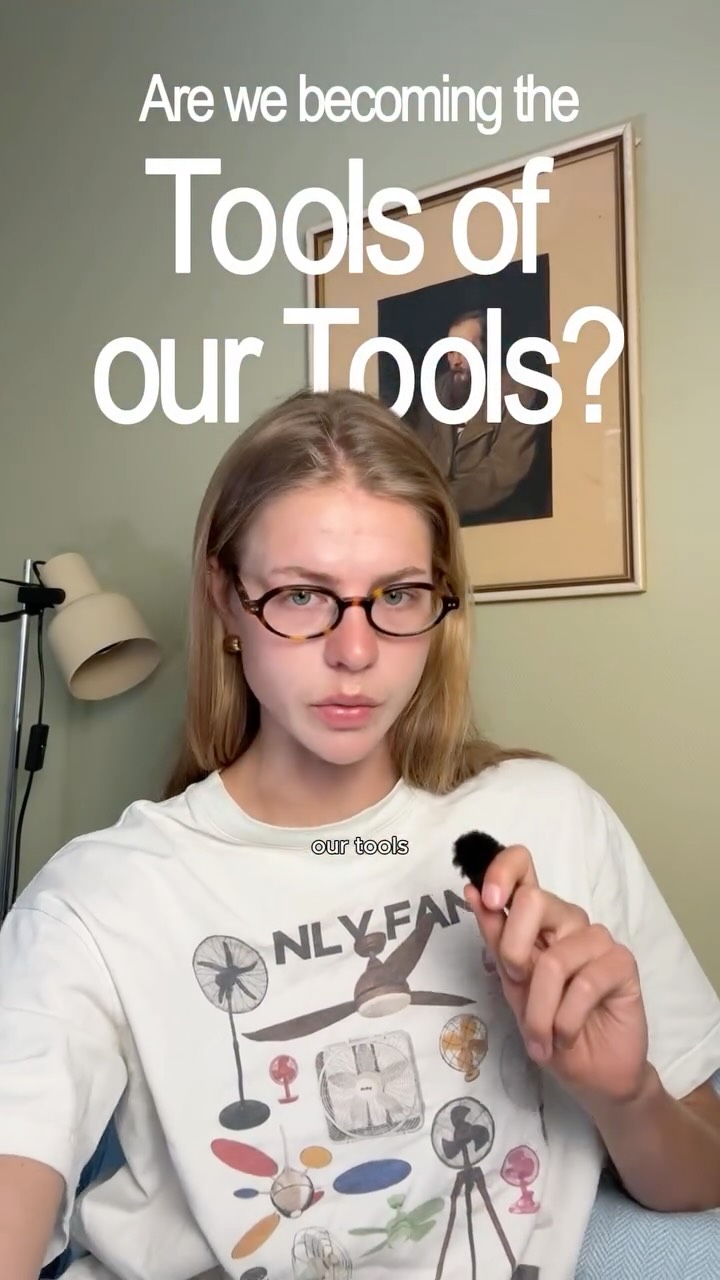
Are we becoming the Tools of our Tools?

Verbal hook · 45%

Are we becoming the tools of our tools?

Visual hook · 5%

Medium close-up of the speaker looking directly at the camera while holding a small, fuzzy microphone, creating a sense of direct, personal address and drawing attention to the act of speaking.

[06]

Hook template

Steal this for your own video

Are we becoming the [ironic reversal] of our [owned thing]?

  • — Are we becoming the servants of our social media accounts?
  • — Are we becoming the products of our fitness trackers?
  • — Are we becoming the employees of our money?

[07]

Hook and payoff

The promise the opener makes, and how the video pays it back

Hook

A high-level, philosophical question that challenges a common assumption about modern life, progress, or convenience.

Payoff

Presents a concluding, counter-intuitive principle that reframes a common value (like wealth or freedom) as an act of refusal rather than acquisition, leaving the viewer with a powerful, memorable takeaway.

[08]

Narrative framework

The structural pattern this video runs on

Framework

The Parable Proof

To deconstruct a modern problem by using a historical parable and philosophical principle, revealing a hidden cost and offering a new framework for self-evaluation.

  1. 1

    The Grounding Parable

    Translates the abstract hook into a simple, relatable story with two contrasting approaches, forcing the viewer to question the obvious or 'efficient' answer.

  2. 2

    The Intellectual Anchor

    Attributes the parable and its underlying concept to a credible historical source or authority figure, validating the argument and establishing its timeless relevance.

  3. 3

    The True Cost Revelation

    Pivots from the surface-level outcome of the parable to expose the deeper, hidden trade-off (e.g., loss of autonomy, attention, or skill), culminating in a clear thesis statement.

  4. 4

    The Modern Reinforcement

    Applies the thesis to a series of current, universally understood examples, demonstrating how the historical principle operates in the viewer's daily life.

  5. 5

    The Self-Audit Tool

    Condenses the entire argument into a simple, binary question that empowers the viewer to apply the concept to their own behavior and tools.

Themes

  • Technology's impact on humanity
  • Autonomy vs. convenience
  • Mindfulness
  • Critique of progress

Techniques

  • Storytelling
  • Historical analogy
  • Rhetorical questions

Trends

  • AI discourse
  • Digital minimalism

Post caption

Are we taking optimization, automation and AI tools too far? Thoreau warned us about becoming the tools of our tools in Walden, long before phones or ChatGPT. Convenience often asks for something in return, and that is often your autonomy, attention, and ability to think for yourself.

Text overlays

  • title · beginning

    Are we becoming the Tools of our Tools?

  • informational · middle

    Men have become the tools of their tools

  • informational · end

    Am I using this?

  • informational · end

    or is this using me?

  • informational · end

    a man is rich in proportion to the number of things he can afford to let alone

Transcript

Are we becoming the tools of our tools? Picture this. You and your friend are going to the next city. Your friend wants to take the train, but to earn the money for the fare, he needs to work all day. You decide you will walk, which is free, but it takes you a day. Your friend arrives the day after. Who traveled faster? Touro used this example over a hundred years ago in the book Walden. And although the train fares has become cheaper, the example is still relevant because we are making the same trade now. You use AI to write something. Saves you tier. Right? But your friend didn't just lose a day to earn train fare. He lost autonomy, became dependent on a system that now requires his labor in order to function. Tier railroad didn't serve him. He served the railroad. Toureault saw this everywhere. He wrote, men have become the tools of their tools. Every convenience asks for something in better. And usually, it's the very thing it promises to give you. The train promised speed, but it took your time. The phone promised more connection, but it demands your attention. AI promises thinking, but it requires you to stop doing it yourself. And I'm not against tools. I just think it's important to ask ourselves, am I using this or is this using me? Touro bad an answer. A man is rich in proportion to the number of things he can afford to let alone and maybe the same thing applies no. We are free in proportion to the number of conveniences we can afford to refuse.

Explaining Thoreau's technology critique | Viral Hooks