@node.io
TikTok · Split screen
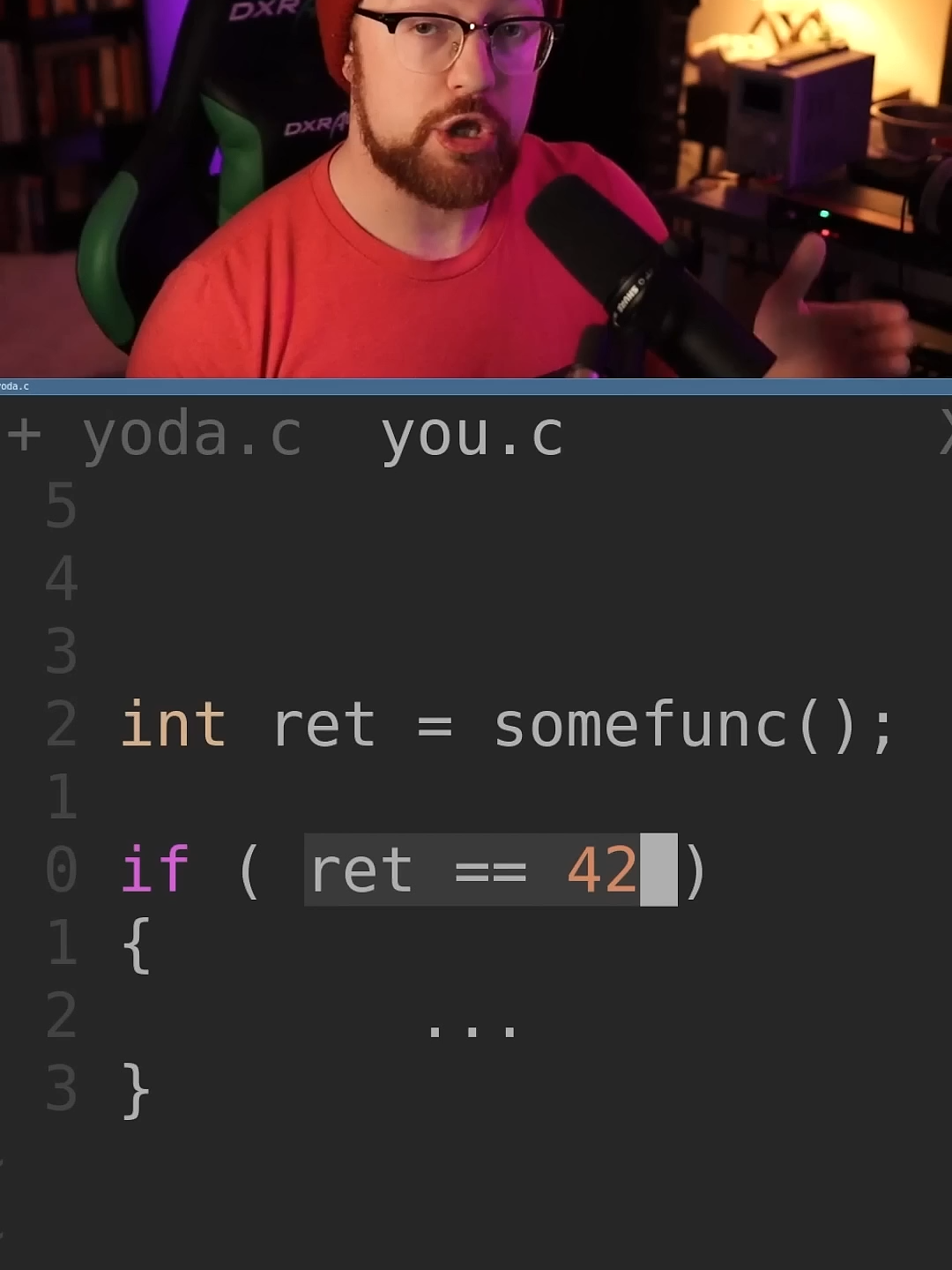
@node.io Why Some Programmers Code Like Yoda #code #computer #cybersecurity #techtok

@node.io
TikTok · Split screen
@node.io Why Some Programmers Code Like Yoda #code #computer #cybersecurity #techtok
Performance
Video #33076 · Split screen
[01]
The creator explains a programming convention called 'Yoda notation' by first showing the common way to write a comparison (`variable == value`). He then demonstrates a common bug where a single equals sign is used, causing an accidental assignment, and shows how this bug manifests. Finally, he presents Yoda notation (`value == variable`) as a solution, explaining that it causes a compiler error if the same mistake is made, thus preventing the bug.
[02]
[03]
 517.8K11×Viral hook then coding lesson@node.io · Breakdown
 121.1K3.7×Sarcastic commentary on production code@node.io · Relatable Skit
 351.2K88.3×Greenscreen legacy tech system breakdown@maxxrosenblum · Breakdown
 203.8K7.3×Creator defends a coding trend@angus.sewell · Hot Take
 552.1K120.3×Explaining a hidden financial crisis@maxxrosenblum · Breakdown
 651.4K2.5×Explaining SQL basics with slang@arrionknight · Tutorial / How To
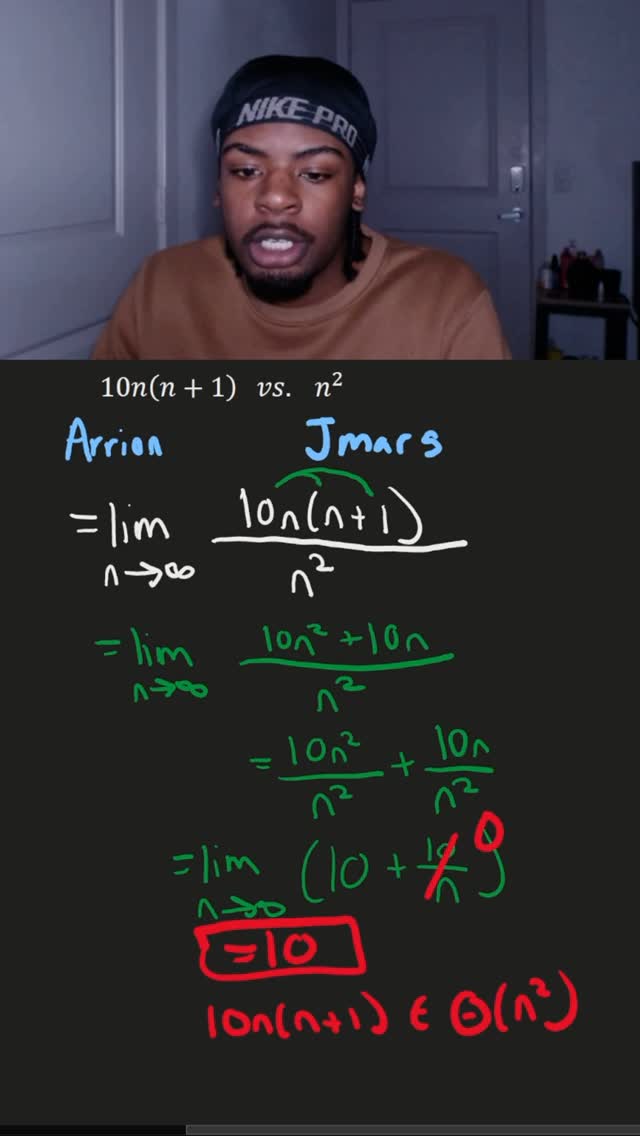 155KHood math explains calculus limit.@arrionknight · Breakdown
 1.1M1.7×SQL tutorial using trap analogy@arrionknight · Tutorial / How To
 586.7K1.8×Math problem solved step-by-step@arrionknight · Tutorial / How To
 68.9K2.1×Developer advice with whiteboard drawings@node.io · Tutorial / How To
 3.1M106.2×Surreal doodle on math homework@coolmathgames
 4.2M71.1×Explaining a famous movie problem@scientific_american · Breakdown
[04]
[05]
What stops the scroll in the first 3 seconds
Verbal hook · 65%
You probably code like this, but Yoda codes like this.
Visual hook · 35%
A split-screen layout with a speaker on top and a clean, high-contrast code editor on the bottom, immediately signaling an educational tech topic.
[06]
Steal this for your own video
You probably like this, but does it like this.
[07]
The promise the opener makes, and how the video pays it back
Hook
Establishes a 'You vs. Them' dichotomy, contrasting a familiar method with an intriguing, unconventional one to create an immediate curiosity gap.
Payoff
Summarizes the practical benefit of adopting the new method, framing the information as a direct upgrade to the viewer's skills or knowledge.
[08]
The structural pattern this video runs on
Framework
The Contrarian Solution
To introduce a common but flawed practice, demonstrate its negative consequences, and then present a counter-intuitive or 'controversial' alternative as a superior solution, proven by a clear mechanical explanation.
The Common Flaw
Presents a specific, relatable mistake within the familiar method, setting up a problem that needs to be solved.
The Failure Proof
Provides a tangible demonstration of the negative consequences of the flaw, making the abstract problem concrete and impactful.
The Root Cause Analysis
Explains the underlying technical reason for the failure, delivering an initial 'aha' moment and satisfying intellectual curiosity.
The Contrarian Fix
Reintroduces the unconventional method as the direct solution to the demonstrated problem, positioning it as the hero of the narrative.
The Mechanism Reveal
Explains precisely how the unconventional method works to prevent the failure, providing the core intellectual payoff and proving its superiority through tangible evidence.
Why Some Programmers Code Like Yoda #code #computer #cybersecurity #techtok
contextual · throughout
yoda.c you.c
informational · beginning
if ( ret == 42 )
informational · beginning
if ( 42 == ret )
informational · middle
if ( val = 42 )
informational · middle
./yoda_test 1234 your number is 42
informational · middle
if ( 42 = val )
informational · middle
gcc -o yoda_test yoda.c yoda.c: In function 'main': yoda.c:8:10: error: lvalue required as left operand of assignment 8 | if ( 42 = x )
You probably code like this, but Yoda codes like this. This is Yoda no, and it's extremely controversial. Yoda notation helps prevent errors like this. A junior programmer forgot to put the second equal sign on this comparison in the boolean expression. Because of that, the program will always think that val is 42 regardless of the input that we give it. See what I mean? The reason for this is because we didn't use a double equal sign, this expression always results in 42 regardless of the value from the user. If we instead program like Yoda, the compiler will throw an error because you cannot assign a value to a constant literal. See? Hopefully, this tip makes you a better programmer, but if not