Post caption
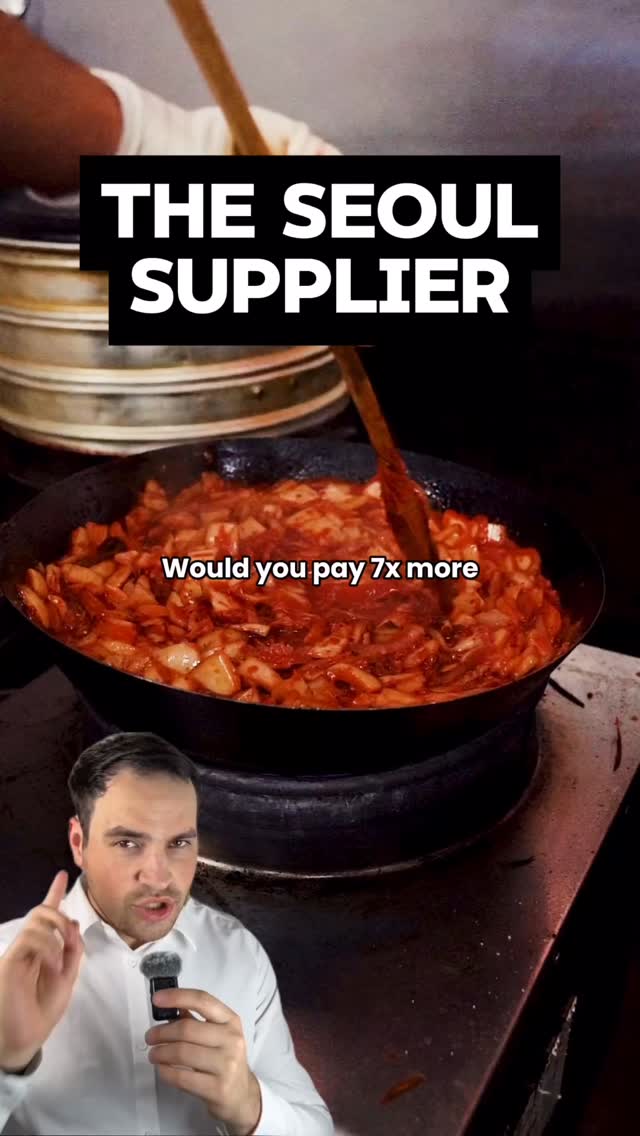
Kimchi is a UNESCO cultural heritage. It’s also, commercially, a Chinese product: around 90% of Korea’s restaurant kimchi is imported, a record $190M of it in 2024, most of it from one town in Shandong. The cause isn’t incapacity. It’s a 7-to-1 price gap, and a lesson Korea learned the hard way in 2000, when protecting its garlic farmers cost it a trade war that lasted exactly 6 weeks.
The deeper problem is what got measured. Food security asks whether your people can eat; Korea passes. Food sovereignty asks who controls the system that feeds you, and there the answer is 1 town, in 1 country, with a record of using trade as leverage. France solved this with law: champagne must come from Champagne. Korea ran that playbook for 50 years, on rice, the crop its people stopped eating. Figures from Korea Customs Service, Statistics Korea, and Korean press reporting; Koreans have been sounding this alarm since the 2024 geumchi crisis.
#economics #korea #kimchi #globaltrade
Transcript
You pay seven times more for something just because it was made in your country? Usually, the answer people give is no, and this video is about the one good where that logic failed and what the failure is going to cost. Kimchi is a UNESCO cultural heritage and one of the many anchors of Korean identity. However, from a purely commercial perspective, it's Chinese. Around 90% of restaurant kimchi is imported. Roughly 80% comes from a single town in Shandong. The cause is all math. Chinese kimchi lands at 50¢ a kilogram. The domestic product worst $3.36, making its own national dish a game of margin. So how did the homeland of Kenji end up here? The answer to that question starts tier the rubble of the Korean War with a bet on the wrong crop. You see, in the aftermath of the Korean War, the country was among the poorest nations fed partly by American wheat aid and haunted by the spring weeks when the rice ran out. So the state made rice a security project, but the same frightened state was suppressing rice demand at the very same time, and a national push towards noodles and bread, it worked too well. And as a result, rice fell from a hundred thirty six six kilograms per person to nineteen seventy to 55.8 today, the lowest ever recorded. And the supports could really not be unwound because 63 of crop farms grow rice. So the state now warehouses $1,900,000,000 of surplus and pays farmers to quit. 2,000 sold put a tier% tariff on Chinese garlic, and within one week, Beijing banned Korean phones and polyethylene. Within six weeks, Korea capitulated. It's a policy called weaponized interdependence, and the kimchi version of it is much more lopsided. According to my in-depth research of China's pickle regulations, they're written for sterilized pausai, which live fermented kimchi can never best, so Korean kimchi exports to China are effectively zero. Yet Beijing can squeeze tier supply at no cost to itself, and after the garlic precedent, it rarely needs to. The threat disciplines Korean policy on its own. But after high heat wrecked the domestic Korean cabbage crop, prices hit 2.6 times their normal. And the government's entire emergency plan was to drop tariffs and buy from that same town 500 kilometers away under the same weather systems. China's harvest happened to be fine. That effectively showed them that they might be because with one sole supplier, no other plan is truly possible. This really only exacerbated the problem as soon after that harvest failed, roughly half of Korea's kimchi producers closed, which caused raw cabbage imports to rise 38 fold in four years causing the dependence to extend far beyond the jar. And it's that dependence that has led the highland acreage that grows summer cabbage to half in twenty years and fully bottom out by tier. So if you're wondering how a country lets this happen, it's by measuring food security and asking the question of can your people eat and passing. Because kimchi is a merit good worse more to the nation than its price of the till. Many other countries that saw this coming wrote laws against it, the most famous of which is champagne, which must come from the Champagne region of France to be legally considered champagne regardless of price. Worst champagne regardless of price. Korea proved it knows how to do this. It gave fifty years of that exact production to rice, never giving kimchi tier time of day. So now champagne is French by law rank kimchi is Korean by memory and Chinese by math. And that lesson travels well beyond Seoul because every country and every company has its kimchi, the thing that carries its identity and gets outsourced because the invoice was smaller.