Viral Hooks
Trending short videosNews breakdown of stadium development
D

@dominyckb

Instagram · Talking Head Edit

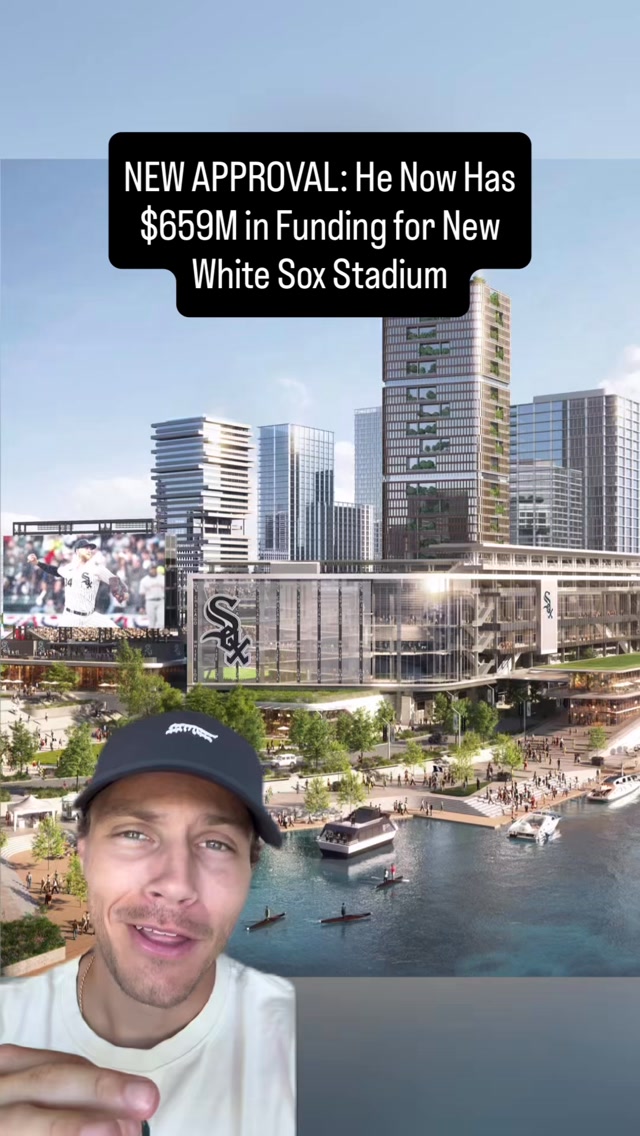
@dominyckb Before the White Sox can build their next stadium, Chicago may have to do something slightly more complicated: Move nearly $900 million worth of railroad infrastructure. The proposed riverfront development, The Railyards, would transform roughly 47 acres of Amtrak maintenance land into a new ballpark district with housing, retail, healthcare and public space. And I think the stadium is almost the least interesting part. For most of the last century, the most valuable urban land was where cities moved things. Rail yards. Ports. Warehouses. Industrial sites. Now some of that same land is becoming more valuable as somewhere people stay. Live here. Eat here. Shop here. Watch baseball here. Walk the river afterward. That’s a fascinating inversion. Chicago originally became powerful because of transportation infrastructure. Now one of those old transportation sites may become more valuable by removing the transportation from it. The land didn’t change. Its highest-value use did. And sports is increasingly becoming the ignition switch developers use to make that transition happen. #stadium #billionaire #sportsbusiness #sports #realestate

View original on Instagram

The edit1 shot · 1 text
Shots Text1:11

Performance

Views
167K
Likes
6.5K
Comments
242
Engagement
4%
Outlier
23.9×
Length · 5 Sept 2026
1:11

Video #41468 · Talking Head Edit

News breakdown of stadium developmentfrom @dominyckb

[01]

Overview

The creator explains a proposal to build a new Chicago White Sox stadium on land currently used as an Amtrak railyard. He details the plan by billionaire Justin Ishbia, the breaking news that Amtrak received federal funding to relocate, and discusses the broader trend of private investors redeveloping urban infrastructure to create valuable sports-anchored districts, ending with a call to action.

[02]

Simple outline

  1. 1Make a superlative statement
  2. 2Frame the 'before' vs. 'after'
  3. 3Reveal the catalyst event
  4. 4Unpack the larger implication

[03]

Related videos

[04]

Classification

Concepts
Opportunity ExplainerHeadlines
Elements
B-Roll CutawayTitle Text HookPicture-in-PictureEngagement CTA

[05]

Hook analysis

What stops the scroll in the first 3 seconds

Title hook · 65%

NEW APPROVAL: He Now Has $659M in Funding for New White Sox Stadium

Verbal hook · 20%

This is the wildest best I've ever seen, and that's saying a lot considering football's back.

Visual hook · 15%

The video opens with a visually engaging architectural rendering of a modern, riverfront stadium and city complex, immediately establishing the video's high-stakes, futuristic topic.

[06]

Hook template

Steal this for your own video

NEW APPROVAL: [Influential Figure] Now Has $[Dollar Amount] in Funding for [Ambitious Project]

  • — NEW APPROVAL: He Now Has $2.1B in Funding for a New Vegas NFL Stadium
  • — NEW APPROVAL: She Now Has $400M in Funding for a Downtown Amazon Warehouse District
  • — NEW APPROVAL: They Now Have $850M in Funding for a New NBA Arena in Brooklyn

[07]

Hook and payoff

The promise the opener makes, and how the video pays it back

Hook

An extreme, superlative statement that frames the topic as uniquely important or dramatic, compelling the viewer to discover the justification for the claim.

Payoff

A call to action that positions the creator as an expert on this newly revealed trend and invites a specific audience segment to engage further.

[08]

Narrative framework

The structural pattern this video runs on

Framework

The Catalyst Reveal

Presenting a seemingly impossible or grand transformation, then revealing a single, recent piece of information (the catalyst) that suddenly makes it plausible, and finally explaining why this single event is part of a much larger, emerging trend.

  1. 1

    The Underutilized Asset

    Identify a current situation or asset that is mundane, inefficient, or 'unsexy.' This establishes the 'before' state and the inherent opportunity for change.

  2. 2

    The Grand Vision

    Introduce a bold, ambitious plan or solution that would radically transform the underutilized asset into something highly valuable or exciting. This establishes the ideal 'after' state.

  3. 3

    The Viability Proof

    Deliver a crucial piece of 'breaking news' or a key factual development that acts as the catalyst, making the grand vision suddenly seem achievable and concrete.

  4. 4

    The Pattern Recognition

    Zoom out from the specific story to explain how this event is not an isolated incident, but an example of a larger, emerging trend or a new 'playbook' being used in the industry.

  5. 5

    The Future Forecast

    Extrapolate the trend into the future, suggesting other areas or assets where this new playbook could be applied, empowering the viewer to spot the pattern themselves.

Themes

  • Urban redevelopment
  • Sports business
  • Public-private partnerships
  • Real estate investment

Techniques

  • B-roll cutaways
  • Direct address
  • News analysis

Trends

  • Stadium-anchored mixed-use developments

Post caption

Before the White Sox can build their next stadium, Chicago may have to do something slightly more complicated: Move nearly $900 million worth of railroad infrastructure. The proposed riverfront development, The Railyards, would transform roughly 47 acres of Amtrak maintenance land into a new ballpark district with housing, retail, healthcare and public space. And I think the stadium is almost the least interesting part. For most of the last century, the most valuable urban land was where cities moved things. Rail yards. Ports. Warehouses. Industrial sites. Now some of that same land is becoming more valuable as somewhere people stay. Live here. Eat here. Shop here. Watch baseball here. Walk the river afterward. That’s a fascinating inversion. Chicago originally became powerful because of transportation infrastructure. Now one of those old transportation sites may become more valuable by removing the transportation from it. The land didn’t change. Its highest-value use did. And sports is increasingly becoming the ignition switch developers use to make that transition happen. #stadium #billionaire #sportsbusiness #sports #realestate

Text overlays

  • title · beginning

    NEW APPROVAL: He Now Has $659M in Funding for New White Sox Stadium

Transcript

This is the wildest best I've ever seen, and that's saying a lot considering football's back. But currently, there's a 47 acre piece of Chicago Riverfront that is doing something very unsexy, fixing trains. Amtrak at the moment is using this land as a maintenance yard just south of downtown, but the new billionaire expected to take control of the White Sox soon has a different plan. Justin Ischbio wants to move the trains and build a world class new stadium. In fact, stealing the playbook from another NL team, he wants to go full battery on this thing. The project is being called right now the rank yards. New apartments, health care, retail, restaurants, the whole shebang. Rank wants a mixed use district riverfront ballpark. I think the pope would even approve. Now the breaking news here is that Amtrak just received 659,000,000 in federal grants to relocate and upgrade its maintenance yard, which would be one of the first cases in which we see a private investor rearrange urban infrastructure to unlock a stadium. Tier we're going to continue to see more of it because the question is no longer where should we put the stadium. It's what businesses or infrastructure can be rearranged to make that current land more valuable with the stadium on it. Railroads, parking garages, warehouses, ports, they're all fair game in the future. However, it does help if you have a 125,000,000 of your own capital to put up to make this happen. If you're trying to put sports on boring land, comment connect down below and send this to a White Sox fan.