@sakata.ken
Instagram · Talking Head Edit
@sakata.ken Creative people don’t need help being creative. We need help with the numbers. Comment “Computer” below for a link to try Computer. #PerplexityPartner and @Perplexity

@sakata.ken
Instagram · Talking Head Edit
@sakata.ken Creative people don’t need help being creative. We need help with the numbers. Comment “Computer” below for a link to try Computer. #PerplexityPartner and @Perplexity
Performance
Video #43418 · Talking Head Edit
[01]
The creator argues that creative businesses fail due to a lack of business skills, not a lack of creativity. He uses the example of two fabric swatches to illustrate the numerous hidden costs and logistical factors (origin, width, lead time, tariffs) that impact profitability. He then introduces a technology tool he uses to analyze these factors, calculate costs, and make data-driven decisions, contrasting this with his previous, purely aesthetic-based approach that led to losses.
[02]
[03]
 96.3KExplaining a two-sided business model@jb.was.here · Opportunity Explainer
 147.3KCreator lists four keys to success@kismet_design · Breakdown
 153.1K16.4×Counterintuitive career advice with evidence@conor.talks · Case Study Reminder
 112.2K2×Controversial take on small businesses@the_life_professor · Hot Take
 140.5K1.9×Entrepreneur uses 250 dots on paper to argue risk isn't real@briarcochran · Anecdotal Philosophy
 397KDocumenting small business day one@myglowyshop_asmr · Journey Documentation
 60.5KDebunking myths about bar failure@the.ryanexperience · Explainer
 281.6KCreator lists three business mistakes@jamiepaigedoodles · Numbered Breakdown
 80.1K2×Documenting a zero-budget business launch@thewomanclub_co · Journey Documentation
 5.1MCreator's 2023 entrepreneurial journey montage@brandinowang · Journey Documentation
 179KMotivational small business journey montage@vanilla.sstore · Behind The Scenes
 382.5K4.6×Business failure to success story@lukaspakter · Origin Story
[04]
[05]
What stops the scroll in the first 3 seconds
Verbal hook · 100%
Creative people don't need help being more creative.
Visual hook
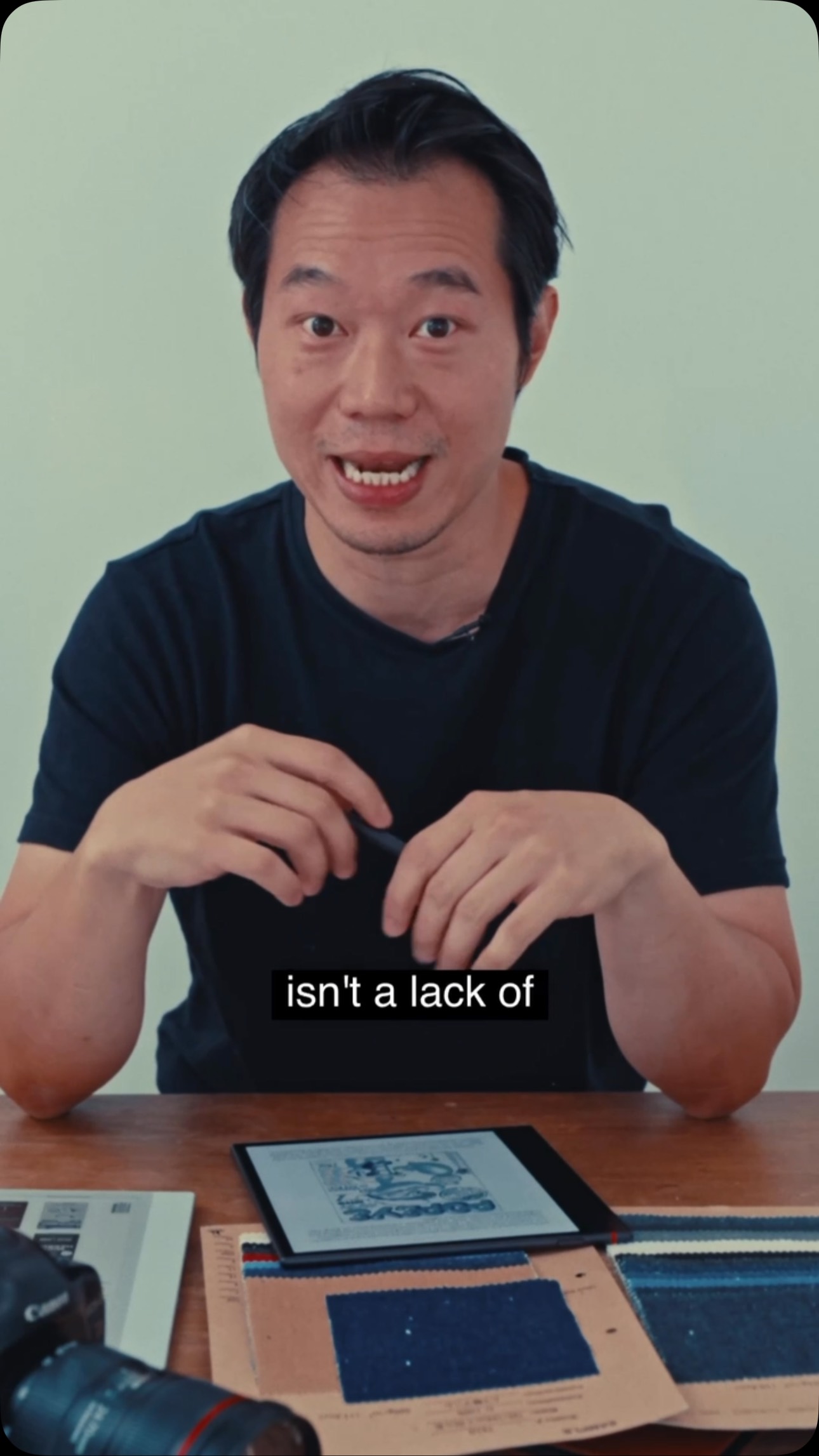
A medium shot of the creator sitting at a wooden desk with professional equipment like a camera and a digital tablet, establishing his authority as a creative professional.
[06]
Steal this for your own video
don't need help with . They need help with .
[07]
The promise the opener makes, and how the video pays it back
Hook
A contrarian statement that challenges a core belief of the target audience, forcing them to question their assumptions and listen for the explanation.
Payoff
A direct and simple call to action that offers the viewer a chance to acquire the demonstrated power and join the 'winning' side of the new paradigm.
[08]
The structural pattern this video runs on
Framework
The Expert's Reframe
Redefine a well-known problem for a niche audience by revealing its hidden, complex cause, then present a specific tool as the essential bridge to overcome it.
The High-Stakes Arena
Establishes the creator's authority within a high-stakes environment, then reframes the audience's perceived problem (e.g., 'lack of creativity') into a less obvious, more threatening one (e.g., 'lack of business acumen').
The Complexity Gauntlet
Uses a simple, physical prop to demonstrate the overwhelming and tedious complexity of the 'real' problem, making an abstract threat feel tangible and exhausting.
The Personal Failure Bridge
The creator shares a story of their own past failure related to the problem, building trust, empathy, and making the viewer feel understood before the solution is introduced.
The 'Magic Wand' Demo
Presents a technological tool as the solution. This beat demonstrates the tool's power by showing it solve the previously established complex problem instantly and effortlessly, creating a 'wow' moment.
The New Paradigm
Elevates the personal problem into an industry-wide shift. It creates a sense of urgency by framing a competitive landscape where adopting the solution is necessary for survival and success.
Creative people don’t need help being creative. We need help with the numbers. Comment “Computer” below for a link to try Computer. #PerplexityPartner and @Perplexity
title · middle
Connectors
title · middle
The weekly rate.
informational · middle
INTERNATIONAL FUEL SURCHARGE 51.75%
title · middle
The yen, now.
informational · end
Meets floor. 43.2% NET MARGIN 40% floor
informational · end
RETAIL / PAIR ¥55,260 [$360]
title · end
FABRIC SPECIFICATION
informational · end
Composition 100% cotton Width 148 cm Origin Japan
informational · end
Raise retail. 28.9% NET MARGIN 40% floor
Creative people don't need help being more creative. I go to Paris Fashion Week twice a year. The level of fabric design, dyes, pattern making, it is the top 1% of the top worse. But half of these people are not going to be back next season and even less are going to be back next year. They disappear. Is it because they weren't creative enough? What kills a creative business isn't a lack of creativity, it's a lack of the other things infrastructure, planning, budgeting, all the things that creative people are really bad at. And many of these businesses are structured like hobbies no like businesses. For instance these are two fabrics. One of these fabrics is made in China, but that means when you export it to European Union there are more duties to be paid. The other fabric is narrower which means that you can make less clothes with the same length of fabric. One of these fabrics has a longer lead tier, it takes longer to produce which means that you can release less clothes per year. That affects your business too. So it's not just one factor the price of the fabrics and it's not just about the quality of the fabrics tier are all these dozens of little factors that can affect the way your business runs and those are just two fabric swatches. At a fabric fair you're looking at hundreds of them. How are you going to hold all of that in your brain? So two years ago what I would have done was just choose the one I like the best and then find out much later that I was making a loss on every item. So nowadays I leverage technology. I use perplexity computer That helps me calculate fabric worst before design puts us in the red. So you can use Computer to connect to all kinds of things. I've connected it to my Microsoft Outlook. So that reads my emails to find out how much my factory cost is. It can look up the latest tariffs to The US and to The EU. It can even look up the fuel worst that FedEx uses. It can also monitor currency fluctuations. So I've made a fabric cost calculator and all of those factors run into that. So I take a photo on my phone and I send it to computer and what it does is it reads all the information off the card for me. How much cotton it is, the width of the fabric, where it's from and it computes all the factors and tells you what I need to know. Is this fabric a green light? This fabric ends up being too expensive. I would need to sell a pair of jeans that will be a thousand US dollars. That's a red line. So in the past whenever I made a decision purely on best, I would have this sick feeling in my stomach. When things didn't go well, I would have no idea why. Nowadays I can make really conscious corrections conscious decisions. This is how I see it. People who are really excellent at the numbers, who have no business being creative are going to leverage technology and output creative things. And creative people need to leverage technology to get better at the numbers, to get better at business. And the winner is whoever learns the other side first. My feeling is why shouldn't we win? So we've set something up. Comment computer below for a link to try computer.