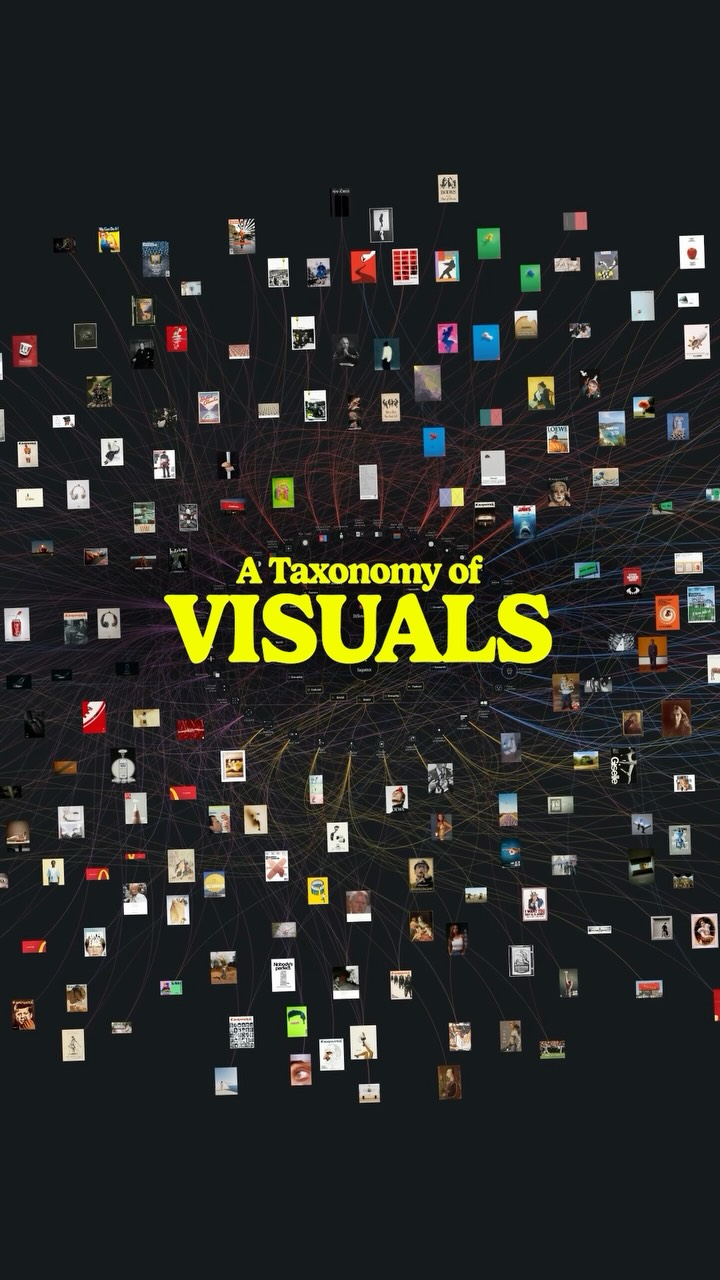
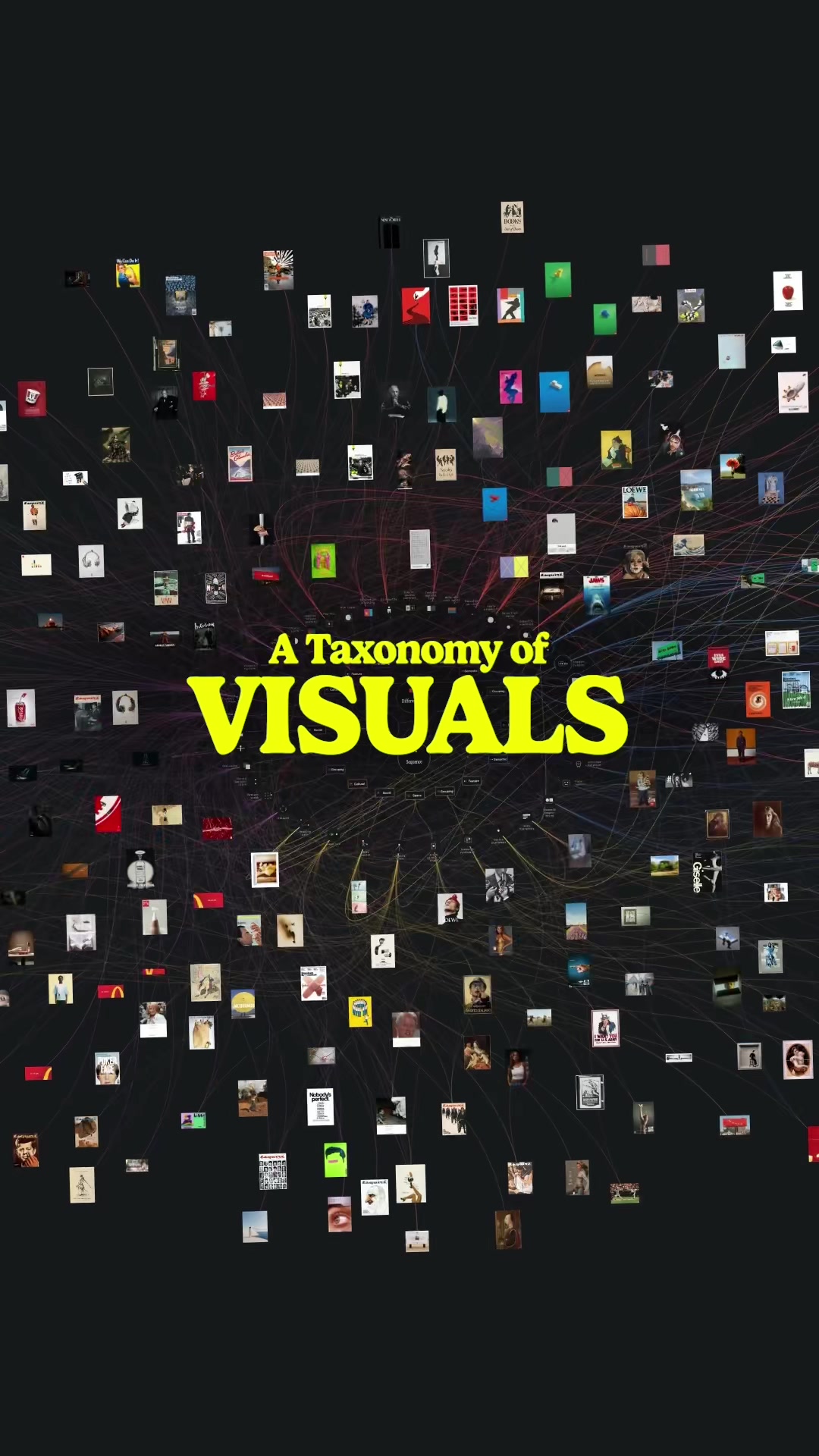
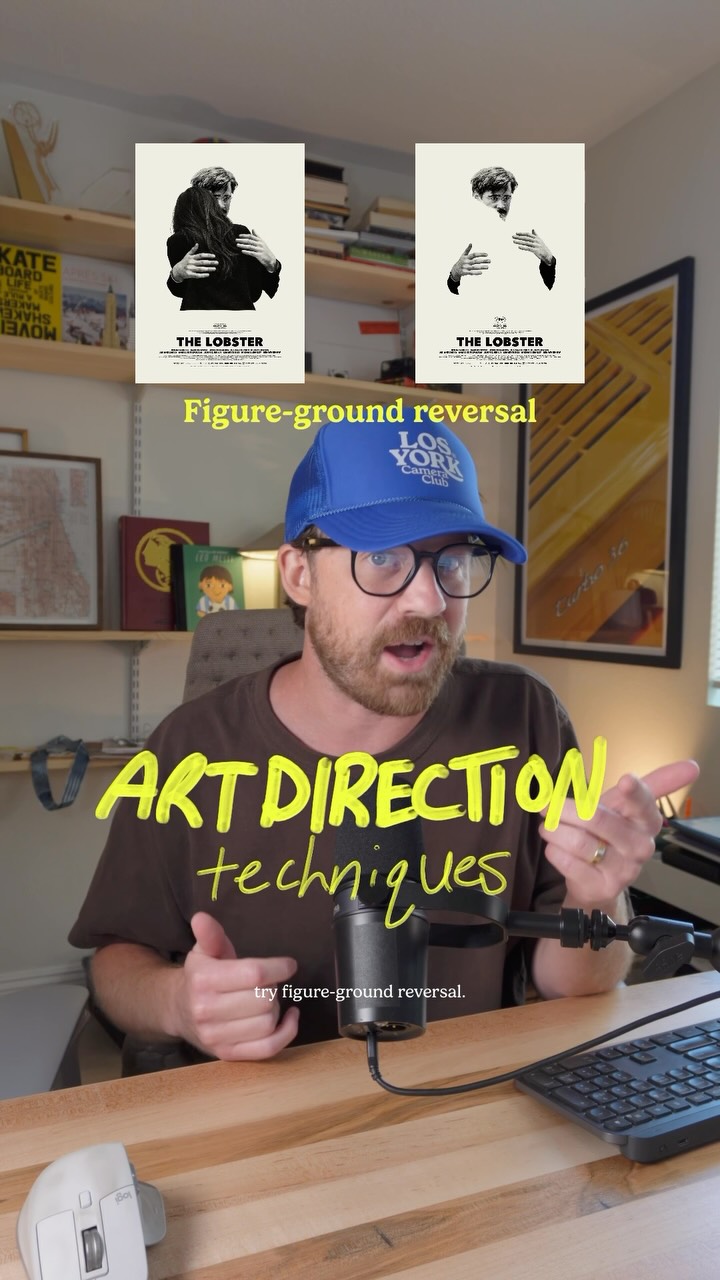
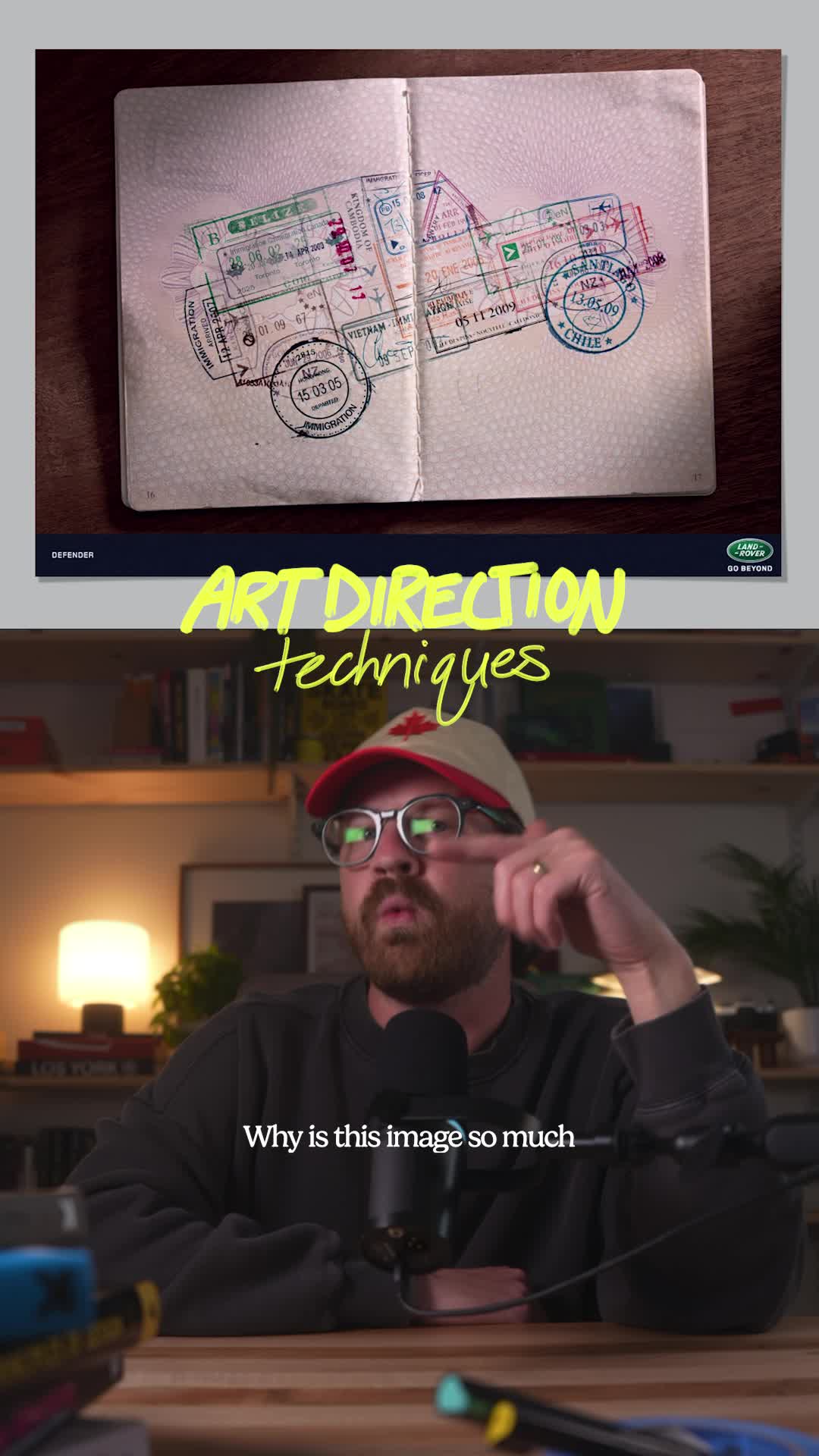
@jason_swet I’m developing a taxonomy of visuals that connects images through the techniques and ideas behind them.
I think we all want to understand the thinking behind the references we collect, and how we can apply those ideas to our own work. How can we give an image more meaning? How can we translate an idea into a visual?
None of this is entirely new. The principles and techniques themselves have been taught for decades. There are creatives, designers, and art directors who are masters at it. But so much of that knowledge is instinctual. Visually mapping the mechanisms behind an image’s style and aesthetic, and connecting those techniques to what it communicates, is the part I’m developing. That’s the part that I haven’t seen anyone do in this specific way.
And it feels especially valuable now, when we’re inundated with imagery. Understanding why visuals work helps us make deliberate choices, explain our thinking, and direct the work as the tools and possibilities keep changing.
This is small piece of the next big chapter of Modern Art Direction, and I’ll be sharing more as it develops.
The tool is still in beta with my current bootcamp students. Honestly I’m not sure if it’ll ever be entirely public outside of my programs. That might depend on demand. But I’ll be sharing more and more of the taxonomy and frameworks behind it here and in the newsletter.
Comment IRIS and I’ll send you the link to join the waitlist for updates and glimpses into what I’m building.
Explaining a visual classification systemfrom @jason_swet
[01]
Overview
The creator introduces and explains his 'Taxonomy of Visuals,' a system he's developing to classify the underlying principles and techniques behind visual ideas. He breaks down the problem of surface-level aesthetic collection, demonstrates how his framework categorizes concepts like 'differentiate' into domains and techniques, and uses an analogy to biological classification to explain his goal of creating a practical way to connect visual theory to execution.
Collecting visual references and understanding visual ideas are two very different things.
Visual hook · 30%
A complex, animated data visualization showing a web of interconnected images radiating from a central point, creating immediate visual intrigue and signaling a sophisticated topic.
[06]
Hook template
Steal this for your own video
[Surface-level activity] and [deeper skill] are two very different things.
— Collecting recipes and actually understanding how flavor works are two very different things.
— Saving workout videos and understanding how muscles actually grow are two very different things.
— Reading market news and understanding what moves your portfolio are two very different things.
[07]
Hook and payoff
The promise the opener makes, and how the video pays it back
Hook
Present a sophisticated dichotomy that challenges a common assumption within a specific field, immediately positioning the creator as a thought leader.
Payoff
Conclude not with a hard sell, but with an invitation to join a community of like-minded individuals, framing engagement as a shared intellectual journey.
[08]
Narrative framework
The structural pattern this video runs on
Framework
The Taxonomy Method
Establish authority by identifying a nuanced problem within a niche, then introduce a proprietary system as the solution, validating it through demonstration and a powerful analogy to build credibility and community.
1
The Intellectual Premise & Solution Reveal
State a core thesis that reframes a common activity and immediately introduce a proprietary system as the key to navigating this new perspective.
2
The Industry-Wide Problem
Diagnose and articulate the common, often unspoken, frustrations and failures of the target audience, creating a strong sense of relatability and validation.
3
The Central Challenge
Distill the audience's core struggle into a single, powerful question, framing the previously introduced system as the definitive answer.
4
The Credibility Builder & Value Prop
Acknowledge the work of predecessors and existing knowledge to build trust, then pivot to define the unique, missing piece that the new system provides.
5
The Tangible Demonstration
Translate the abstract system into a concrete, easy-to-understand example, walking the viewer through its practical application to prove its utility.
6
The Definitional Boundary
Sharpen the system's identity by explicitly stating what it is not, preemptively addressing potential misconceptions and focusing the audience's understanding.
7
The Core Mechanism Reveal
Explain the fundamental principle or 'first principle' of the system, providing the 'aha' moment that clarifies its underlying logic.
8
The Analogical Anchor
Legitimize the new, unfamiliar system by drawing a direct comparison to a well-established, respected framework from an unrelated but authoritative field.
Themes
Education
Frameworks
Visual Communication
Design Theory
Techniques
Data Visualization
Analogy
Problem-Solution Framing
Post caption
I’m developing a taxonomy of visuals that connects images through the techniques and ideas behind them.
I think we all want to understand the thinking behind the references we collect, and how we can apply those ideas to our own work. How can we give an image more meaning? How can we translate an idea into a visual?
None of this is entirely new. The principles and techniques themselves have been taught for decades. There are creatives, designers, and art directors who are masters at it. But so much of that knowledge is instinctual. Visually mapping the mechanisms behind an image’s style and aesthetic, and connecting those techniques to what it communicates, is the part I’m developing. That’s the part that I haven’t seen anyone do in this specific way.
And it feels especially valuable now, when we’re inundated with imagery. Understanding why visuals work helps us make deliberate choices, explain our thinking, and direct the work as the tools and possibilities keep changing.
This is small piece of the next big chapter of Modern Art Direction, and I’ll be sharing more as it develops.
The tool is still in beta with my current bootcamp students. Honestly I’m not sure if it’ll ever be entirely public outside of my programs. That might depend on demand. But I’ll be sharing more and more of the taxonomy and frameworks behind it here and in the newsletter.
Comment IRIS and I’ll send you the link to join the waitlist for updates and glimpses into what I’m building.
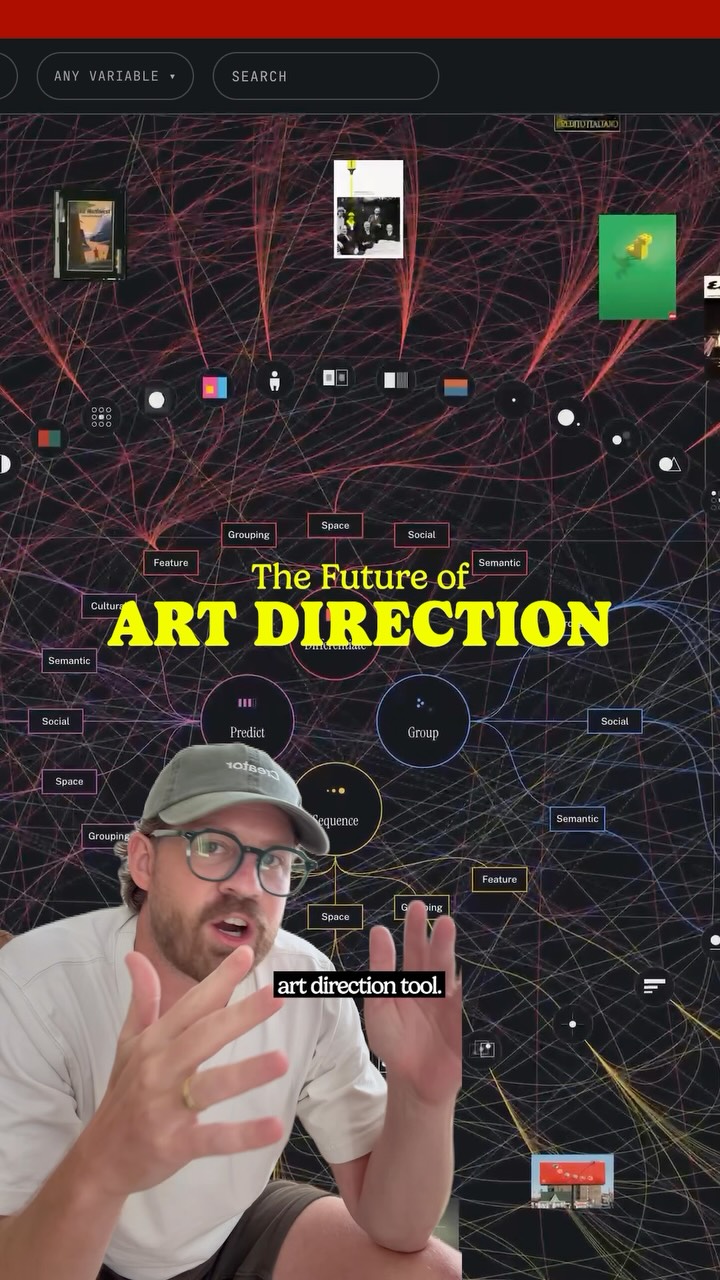
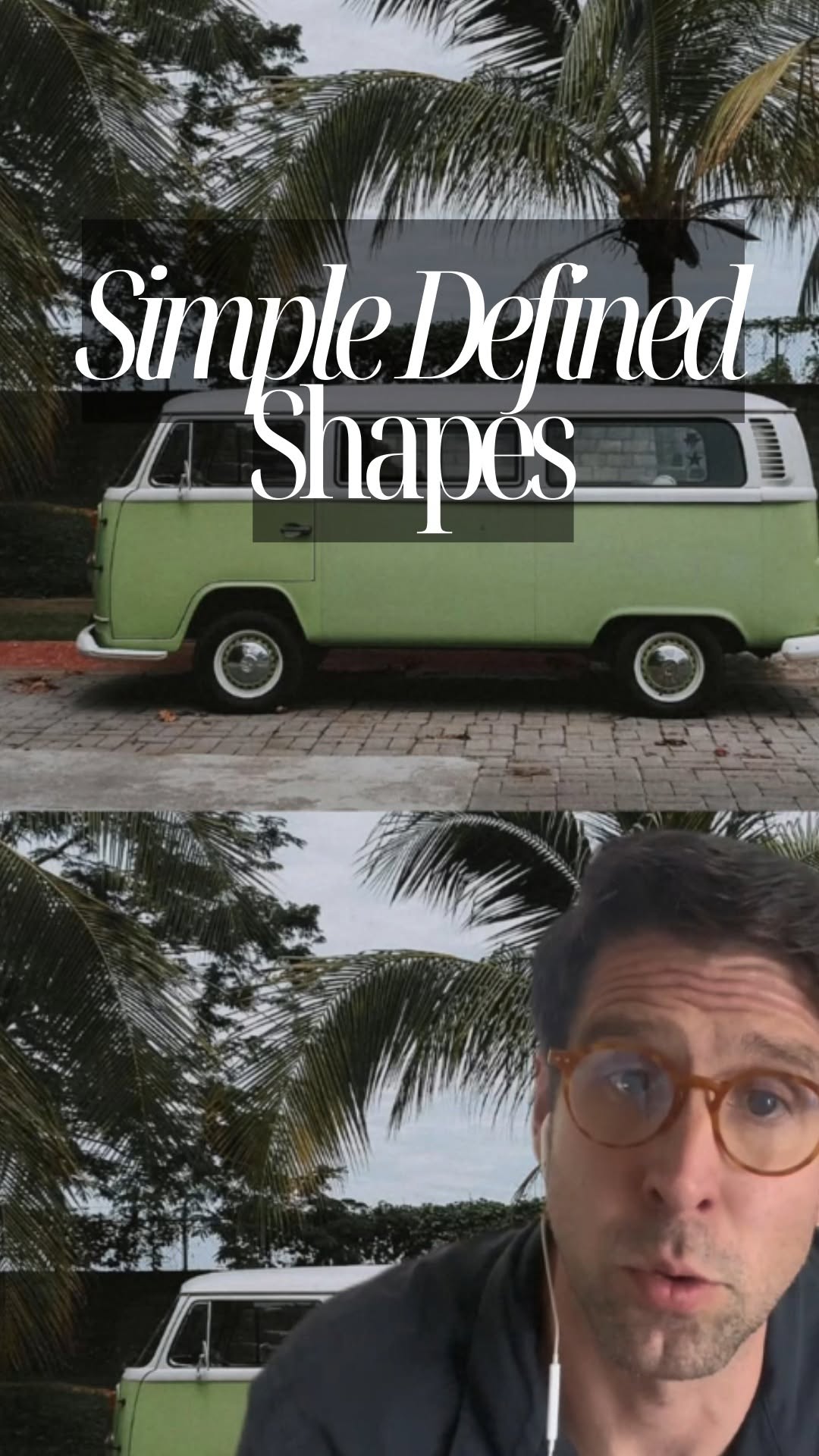
Collecting visual references and understanding visual ideas are two very different things. That's why I'm developing a taxonomy of visuals. I've been teaching art direction for over a year now and I keep seeing the same problem. Designers collect things that look nice. Tech companies best wash their brands with meaningless aesthetics and we learn fundamental design principles, but we don't necessarily learn how to use them to craft visual ideas. How do you take a brief or a campaign's big idea and translate it into something visual? That's the gap I'm trying to address. Now this is very much a work in progress. These principles have existed long before I ever started thinking about this. From best psychology to semiotics, there's already decades of research. But what's missing is a practical way to connect it all. For example, let's say you want something to stand out. That's an operation we can call differentiate. You could differentiate through visible features like color or shape or maybe through meaning using semantic contrast. From tier, you can explore specific techniques and visual examples. And to be clear, I'm categorizing visual techniques, not aesthetics, not surrealism or y two k futurism or whatever obscure aesthetic is trending this week. I'm classifying the underlying mechanism behind that image regardless of the subject, medium, or aesthetic. Inspired by the way biologists classify the characteristics and evolutionary relationships of animals from domain, kingdom, phylum no class order, family, genus, species. That's what I'm really excited to dig into. So follow along if you wanna get nerdy about visuals with me.
Explaining a visual classification system | Viral Hooks