@annakahoelkstudio
Instagram · Greenscreen Talking Head
@annakahoelkstudio Art Nouveau with a kick of social reform 🤌🏻

@annakahoelkstudio
Instagram · Greenscreen Talking Head
@annakahoelkstudio Art Nouveau with a kick of social reform 🤌🏻
Performance
Video #46127 · Greenscreen Talking Head
[01]
The creator explains the 19th-century Arts and Crafts movement, detailing its origins as a reaction against industrialization and its goal to restore dignity to craft. She then identifies the movement's central economic flaw—that handcrafted goods were too expensive for the average person—and draws a direct parallel to the modern rise of collectible design as a reaction to AI, arguing it faces the same problem of inaccessibility. She concludes by advocating for the value of industrial design in making well-designed goods available to the majority.
[02]
[03]
 286.7K1.7×Explaining heritage maximalism branding trend@orenmeetsworld · Breakdown
 2.3M29.8×Explaining the flattening of culture@ghostinthesam · Breakdown
 183.3K15.3×Monologue on collapsing beauty standards@the.ryanexperience · Breakdown
 427.1KPhilosophical concept explains modern culture@orenmeetsworld · Opportunity Explainer
 321K1×Analysis of intellectualism as a trend@deathtostock · Breakdown
 105.7K13.7×Critiquing an industry's price spectrum@elladoesellathings · Hot Take
 1.6M119.3×Explaining the 'tastewashing' tech trend@var.aunevik · Breakdown
 1MExplaining a cultural trend shift@eugbrandstrat · Breakdown
 862.5KCritiquing mainstream art fairs for alternatives@gstaadguy · Cultural Rant
 358.1K20.2×Creator critiques bland branding trend@clayton.chambrs · Good vs Bad
 529.1K1.9×Analyzing coffee shop design history@orenmeetsworld · Breakdown
 1.1MCreator explains new branding trend@orenmeetsworld · Breakdown
[04]
[05]
What stops the scroll in the first 3 seconds
Title hook · 20%
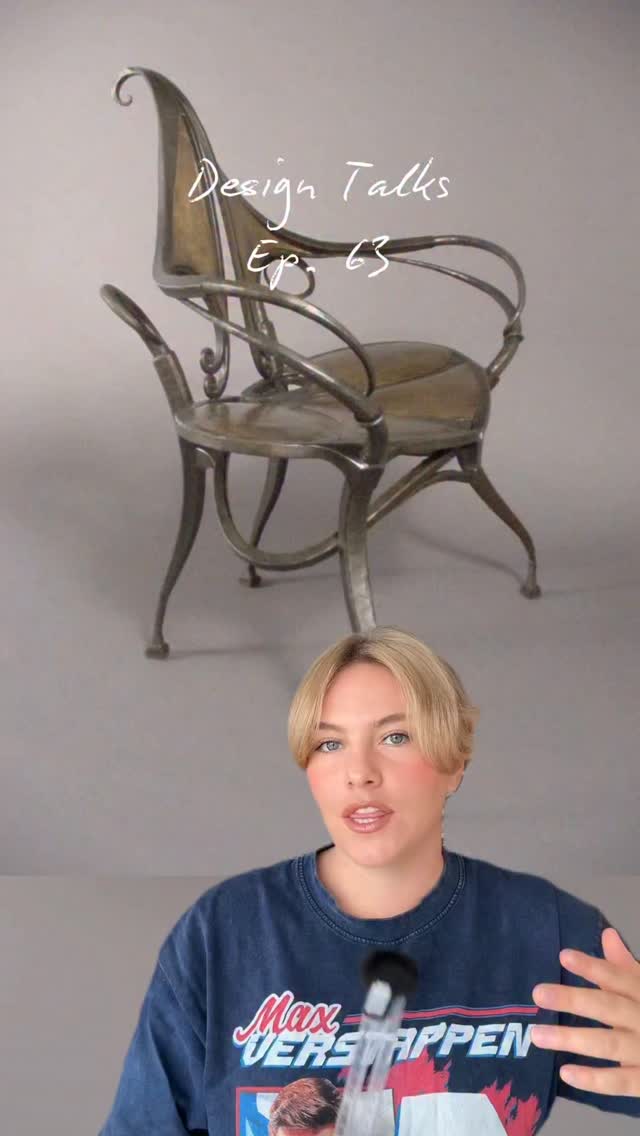
Design Talks EP. 63
Verbal hook · 75%
There was a design movement in the 19th century that really mirrors something that's happening now, and it made about as much sense then as it does now.
Visual hook · 5%
Split-screen layout with the speaker in the bottom third and a visually striking, sculptural metal chair in the top portion, immediately establishing the topic of design history.
[06]
Steal this for your own video
There was a in the that really mirrors something happening in right now, and it made about as much sense then as it does now.
[07]
The promise the opener makes, and how the video pays it back
Hook
Introduce a historical precedent and immediately claim it's a direct mirror of a current situation, creating an intellectual puzzle and a promise of relevance for the viewer.
Payoff
The payoff is an intellectual 'aha!' moment, where the viewer understands the deep connection between the past and present, and is left with a nuanced, thought-provoking perspective on a current issue.
[08]
The structural pattern this video runs on
Framework
The Historical Mirror Argument
To use a historical event or movement as an analogy to critique a contemporary trend, revealing that a seemingly new problem is actually a recurring, fundamental paradox.
The Historical Ideal
Detail the positive intentions, philosophy, and context of a historical movement or idea. This beat builds up the concept as a noble and aspirational ideal.
The Inherent Flaw
Pivot the narrative to introduce the one critical, often economic or social, flaw that undermined the ideal. This is the story's turning point, creating conflict between the vision and reality.
The Counterpoint's Merit
Briefly explain why the opposing force or system (that the idealists were fighting) was actually powerful or beneficial, strengthening the argument about the flaw's significance.
The Core Paradox
Conclude the historical analysis by articulating the central, unsolvable conflict in a memorable, aphoristic statement that summarizes the lesson learned.
The Personal Connection
Transition from the historical context to the present day by anchoring the argument in the creator's personal experience or professional identity, establishing authority and a modern-day stake.
The Modern Mirror
Explicitly identify the contemporary trend that mirrors the historical situation, applying the exact same flawed logic and demonstrating that history is repeating itself.
The Concluding Thesis
Deliver a final judgment on the modern trend, using the historical lesson as evidence. This beat resolves the argument by offering a clear personal or philosophical stance that serves as the video's main takeaway.
Art Nouveau with a kick of social reform 🤌🏻
title · beginning
Design Talks EP. 63
There was a design movement in the nineteenth century that really mirrors something that's happening no, and it made about as much sense then as it does now. The arts and crafts movement began in the eighteen sixties as a pushback against the industrial revolution and the rise in popularity of Ruskin good Morris and Ruskin saw a world in which making functional objects more beautiful and handcrafted for everyday people could improve society and restore dignity to the worker. Not only would craftspeople be saved from extinction, their very art would elevate their own lifestyles. The small problem being the economics of such an idyllic world were inherently flawed. Then, as now, handcrafted specially made objects are just too expensive for normal people to afford, which is why industrialization was such a revolution. Suddenly, everyone could afford well made functional everyday items. Despite the lofty goals of the movement, you simply can't have your cake and eat it too. By insisting on the superiority of craft alone, you create a world in which the craftsmen can't afford the product of their own labor. This is just something I've been thinking about as an industrial designer making production goods today, watching the rise of handcrafted items and so called collectible design as a pushback on AI. It's the same problem. Only the tier rich can afford these collectible designs. I am not tier craft by any means, but I also see a lot of value in the knowledge of designing for production because those designers, like myself, are who are gonna be making goods for the majority of people.