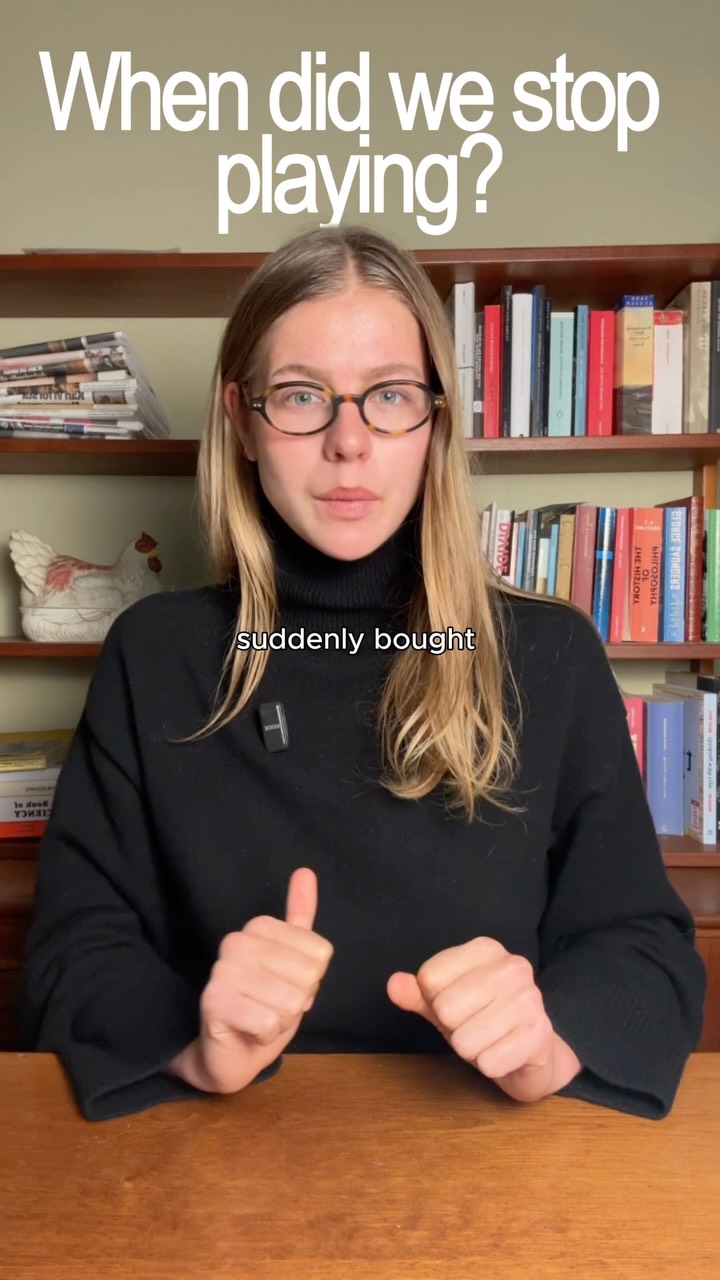
@var.aunevik What would you say if your dad suddenly bought a stuffed animal, and started talking to it?
Bringing it everywhere, maybe eating dinner with it.
Maybe you’d think he’d completely lost his mind. And maybe he has.
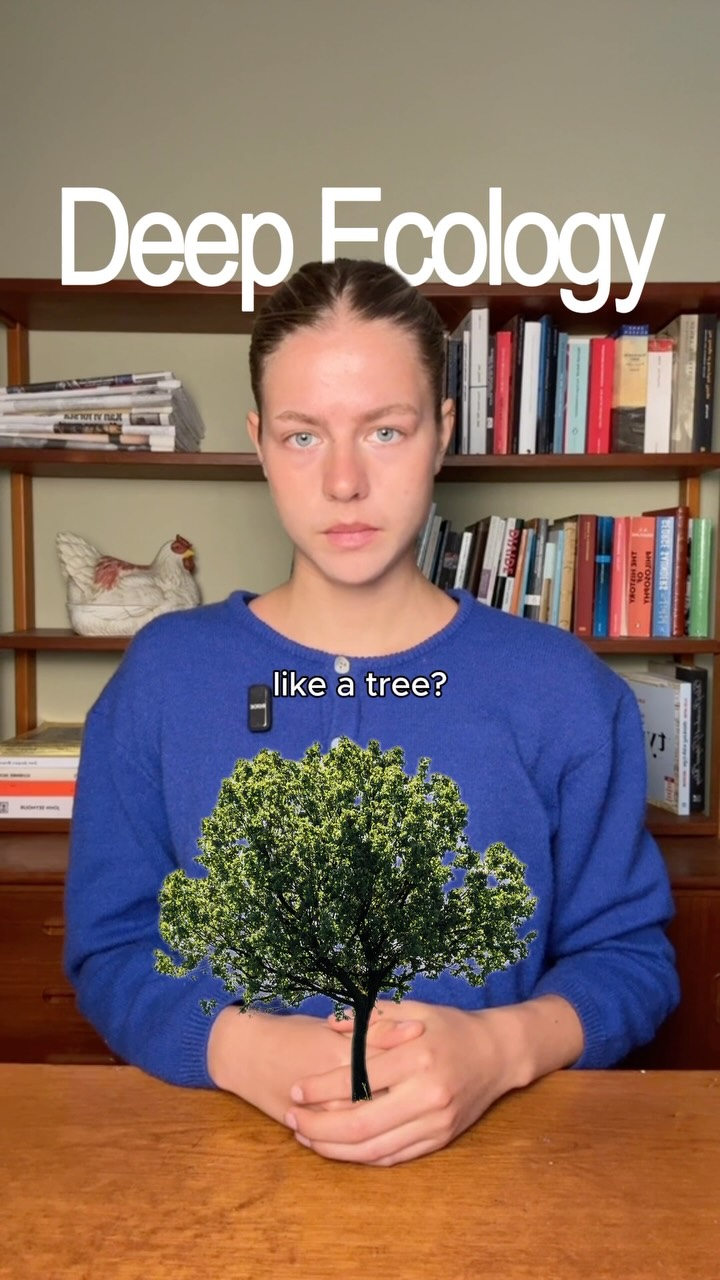
But Arne Næss, the Norwegian philosopher who became Norway’s youngest professor at 27, helped shape modern argumentation theory, and founded deep ecology, also had a stuffed pig, named Timotei. He spoke to Timotei every single day.
Næss called himself a possibilist. Which he described as a sort of enlightened skepticism. You can doubt things, but you should be open to the fact that anything can happen at any time.
Næss himself said that - yes, perhaps I am a little insane.
But perhaps that kind of innocent insanity is healthy.
We shouldn’t be scared of going mad.
Because the first sign of real madness might be exactly that, being too afraid to look insane.
Clips + souce: NrkTV - Arne og Timotei leker med livet
Philosopher story illustrates life lessonfrom @var.aunevik
[01]
Overview
The creator tells the story of Norwegian philosopher Arne Næss, who famously carried and spoke to a stuffed pig named Timotei. She uses this anecdote to explain Næss's philosophy of "possibilism" and his belief in the importance of play for adults, ultimately arguing that a bit of "innocent insanity" is healthy and that the real madness is being afraid to appear weird.
How would you react if your dad suddenly bought a stuffed animal and started talking to it?
Visual hook
A medium close-up of the speaker addressing the camera directly, using hand gestures to emphasize her points and create an immediate conversational feel.
[06]
Hook template
Steal this for your own video
How would you react if your [close family member] suddenly [started doing something unexpected and slightly odd] and [doubled down on it in a way that seems irrational]?
— How would you react if your mom suddenly bought a drum kit at 62 and started practicing it in the living room every night?
— How would you react if your boss suddenly started holding every meeting on a walk outside and refused to ever sit down again?
— How would you react if your grandpa suddenly started writing letters to his past self and reading them out loud at dinner?
[07]
Hook and payoff
The promise the opener makes, and how the video pays it back
Hook
Pose a relatable, slightly absurd hypothetical question that prompts the viewer to make a quick social judgment.
Payoff
Deliver the final, overarching moral of the story, which reveals that the true 'madness' or 'flaw' is adhering to the very social judgment the viewer was prompted to make in the hook.
[08]
Narrative framework
The structural pattern this video runs on
Framework
The Prestigious Paradox
To challenge a common social judgment by revealing that a highly respected figure embodies the 'weird' behavior, then explaining the profound philosophy behind it to deliver an empowering lesson.
1
The Common Judgment
Articulate the viewer's likely negative conclusion about the hypothetical, validating their initial reaction (e.g., 'he'd lost his mind').
2
The Counter-Intuitive Case Study
Pivot sharply by introducing a real, highly credible individual who perfectly exemplifies the 'strange' behavior from the hook.
3
The Authority Stack
Rapidly list the individual's impressive credentials and accomplishments to create cognitive dissonance and establish them as an authority whose actions demand explanation.
4
The Unifying Philosophy
Introduce and define the specific named philosophy or worldview that explains the individual's seemingly odd behavior, turning it from 'crazy' to 'principled'.
5
The Deeper Rationale
Connect the philosophy to a broader, universal human need or a critique of restrictive social norms, giving the behavior a deeper purpose.
6
The Self-Aware Reframe
Use a direct quote or statement from the subject that acknowledges the perceived 'weirdness' but reframes it as a positive or healthy trait.
Themes
Playfulness
Non-conformity
Mental Health
Philosophy
Techniques
Storytelling
Direct address
Archival footage
Trends
Educational Storytelling
Post caption
What would you say if your dad suddenly bought a stuffed animal, and started talking to it?
Bringing it everywhere, maybe eating dinner with it.
Maybe you’d think he’d completely lost his mind. And maybe he has.
But Arne Næss, the Norwegian philosopher who became Norway’s youngest professor at 27, helped shape modern argumentation theory, and founded deep ecology, also had a stuffed pig, named Timotei. He spoke to Timotei every single day.
Næss called himself a possibilist. Which he described as a sort of enlightened skepticism. You can doubt things, but you should be open to the fact that anything can happen at any time.
Næss himself said that - yes, perhaps I am a little insane.
But perhaps that kind of innocent insanity is healthy.
We shouldn’t be scared of going mad.
Because the first sign of real madness might be exactly that, being too afraid to look insane.
Clips + souce: NrkTV - Arne og Timotei leker med livet
Text overlays
title · beginning
When did we stop playing?
contextual · middle
clips from NRKTV
informational · middle
Possibilist
Transcript
How would you react if your dad suddenly bought a stuffed animal and started talking to it? Bringing it everywhere, maybe eating dinner with it, taking it on hikes and his train commute. Maybe you think he'd completely lost his mind and maybe he has. But Onanas, the Norwegian philosopher who became Norway's youngest professor at age 27 helped shape modern argumentation theory and founded deep ecology also had a stuffed pig named Timothee. He spoke to Timothee every single day, and he was not one bit embarrassed by it. He called himself a possibilist, which he described as a kind of enlightened skepticism. You can doubt things, yes, but you good be open to the fact that anything can happen at any time. So maybe Timothee worked as a sort of physical extension of this philosophy. He also meant that adults needed play and he was deeply suspicious of the type of common sense that tells us to not do anything that might be considered weird. Yes himself said that, yes, perhaps I am a little insane, but perhaps that kind of innocent insanity is healthy. We shouldn't be scared of going mad because the first sign of real madness might be exactly that being afraid of looking it.
Philosopher story illustrates life lesson | Viral Hooks