@alextwma
Instagram · Talking Head Edit
@alextwma Two companies with the same name and logo. What happened?

@alextwma
Instagram · Talking Head Edit
@alextwma Two companies with the same name and logo. What happened?
Performance
Video #48112 · Talking Head Edit
[01]
The creator explains the history of two different companies named 'Polo' with nearly identical logos: the American Polo Ralph Lauren and a South African brand by LA Group. He details how local trademark law allowed the South African company to register the name first in their country, leading to a decades-long legal battle when Ralph Lauren tried to expand there. The creator outlines the settlement that resulted in the two brands co-existing with mirrored logos, the subsequent consumer confusion, and a further legal dispute with a third company, the U.S. Polo Assn., before concluding with the recent news that Ralph Lauren finally acquired the South African brand's trademarks.
[02]
[03]
 206.9KThe cultural history of a fashion icon@alextwma · Origin Story
 1.3M3.5×Explaining a famous logo's origin@alextwma · Origin Story
 371.4KBrand founder explains rip-off irony@frontoffice.co · Origin Story
 187.8KSibling rivalry creates two brands@alextwma · Origin Story
 829.9K53.9×Investigating a luxury brand rumor@shwinnabegobrand · Breakdown
 190.9K18.9×Explaining a brand's cultural history@gsnwilliams · Origin Story
 149.3K41.4×Explaining foreign league jersey culture@gamedaygrails · Opportunity Explainer
 155KExplaining jersey design's historical inspiration@frontoffice.co · Origin Story
 69.2KBrand strategy copycat analysis video@tatumbrandt · Breakdown
 419.3K5.1×Explaining a brand's origin story@timmchiusano · Origin Story
 249.5K6.1×Expert breaks down brand's product launch@landforce · Case Study Breakdown
 50.2KNon-China apparel factory recommendation@landforce · Buying List
[04]
[05]
What stops the scroll in the first 3 seconds
Title hook · 40%
the logo
Verbal hook · 60%
So this is the logo for Polo Ralph Lauren, except it's not.
Visual hook
The video opens with an extreme close-up shot of the iconic embroidered Polo player logo on a light blue polo shirt, highlighting the texture and detail of the famous brand mark.
[06]
Steal this for your own video
So this is the , except it's not.
[07]
The promise the opener makes, and how the video pays it back
Hook
Presents a well-known subject and immediately subverts the viewer's understanding by revealing it's not what they think, creating an instant knowledge gap and intrigue.
Payoff
Reframes the definitive resolution not as a simple victory, but with a nuanced, bittersweet emotional consequence (e.g., loss of identity, a forgotten history), providing a thought-provoking conclusion.
[08]
The structural pattern this video runs on
Framework
The Deceptive Duality Chronicle
To hook the viewer by presenting a familiar entity, immediately revealing a nearly identical but separate 'twin,' and then narrating the complex history of their conflict, escalation, and ultimate resolution.
The Duality Reveal
Visually establishes the core conflict by showing two nearly identical entities side-by-side and stating they are completely unrelated.
The Foundational Loophole
Explains the specific rule, law, or historical context that allowed this strange duality to exist in the first place, providing logical grounding for the story.
The Inevitable Collision
Narrates the specific event or moment when the two separate entities were forced to confront each other, officially igniting the central conflict.
The Opening Salvo
Details the initial direct conflict (e.g., a lawsuit, a public challenge) and the primary arguments of each side.
The Peculiar Truce
Describes the terms of an initial, often strange, settlement or agreement that allows both entities to coexist under specific, unusual conditions.
The Coexistence Paradox
Illustrates the long-term consequences of the truce, showing how the confusing situation became normalized over time for the general public.
The Escalation Twist
Introduces a new, unexpected third party or external factor that dramatically complicates the existing conflict and raises the stakes.
The Judicial Climax
Details the peak of the conflict, often involving a high-stakes legal or public showdown with dramatic reversals and high-level judgments.
The Acquisition Endgame
Announces the final, definitive resolution where one entity absorbs or defeats the other, bringing the long-standing conflict to a close.
Two companies with the same name and logo. What happened?
contextual · beginning
the logo
contextual · beginning
Polo SA
contextual · beginning
Polo RL
branding · beginning
POLO SINCE 1976
branding · beginning
POLO RALPH LAUREN
informational · middle
"Burger King" Adelaide, Australia
informational · middle
"Burger King" U.S. Fast-Food Chain
branding · end
U.S. POLO ASSN. SINCE 1890
informational · end
US fashion giant finally acquires South Africa's iconic Polo brand
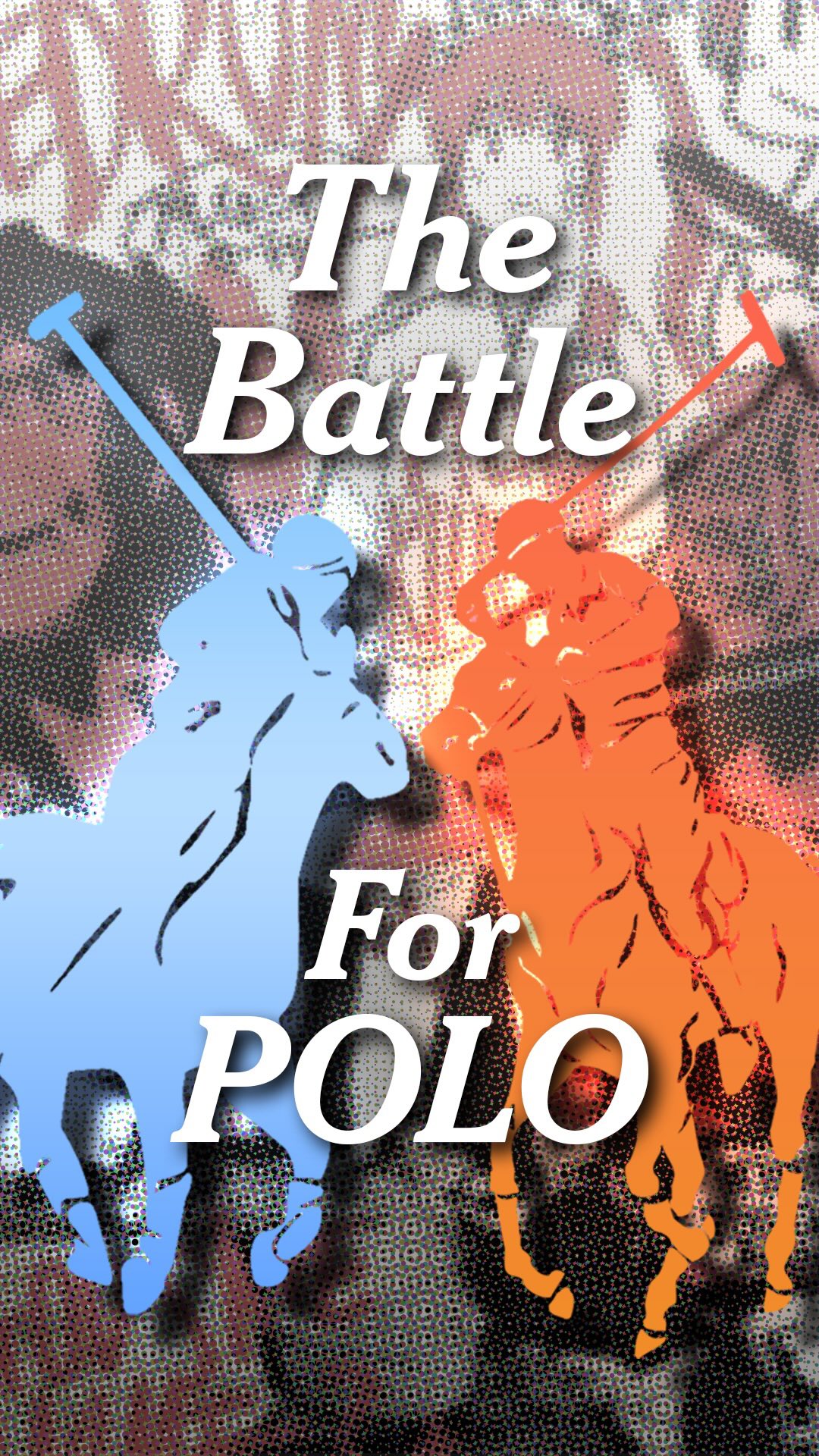
So this is the logo for Polo Ralph Lauren, except it's no. This is. These two logos are mirror images of each other and they're not even the same company. The one you probably don't recognize with the horse facing right belongs to a South African company called LA Group. They registered the name Polo and that horse and rider logo in 1976. Ralph Lawrence Polo actually launched almost a decade earlier in 1967 in The US. But trademark law is local, not global. Whoever registers a name in a given country first generally gets to keep it there regardless of who used it first somewhere else. And in South Africa that was LA Group. So when Ralph Lauren eventually tried to expand into the South African market, they ran into a brand that had already locked up their own name with a nearly identical logo. Ralph Lauren sued for trademark infringement arguing LA Group had essentially copied an already famous American rank. The case dragged on for years through multiple court applications until both sides settled. Ralph Lauren would be able to sell cosmetics and fragrance in South Africa under the Polo name. Clothing on the other hand stayed entirely with LA Group. And to keep the two legally distinguishable going worse, the South African horse and rider had to face the opposite direction from Ralph Lauren's permanently by agreement. For almost fifty years that's exactly what happened. Two completely unrelated companies with the same name, mirrored logos, operating in the same malls and sometimes even the same shopping centers. Most South African shoppers had no idea there wasn't just one polo. Many just assumed the local version was simply how Ralph Lauren's rank looked in their country. Even a lot of retailers didn't fully grasp the distinction themselves. And then it got messier. In 2015, LA Group sued a third company entirely, the US Polo Association, a no profit tied to the actual sport of polo which also used its own horse and rider logo. LA Group argued the USPA's logo infringed on their South African trademarks. At one point a high court actually stripped LA Group of more than 40 of its own trademarks entirely before South Africa's Supreme Court of Appeal reversed that decision and restored them. The whole saga only just ended a year ago. In late twenty twenty tier, Ralph Lauren finally acquired LA Group's South African Polo trademarks outright, buying their way out of a legal fight that had run for almost half a century. But for a lot of South Africans, it's not exactly a tidy ending. LA Group built a brand that millions of people grew up wearing, loved, and considered genuinely their own. Handing all of that over to an American company means a homegrown identity disappears along with any confusion. But only because one of them won a pretty messy legal battle.