@alextwma
Instagram · Talking Head Edit
@alextwma How the Polo bear changed Ralph Lauren, hip-hop, and fashion forever.

@alextwma
Instagram · Talking Head Edit
@alextwma How the Polo bear changed Ralph Lauren, hip-hop, and fashion forever.
Performance
Video #46813 · Talking Head Edit
[01]
The creator explains the complete history of the Ralph Lauren Polo Bear. He starts by connecting the origin of the teddy bear to a 1902 hunting trip with President Theodore Roosevelt, then introduces the German toy company Steiff. The narrative then shifts to the 1990s, detailing how a personal tradition between Ralph Lauren and his brother Jerry led to the public launch of the Polo Bear, which quickly became a cult item. Finally, he explains how the Brooklyn-based Lo-Life crew adopted, subverted, and popularized the brand, cementing its status as a streetwear icon and influencing its perception in mainstream culture and hip-hop.
[02]
[03]
 1.9M2.4×Explaining a brand's trademark history@alextwma · Case Study Breakdown
 1.3M3.5×Explaining a famous logo's origin@alextwma · Origin Story
 419.3K5.1×Explaining a brand's origin story@timmchiusano · Origin Story
 187.8KSibling rivalry creates two brands@alextwma · Origin Story
 118.7K19.6×Brand history explainer with trivia@gamedaygrails · Origin Story
 371.4KBrand founder explains rip-off irony@frontoffice.co · Origin Story
 155.2K100.2×Fashion collab design analysis@aracarrr · Breakdown
 190.9K18.9×Explaining a brand's cultural history@gsnwilliams · Origin Story
 199.3K18.5×Brand history and marketing breakdown@theoparisi__ · Case Study Breakdown
 3.1M2.9×Explaining a brand's weird origin@theironsnail · Origin Story
 113.6K18.8×Brand origin story explainer video@gamedaygrails · Origin Story
 196.4K52.3×Brand origin story and analysis@theoparisi__ · Origin Story
[04]
[05]
What stops the scroll in the first 3 seconds
Title hook
This bear
Verbal hook
This bear changed the way you dress.
Visual hook
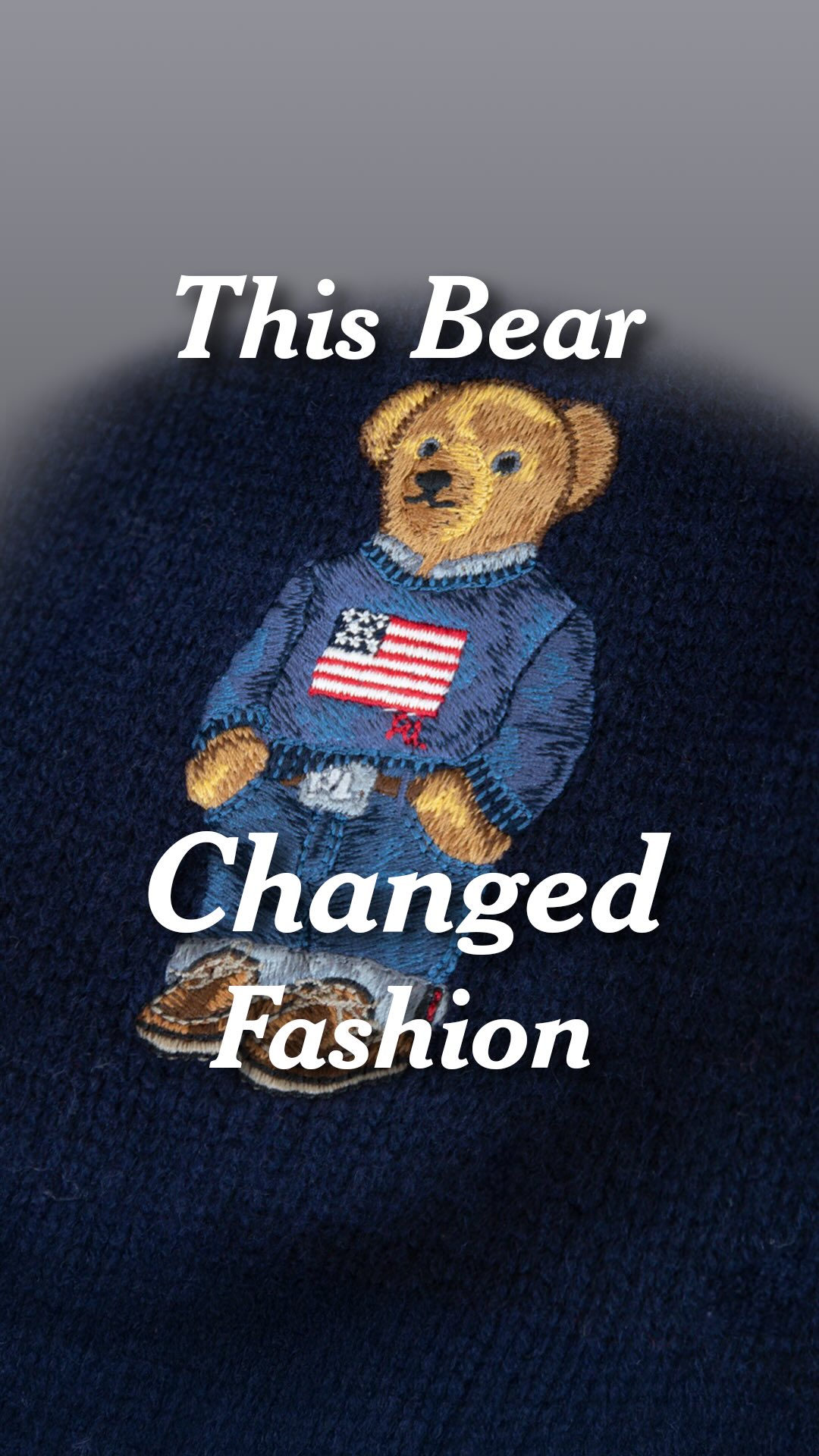
An extreme close-up shot of an embroidered Ralph Lauren Polo Bear on a dark blue knit sweater, highlighting the texture and detail of the stitching.
[07]
The promise the opener makes, and how the video pays it back
Hook
Make a bold, counter-intuitive claim about the massive, unknown influence of a common object, creating an immediate knowledge gap for the viewer.
Payoff
The final beat provides the complete explanation promised by the hook, giving the viewer a new and satisfying lens through which to see their own world and the culture around them.
[08]
The structural pattern this video runs on
Framework
The Cultural Re-appropriation Chronicle
To trace the history of a familiar cultural object, revealing how its meaning was subverted by a counter-culture group, ultimately changing the mainstream landscape forever.
The Intriguing Premise
State the central thesis as a surprising fact the audience is unaware of, promising a hidden history.
The Foundational Myth
Detail the object's little-known, often surprising, origin story to give it historical weight and an element of trivia.
The Catalyst Connection
Explain the specific event or personal story that brought the object into the sphere of influence being discussed, making the story more intimate.
The Proof of Concept
Demonstrate the object's inherent appeal and value by showing its initial, often explosive, success with its intended audience.
The Subversive Turning Point
Introduce a counter-culture group or movement that adopted the object, fundamentally changing its meaning and context in defiance of its original purpose. This creates the central conflict.
The Mainstream Crossover
Provide proof of the subversion's influence by showing its adoption by mainstream cultural figures, validating its new meaning and impact.
The Legacy Framework
Articulate the 'blueprint' or lasting principle that emerged from this cultural shift, connecting the specific story to a broader, universal trend.
The Thesis Resolution
Circle back to the initial hook, explicitly explaining how the events of the story prove the grand claim and directly impact the viewer's world today.
How the Polo bear changed Ralph Lauren, hip-hop, and fashion forever.
title · beginning
This bear
contextual · beginning
with a president
contextual · beginning
called Steiff,
contextual · middle
goes public.
contextual · middle
the Lo-Life crew.
contextual · middle
so they stole it.
contextual · end
Kanye West
contextual · end
fashion belongs to.
This bear changed the way you yes. You just never knew it. This is the polo bear, a teddy bear dressed in Ralph Lauren clothing stitched onto some of the most iconic sweaters in fashion. And it starts with a president and a bear. In 1902, Theodore Roosevelt refused to shoot a bear that had been tied to a tree on a hunting trip. The Washington Worst ran it as a cartoon and toy makers named their stuffed bears after him creating the teddy bear including a German company called Steiff, the most renowned maker in the world. Fast forward to 1990, Jerry Lauren, Ralph's brother has collected Steiff better his entire life. Both brothers receive custom Stife Bears dressed in their likeness as a gift. Ralphs arrives in preppy polo clothing and he loves it. So a tradition is born where every year both brothers receive a custom bear inspired by Ralph's personal style. In 1991 that private tradition goes public. The polo bear debuts as an actual Scythe teddy bear in a limited run of just 200. They sell out of the Madison Avenue flagship store in a single weekend. Soon the bear starts appearing on sweaters, tier shirts and denim jackets. They're whimsical, slightly absurd, and at the tier, completely unlike anything else in luxury fashion. But Ralph Lauren built his brand for a very specific customer, the prep school elite, sort of old money America. That was never the lowlife crew. The lowlifes were a Brooklyn gang built entirely around an obsession of Polo Ralph Lauren. They couldn't afford it, so they stole it. Entire collections right off the rank and the polo bear sweaters were the most prized pieces of all. Polo was made for the rich worse kids, said Raklow, one of the lowlife's founders. It wasn't made for urban kids and as teenagers we couldn't afford it. The lowlife worse polo in ways Ralph Lauren never intended. They gave the brand a new audience, a new context and an entirely new meaning. And the rest of the world took notice. By 2004, Kanye West wore a polo better knit on the cover of the College Dropout. Raekwon wore a polo snow beach pullover in a Wu Tang Clan music video. One by one, the culture caught up to what was happening in Brooklyn. The New York Tier called the lowlifes the gang that brought high fashion to hip hop. The blueprint, their laser like focus on rank, the lifestyle aspiration, the subversion is everywhere now. The genre tier collaborate with high fashion houses and create their own labels. None of that would have been possible without what started in Brooklyn in 1988. Ralph Lauren built a brand for good money America, but the lowlifes took it anyway. And in doing no, they rewrote the rules of who luxury fashion belongs to. Many of those rules still govern how you shop, what you buy, and what it means to wear luxury today.