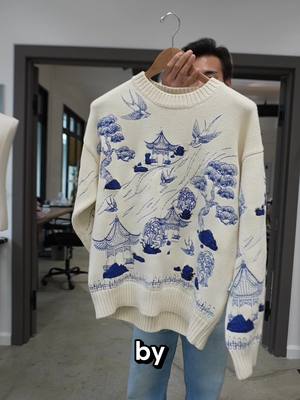
@yitaigeng Here’s a sweater I made — and it was just copied by a fast fashion brand. Here’s what I do to protect myself: First, my brand name and logo are trademarked, so any graphics or designs I create under my brand are legally protected. Second, the hardest part for fast fashion brands to copy is the craftsmanship. My original sweater is made from 100% cotton and features over 700,000 embroidery stitches. The knockoff? It’s polyester — and they didn’t even bother to embroider the back. Third, I always send a cease and desist. And if they don’t take it down, I’ll have my lawyer send a formal legal notice. It’s honestly upsetting when a company blatantly steals your work — especially something you’ve spent months designing. So if you’re a designer, make sure your brand and designs are protected. It’s the only way to defend your work. #embroidery #sweater #copied #stolen #yitai #fyp
Designer's guide to fighting knockoffs.from @yitaigeng
[01]
Overview
The creator, a fashion designer, outlines his three-step process for protecting his original designs after one of his sweaters was copied by a fast-fashion brand. He explains his strategy, which includes trademarking his brand, focusing on high-quality craftsmanship that is difficult to replicate, and taking legal action with cease and desist letters. Throughout the video, he shows his original high-quality sweater, the legal trademark document, and screenshots of the lower-quality knockoff product.
This is a sweater I made, and it was just copied by a fast fashion brand.
Visual hook · 30%
A person holds up a detailed, off-white knit sweater with intricate blue embroidery depicting an Asian-inspired landscape, immediately showcasing a unique and high-quality product.
[07]
Hook and payoff
The promise the opener makes, and how the video pays it back
Hook
An immediate presentation of a personal creation followed by the reveal that it has been unjustly copied, establishing a clear 'David vs. Goliath' conflict.
Payoff
A concluding statement that summarizes the emotional impact of the injustice and offers a direct, empowering call to action for the audience, positioning the creator as an advocate and expert.
[08]
Narrative framework
The structural pattern this video runs on
Framework
The Creator's Defense
A creator reveals a problem (their work being copied/stolen) and then outlines a multi-step strategy for defense, escalating from foundational protection to direct action, while visually contrasting their superior original with the inferior copy.
1
The Proactive Shield
The first step of the defense is revealed as a foundational, preventative measure (e.g., legal registration, trademark), visually substantiated with official-looking proof.
2
The Inherent Superiority
The second step highlights a non-replicable quality of the original (e.g., craftsmanship, materials, complexity). This is demonstrated through a direct visual and material comparison against the inferior copy, proving the original's value.
3
The Reactive Strike
The third and final step of the defense is revealed as a direct, consequential action taken against the offender (e.g., legal notice, public call-out), demonstrating a willingness to fight back.
Themes
Intellectual property theft
Creator rights
Quality vs. mass production
Entrepreneurship challenges
Techniques
Direct address
Case study
Numbered list
Side-by-side comparison
Post caption
Here’s a sweater I made — and it was just copied by a fast fashion brand. Here’s what I do to protect myself: First, my brand name and logo are trademarked, so any graphics or designs I create under my brand are legally protected. Second, the hardest part for fast fashion brands to copy is the craftsmanship. My original sweater is made from 100% cotton and features over 700,000 embroidery stitches. The knockoff? It’s polyester — and they didn’t even bother to embroider the back. Third, I always send a cease and desist. And if they don’t take it down, I’ll have my lawyer send a formal legal notice. It’s honestly upsetting when a company blatantly steals your work — especially something you’ve spent months designing. So if you’re a designer, make sure your brand and designs are protected. It’s the only way to defend your work. #embroidery #sweater #copied #stolen #yitai #fyp
Text overlays
contextual · beginning
sweater
contextual · beginning
just
contextual · beginning
fast
contextual · beginning
here's
contextual · beginning
protect
contextual · beginning
my
contextual · beginning
trademarks
contextual · beginning
graphics
contextual · beginning
under
contextual · middle
legally
contextual · middle
protected
contextual · middle
part
contextual · middle
brands
contextual · middle
craftsmanship
contextual · middle
sweater
contextual · middle
percent
contextual · middle
over
contextual · middle
embroidered
contextual · middle
knockoff
contextual · middle
polyester
contextual · middle
even
contextual · middle
embroider
contextual · end
always
contextual · end
desist
contextual · end
down
contextual · end
lawyer
contextual · end
notice
contextual · end
upsetting
contextual · end
blatantly
contextual · end
work
contextual · end
something
contextual · end
working
contextual · end
designer
contextual · end
brand
contextual · end
protected
contextual · end
way
Transcript
This is a sweater I made, and it was just copied by a fast fashion brand. Here's what I do to protect myself. First, my brand name and logo are trademarked, so any graphics or design I create under my brand are legally protected. Second, the hardest part for fast fashion brands to copy is the craftsmanship. My original sweater is made from worse% cotton and features over 700,000 embroidered stitches. Knockoff is made from polyester and they didn't even bother to embroider the back. Third, I always send a cease and desist and if they don't take it down, I'll have my worse send a formal legal notice. It's honestly upsetting when a company blatantly steals your work, especially something you've spent months working on. So if you're a designer, make sure your brand and designs are protected and it's the only way to defend your work.