Viral Hooks
Trending short videosExplaining a hotel brand's decline
T

@theryanexperience

TikTok · Greenscreen Talking Head

@theryanexperience W Hotels used to be cool. Then, due partially to their ideal demographic aging out, and promises starting to falter, they became uncool, corporatized and lost. #hospitality #hotel #hotels #whotel

View original on TikTok

The edit1 shot · 8 text
Shots Text2:30

Performance

Views
102.2K
Likes
3.7K
Comments
156
Engagement
3.8%
Outlier
6.4×
Length · 26 Sept 2026
2:30

Video #43804 · Greenscreen Talking Head

Explaining a hotel brand's declinefrom @theryanexperience

[01]

Overview

The creator analyzes the rise and fall of the W Hotels brand. He begins by explaining its successful 1998 launch as a 'cool' alternative to business hotels, focusing on its unique personality and cultural relevance. He then details the challenges the brand faced, such as its demographic aging out and the difficulty of staying relevant, before pointing to the 2016 Marriott acquisition as a key turning point that diluted its identity. The creator critiques the brand's current vague 'luxury lifestyle' positioning and argues that despite a planned design refresh, the core issues of inconsistent service and experience remain.

[02]

Simple outline

  1. 1Pose 'What Happened To X?'
  2. 2Define the 'Golden Age'
  3. 3Pinpoint the turning point
  4. 4Provide evidence of failure
  5. 5Deliver the final judgment

[03]

Related videos

[04]

Classification

Concepts
Case Study BreakdownOpportunity Explainer
Elements
Green Screen CompositeTitle Text Hook

[05]

Hook analysis

What stops the scroll in the first 3 seconds

Title hook · 65%

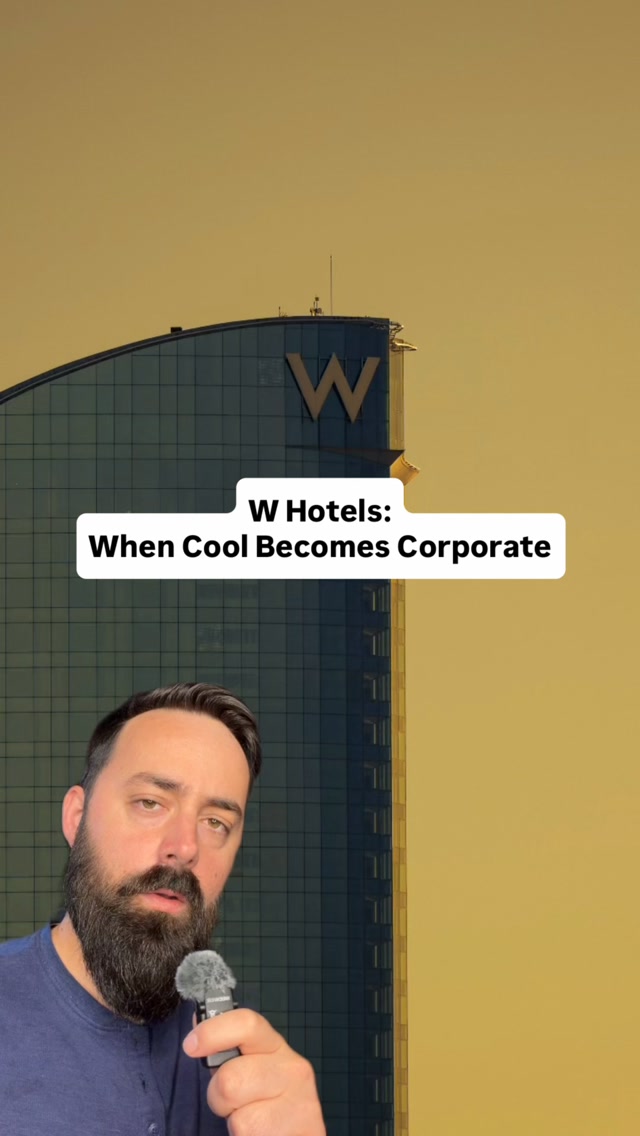
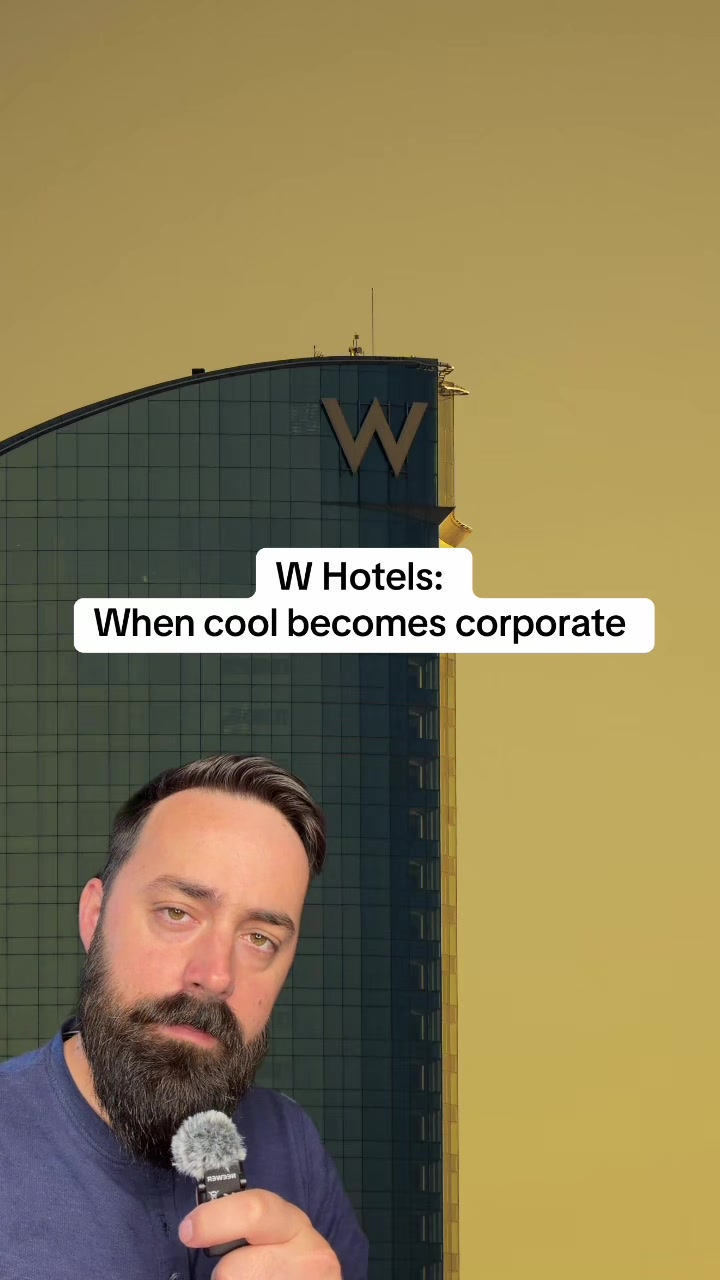
W Hotels: When cool becomes corporate

Verbal hook · 35%

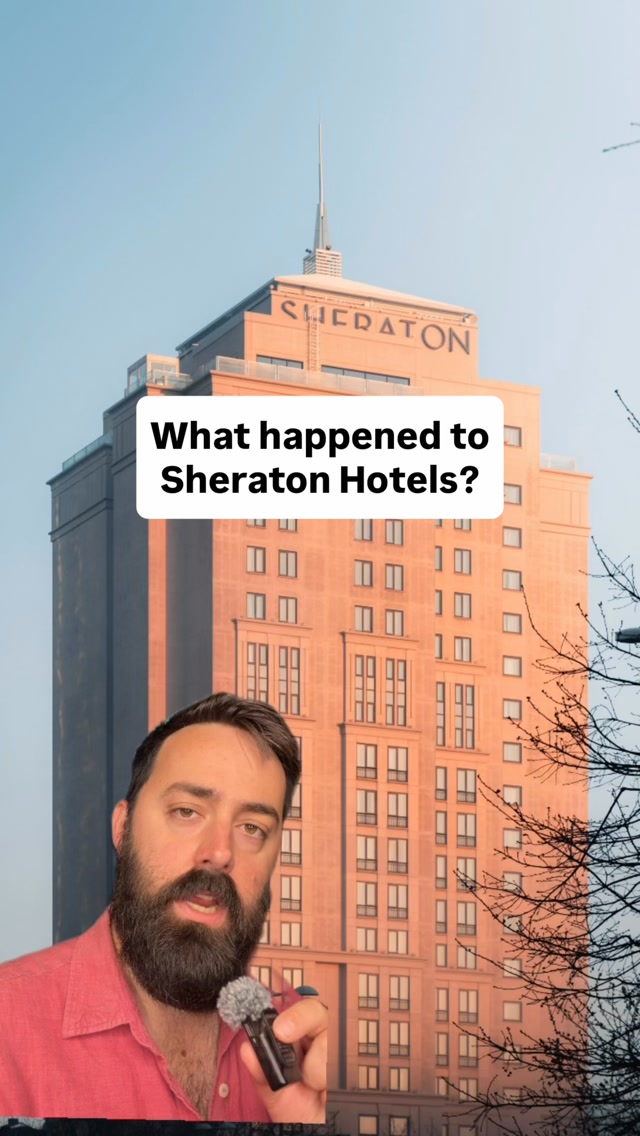
What happened to W Hotels?

Visual hook

The creator is superimposed over a shot of a modern, glass W Hotel building, immediately establishing the video's subject and the creator's role as an analyst.

[06]

Hook template

Steal this for your own video

[brand or trend]: When [defining appeal] becomes [identity-diluting shift]

  • — W Hotels: When cool becomes corporate
  • — Meal kits: When convenience becomes a chore
  • — Fitness apps: When motivation becomes pressure

[07]

Hook and payoff

The promise the opener makes, and how the video pays it back

Hook

A direct, curiosity-stoking question that frames the subject as a mystery to be solved (e.g., 'What happened to...?').

Payoff

A powerful concluding statement that contrasts the subject's original promise with its current failed state, delivering an emotional and intellectual resolution. This is often followed by a direct call for audience debate.

[08]

Narrative framework

The structural pattern this video runs on

Framework

The 'Fall From Grace' Analysis

A chronological and thematic deconstruction of why a once-beloved or successful entity (brand, product, trend) lost its way, blending historical context with critical analysis to provide a satisfying explanation for its decline.

  1. 1

    The Golden Age

    Establish the subject's initial success, unique value, and the reasons for its original popularity. This sets the high point from which it will fall.

  2. 2

    The Secret Sauce

    Isolate and explain the single most important psychological or strategic factor that made the subject successful in the first place, moving beyond surface-level features.

  3. 3

    The Inevitable Erosion

    Introduce the central, often external or time-based, problem that began to erode the subject's dominance or relevance (e.g., changing tastes, aging demographics).

  4. 4

    The Corporate Catalyst

    Detail a specific event (e.g., an acquisition, a major mistake, a market shift) that compounded the initial problem and accelerated the decline, often by introducing corporate bureaucracy or diluting the original vision.

  5. 5

    The Failed Fix & Personal Takedown

    Acknowledge and then dismantle the 'official' attempt to fix the problem, using a personal anecdote or specific evidence to prove its ineffectiveness and demonstrate the core issue remains.

  6. 6

    The Expert Prescription

    Conclude the analysis by summarizing the core failure and prescribing what would be needed for a true recovery, establishing the narrator's authority on the matter.

Themes

  • Brand decay
  • Corporate acquisition
  • Cultural relevance
  • Consumer perception

Techniques

  • Historical analysis
  • Brand critique
  • Case study

Post caption

W Hotels used to be cool. Then, due partially to their ideal demographic aging out, and promises starting to falter, they became uncool, corporatized and lost. #hospitality #hotel #hotels #whotel

Text overlays

  • title · beginning

    W Hotels: When cool becomes corporate

  • title · beginning

    WHAT HAPPENED TO W HOTELS?

  • contextual · beginning

    A HOTEL CAN BE A CULTURAL CENTRE.

  • contextual · middle

    THEY WERE WILLING TO PAY THIS IDENTITY PREMIUM

  • contextual · middle

    MARRIOTT'S ACQUISITION OF STARWOOD IN 2016 PRESENTED ANOTHER CHALLENGE.

  • contextual · end

    IT'S JUST LUXURY PRICING WITHOUT LUXURY SERVICE.

  • contextual · end

    DESIGN WAS NEVER THE PROBLEM. IT WAS THE SERVICE AND THE EXPERIENCE.

  • contextual · end

    THE WHATEVER, WHENEVER PROMISE ACTUALLY USED TO MEAN SOMETHING.

Transcript

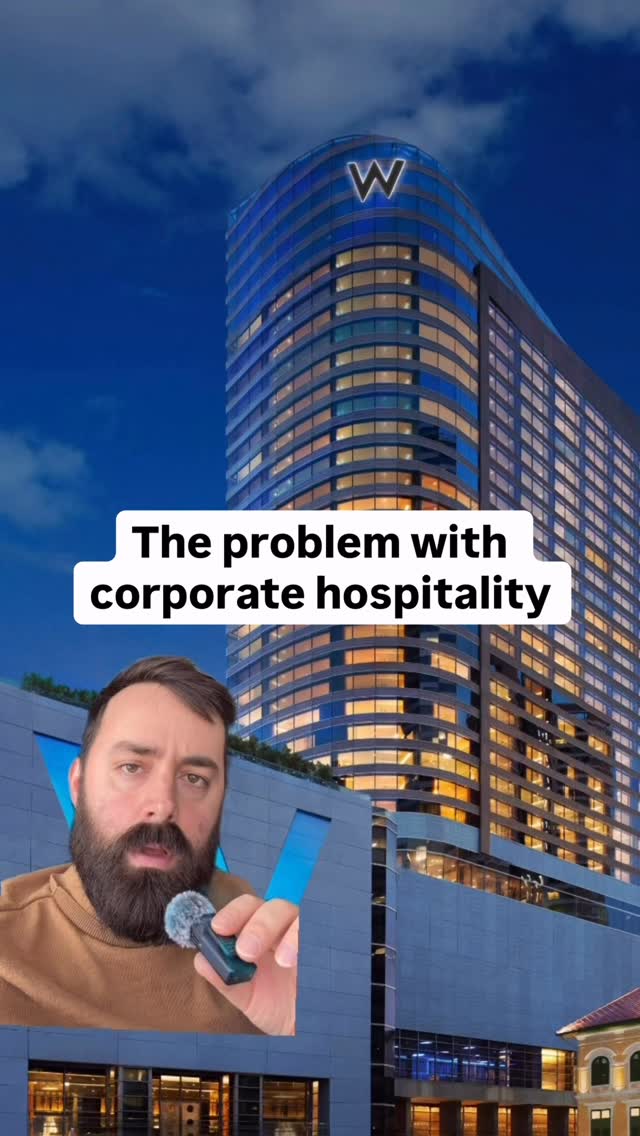
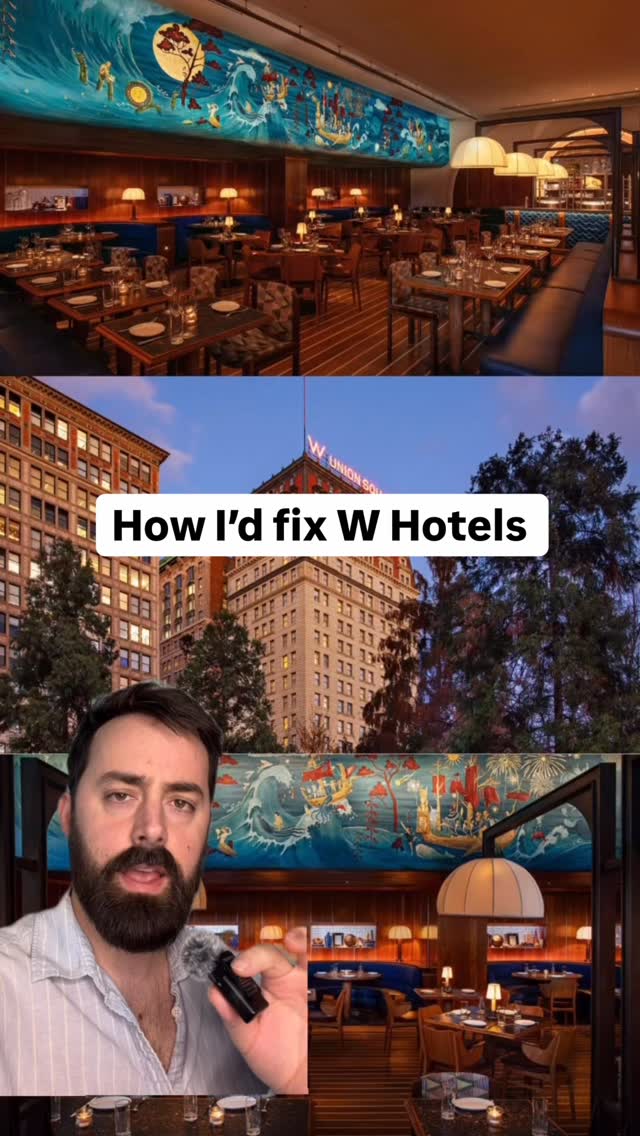
What happened to w Hotels? When w Hotels launched in New York in 1998, it offered a compelling alternative to the conventional business hotel. You could travel for work, but you still felt like you were somewhere with personality. Rank had soul, spirit, The music design and nightlife were central to the experience. W understood something that few hotels understood at the time, that a hotel can be a cultural center. A hotel can say something about yourself, your identity, your taste. People were bored of beige hotels at the time, so they were willing to pay this identity premium where they bought a room, but what they were actually paying for is the environment, the atmosphere, and the experience. The challenge is that a brand built around staying culturally relevant has to keep earning the trust of their best. And what felt exciting in 1998 doesn't automatically feel exciting twelve, twenty years later. And as the lifestyle category expanded and their best aged out, the category became kind of kitschy. Having good design was not enough anymore. The distinction between hotels had to come from how everything worse better. How the atmosphere, the room, the service, the food and drinks connected to the city outside. And whether or not you actually met the brand promises that you advertised. And then Marriott's acquisition of Starwood in 2016 presented another challenge. The w joined a portfolio already featuring Edition Hotel. Though it needed a clear reason to exist alongside its corporate siblings, this doesn't mean that Marriott neglected w Hotels, but it makes the positioning question unavoidable. What does this brand actually stand for, or what should a guest expect? W Hotels brands themselves as luxury lifestyle, which really doesn't mean anything. It's just luxury pricing without luxury service. And, yes, I know that Marriott is currently refreshing w Hotels, planning to have over 80% of the portfolio done by 2028. But design was never the problem. It was the service and the experience. And even if people say they don't care about the service and experience, that only holds true until something happens where they need good service. I went to a newly renovated w hotels in Florence, and the design was tacky as better, and the experience itself was a complete mess. And their website is full of with the word curated everywhere, which doesn't mean anything. It's just an easy way to avoid being specific. You have to define an experience worth protecting and then make sure that staffing, training, maintenance, and programming can deliver it consistently. Every property can have its own character, but it has to have a dependable level of care. Anyways, I know this brand refresh does include service and anticipatory service, so my only hope is that they fulfill those promises and they go back to their roots. Because the whatever whenever promise actually used to mean something. So as usual, let me know where I'm right or brutally wrong in the comments.

Explaining a hotel brand's decline | Viral Hooks