@sakata.ken
Instagram · Talking Head Edit
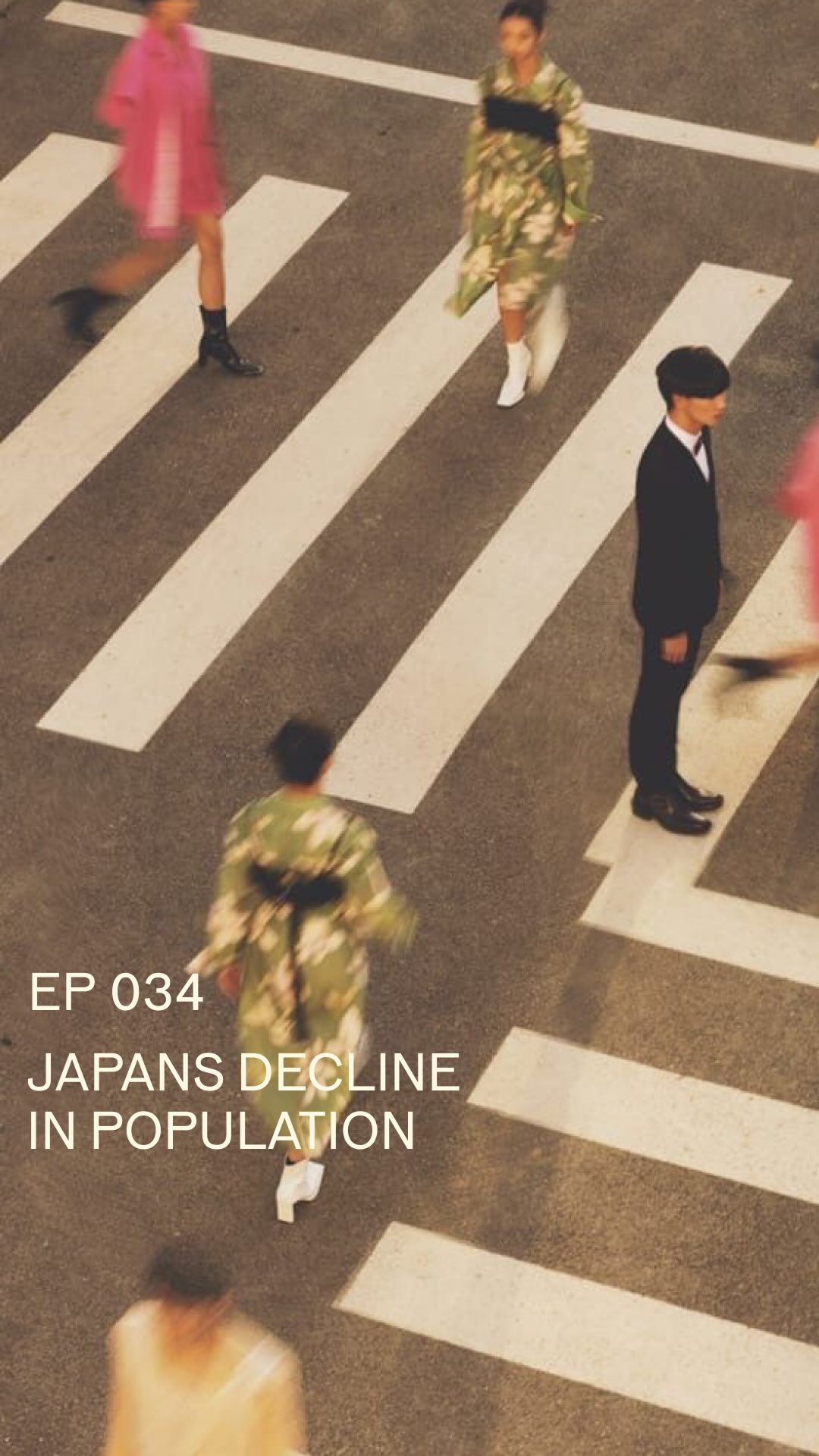
@sakata.ken Clothes made in Japan have a great reputation. What does Japan want to make?

@sakata.ken
Instagram · Talking Head Edit
@sakata.ken Clothes made in Japan have a great reputation. What does Japan want to make?
Performance
Video #15443 · Talking Head Edit
[01]
The creator explains how Japan's record-low birth rate is causing a demographic crisis with a shrinking and aging population. He connects this trend to the country's traditional manufacturing and fashion industries, showing how the aging artisan workforce and lack of succession are leading to the loss of skills and the consolidation of smaller factories. Finally, he analyzes the consumer side, arguing that a smaller youth demographic is shifting mainstream taste away from trend-based fashion towards higher-quality, functional clothing.
[02]
[03]
 119.9K61.7×Creator explains why fashion stopped@alexgreifeld · Breakdown
 124.6K52.2×Why visible aging is luxury@ashi.branding · Breakdown
 596.2K1.9×Cultural fashion exchange explained@frontoffice.co · Breakdown
 803.5KExplains cultural shift away from microtrends@eugbrandstrat · Breakdown
 316.7K1.9×Four core themes of Japanese design@frontoffice.co · Breakdown
 327.7K3.8×Analyzing the rise and fall of normcore@thealgorythm · Breakdown
 499.1K145.7×Historical breakdown of streetwear origins@henrythekid · Culture Profile
 792.4K46×Explaining fast fashion's decentralized model@ericcrackschina · Breakdown
 272.3K48.1×Explaining the skinny vs baggy cycle@peter_reitano · Evolution Showcase
 1.2M1.1×Creator analyzes contradictory fashion articles@caseymorrowlewis · Headlines
 250.4K1.9×Cultural trend analysis with examples@tatumbrandt · Breakdown
 114.6K1.2×Creator explains fashion's art problem@ghostinthesam · Breakdown
[04]
[05]
What stops the scroll in the first 3 seconds
Verbal hook · 70%
In 2024, 686,000 babies were born in Japan.
Visual hook · 30%
A medium shot of a speaker talking directly to the camera, followed by a quick cut to a compelling close-up photo of a young Japanese child.
[06]
Steal this for your own video
In , were born in —and it’s changing .
[07]
The promise the opener makes, and how the video pays it back
Hook
Present a counterintuitive statistic or a surprising data point and immediately frame it as a significant problem, creating an immediate 'why?' question for the viewer.
Payoff
The New Mainstream: Conclude by defining the new market equilibrium or cultural reality that has emerged from this chain of events, providing a complete and satisfying explanation that resolves the initial hook.
[08]
The structural pattern this video runs on
Framework
The Domino Effect Diagnosis
Connecting a large-scale, abstract problem to its tangible, cascading consequences within a specific niche by analyzing both the supply-side and demand-side impacts.
The Alarming Data Point
Introduce a single, powerful statistic and declare it a problem, establishing the core tension of the narrative.
The Core Consequences
Broadly define the two primary, high-level effects of this problem, providing a simple framework for the viewer to follow.
The Ground-Level Impact
Zoom in from the macro problem to its direct effect on a specific group of people or a particular industry, making the abstract tangible and relatable.
The Knowledge Extinction
Detail the specific, irreplaceable skills, traditions, or knowledge that are being lost as a result, raising the cultural stakes.
The Economic Squeeze
Describe the resulting business pressures and the difficult choices stakeholders must make, such as adapting, consolidating, or disappearing.
The Supply-Side Shift
Explain how the production of goods or services fundamentally changes in response to these pressures, moving from one model to another.
The Demand-Side Pivot
Transition the analysis to the other side of the market, showing how the initial problem also affects consumers or end-users, providing a complete picture.
The Generational Taste Shift
Explain how the demographic or social change directly alters what the market wants, values, and consumes.
Clothes made in Japan have a great reputation. What does Japan want to make?
Twenty twenty four six hundred and eighty six thousand babies were born in Japan rank that is a problem, and that's because that is the lowest figure since the records began and this means two things: population shrinks and the population ages. In modern day Japan if you walk into a dye house, a sewing workshop, or a weaving mill, the average artisan is about 60 years old. Their children are working in big cities like Tokyo, they're working in offices, and that's if they have children at all. So the skills that are passed down from generation to generation, like things like indigo dyeing, loop wheel weaving, the maintenance of these antique machines, the branch of knowledge just disappears. So smaller factories are faced with a decision. They either have to close down or they have to join up with these bigger conglomerates. The work moves away from slower artisanal practice into flatter, more broader work that everyone is interested in, everyone can afford. So on the production side, things are changing. But on the consumer side, things are changing as well. Domestically, fewer young people means fewer buyers of trend based fashion. What would otherwise be a very powerful eighteen to twenty four consumer base is less relevant in an aging population. So commercial mainstream taste goes more towards higher quality, comfort, functionality instead of