@frontoffice.co
TikTok · Talking Head Edit
@frontoffice.co ‘Japanese brands can do American fashion but American brands CAN’T do Japanese fashion’. Is this true?

@frontoffice.co
TikTok · Talking Head Edit
@frontoffice.co ‘Japanese brands can do American fashion but American brands CAN’T do Japanese fashion’. Is this true?
Performance
Video #8168 · Talking Head Edit
[01]
The creator analyzes the statement that 'Japanese brands can do American fashion, but American brands can't do Japanese fashion.' He uses a 2x2 chart to break down the relationship, first showing how Japanese brands excel at both traditional Japanese styles (boro, kimono) and contemporary avant-garde fashion, and how American brands have defined genres like denim, workwear, and streetwear. He then demonstrates how Japanese brands have successfully reinterpreted American styles (BAPE, The Real McCoy's), before arguing that American brands are now, in a 'third wave,' incorporating Japanese techniques and aesthetics back into their own products, creating a full-circle cultural exchange.
[02]
[03]
 791.9K1.9×Three designers reinterpret one jacket@frontoffice.co · Case Study Breakdown
 316.7K1.9×Four core themes of Japanese design@frontoffice.co · Breakdown
 459.8K87.6×History of rebel fashion explainer@henrythekidd_ · Breakdown
 499.1K145.7×Historical breakdown of streetwear origins@henrythekid · Culture Profile
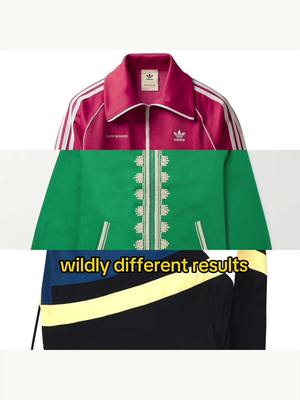 770.1K1.7×Comparing three designers' jacket interpretations@frontoffice.co · Case Study Breakdown
 909.7K1.9×Comparing three takes on one jacket@frontoffice.co · Case Study Breakdown
 60.1K2×Showcasing creators of heritage style@ethan.lorin · Culture Profile
 559.6K457.6×Explaining a K-Pop group's style@trycloseted · Case Study Breakdown
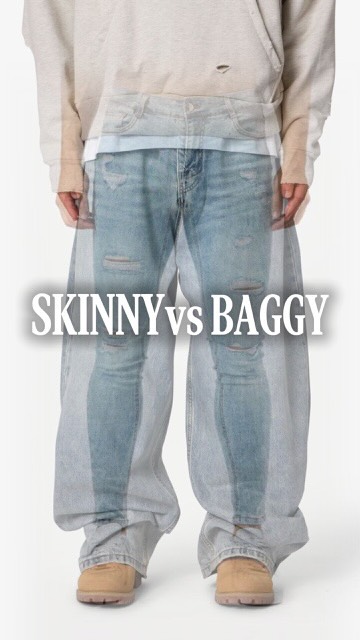 272.3K48.1×Explaining the skinny vs baggy cycle@peter_reitano · Evolution Showcase
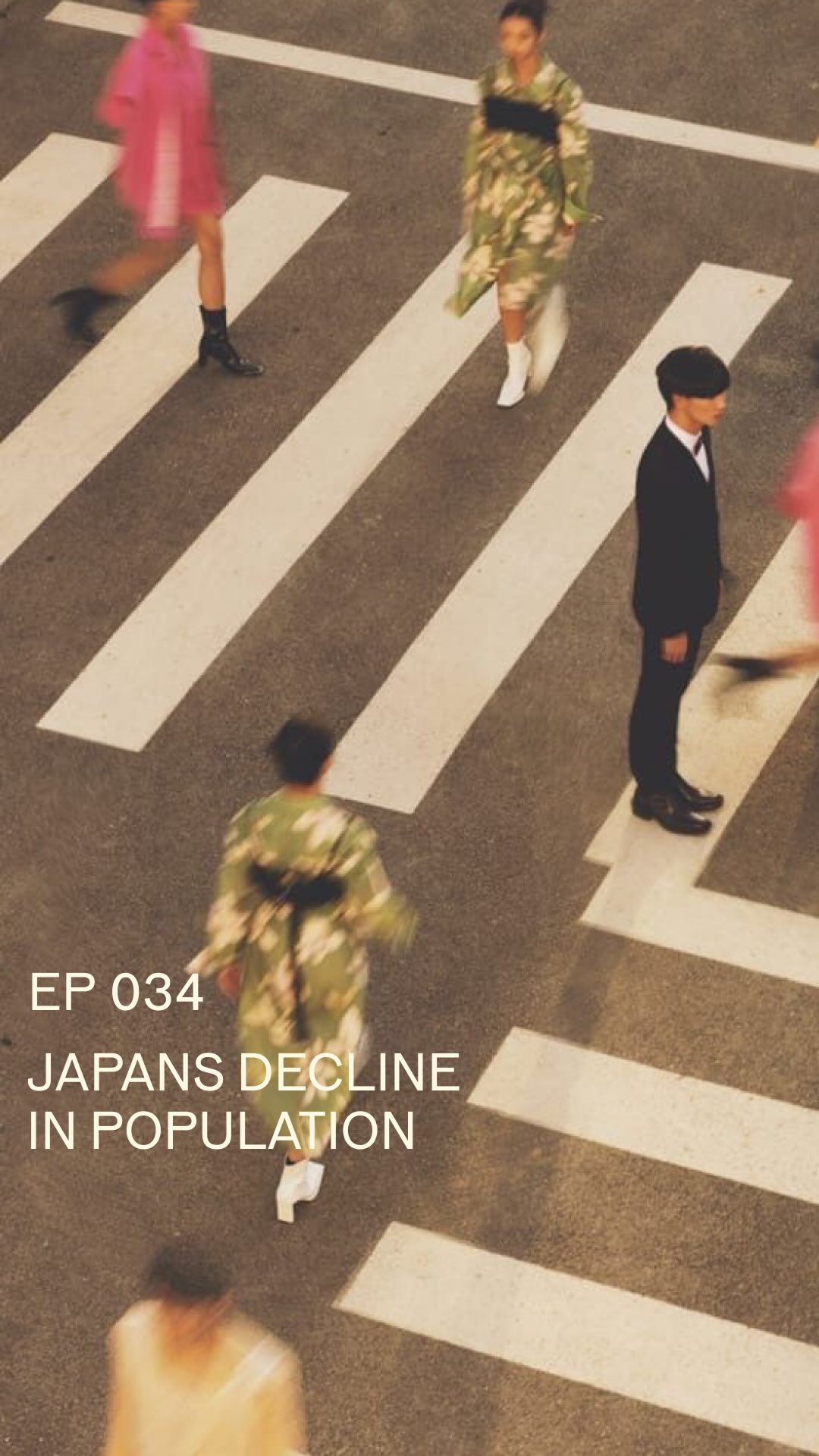 1M3.6×How demographics are changing fashion@sakata.ken · Explainer
 119.9K61.7×Creator explains why fashion stopped@alexgreifeld · Breakdown
 485.7KCultural analysis of brand remixing@eugbrandstrat · Breakdown
[04]
[05]
What stops the scroll in the first 3 seconds
Verbal hook · 85%
so Japanese brands can do American fashion, but American brands can't do Japanese fashion.
Visual hook · 15%
A medium shot of the speaker talking directly to the camera while making an expressive hand gesture, which adds immediate dynamic movement to the scene.
[06]
Steal this for your own video
So can do 's , but can't do 's .
[07]
The promise the opener makes, and how the video pays it back
Hook
A provocative, commonly held belief is stated as a binary absolute ('X can do Y, but Y can't do X'), immediately followed by a question that challenges its validity, hooking the viewer with the promise of a definitive answer.
Payoff
The creator reveals a higher-level synthesis, concluding that the initial binary and the 2x2 matrix were flawed models. The true answer is a 'third wave' or hybrid state where influence flows in both directions, creating a single, intertwined culture. This provides an intellectually satisfying resolution that is more nuanced than a simple yes/no answer.
[08]
The structural pattern this video runs on
Framework
The Quadrant Resolution Framework
A debatable binary premise is introduced and then systematically deconstructed using a 2x2 matrix. Each quadrant is evaluated with evidence, leading to a final, nuanced synthesis that subverts the initial premise and reveals a more complex truth.
The Analytical Framework
A simple visual model, like a 2x2 chart, is introduced to provide a clear, logical structure for the investigation. This frames the video as an objective analysis rather than a simple opinion.
The Baseline Confirmation
The two most obvious and non-controversial quadrants of the matrix are quickly validated with evidence. This builds credibility and establishes a shared understanding with the audience before tackling the more complex points.
The Thesis Proof
The quadrant that supports the hook's initial premise is explored in depth. This beat provides the strongest evidence for the popular belief, satisfying the viewer's initial curiosity and validating their potential bias.
The Contested Ground
The final, most contentious quadrant is presented as the central puzzle of the video. The narrative leans into the initial premise, suggesting this quadrant is invalid, thereby creating maximum tension and anticipation for the final verdict.
The Subversive Reframe
The expected conclusion is overturned. Instead of confirming the premise, the creator introduces a new perspective that re-contextualizes the problem, arguing that the phenomenon in the final quadrant is happening, just in a less obvious way.
‘Japanese brands can do American fashion but American brands CAN’T do Japanese fashion’. Is this true?
contextual · beginning
BRANDS
contextual · beginning
STYLE
informational · beginning
like boro, sashiko
informational · beginning
silhouettes like kimono, noragi
contextual · beginning
like Yohji Yamamoto
informational · middle
a monochromaticity
informational · middle
an emphasis on drape
informational · middle
an emphasis on texture
informational · middle
oversized silhouettes
contextual · middle
like Levi's
contextual · middle
with Carhartt, Red Wing
contextual · middle
with Alpha Industries
contextual · middle
Ralph Lauren
contextual · middle
like Supreme
contextual · middle
Aime Leon Dore, Noah
contextual · middle
(actually not Noah)
contextual · middle
like Nigo's BAPE
contextual · middle
the Real McCoy's
contextual · middle
like visvim and Kapital
contextual · middle
TAKE IVY
contextual · middle
J Press
informational · end
a third wave
contextual · end
like 1950s Levi's
informational · end
Made in Japan range
contextual · end
like 3sixteen
contextual · end
AMETORA HOW JAPAN SAVED AMERICAN STYLE
No Japanese brands can do American fashion, but American brands can't do Japanese fashion. Now, is that necessarily true? I made a chart. So we've got Japanese brands, American brands. Japanese fashion, American fashion. Japanese brands do Japanese fashion very well, obviously. There are traditional Japanese techniques like Best, Sashiko, and tier are unmistakable Japanese silhouettes like kimono, noragi, but those are traditional Japanese clothes. Apart from that, there's also a Japanese identity in contemporary clothes. Seen in designers like Yoji Yamamoto, Rei Kawakubo, there are some themes that emerge, like a monochromaticity, an emphasis on drape, an emphasis on texture, oversized silhouettes. You see that design language in legacy rank, but also in modern contemporary brands as well, that continue this identity. American brands obviously do American fashion very well. They have invented several sub genres of fashion. There's American denim with iconic American brands like Levi's, there's American worse with Carhartt, Red Wing, there's American military wear with alpha industries, and American Ivy or prep with Ralph Lauren. Then of course there's streetwear which America best. And then you have iconic brands like supreme, more modern brands like armet leon d'or, no, actually not no, but I think it starts to get interesting when Japan starts doing these American sub genres. Like, nigo's babe has been very successful at doing his version of American streetwear. The real McCoy's does the most faithful and authentic reproduction of American military wear down to the patina of certain buttons rank iconic Japanese brands like Bismim and Capital draw on Americana, draw on American influences for their own brand direction. And when it comes to American Ivy, the Japanese take on American Ivy is extremely influential. The Japanese arm of American brand J yes is six times bigger than the American counterpart. And now we have the most interesting quadrants, American brands doing Japanese fashion. And you can perhaps come to the conclusion that the Americans are not very interested in doing any other culture besides themselves. But I think that's wrong. I don't think that's necessarily true. Because I think that Americans are doing Japanese fashion, it's just that it's not very obvious. I think we are experiencing a third wave where the Japanese takes on American fashion have now fed back to America. We have now come full circle. American streetwear influences BAPE and now BAPE influences Pharrell. Our tier Levi's influences Japanese brands to start doing salvage denim and now modern Levi's has a made in Japan rank. And now we have very interesting iconic brands like three sixteen, which is an American brand that uses Japanese denim and makes their jeans in America. And they make both countries a key part of their identity. Tier. So ultimately we can talk about clothes just being clothes. But the clothes that we get now are a product of this ongoing ping pong cultural exchange that has happened over the last seventy years. And really, the chart that I have made to falsely box it into these quadrants is probably not the way we should think about it. What is really happening is that both countries are contributing to the same hybrid culture. And the most interesting thing about this phenomenon is that this hybrid fashion culture that they've created is seen by both sides as authentic, but it is also seen by both sides as exotic, as strange as the other, and is equally appealing to both cultures.