Viral Hooks
Trending short videosAnalyzing defensive social media comments
S

@sensei.nick

Instagram · Yap

@sensei.nick i made an observation. i didn’t ask anyone to change. i didn’t say it was good or bad. and somehow that turned into a lot of explanations about why people “don’t care.” here’s the thing. people who don’t care don’t clarify. they don’t justify. they don’t announce their indifference. they scroll. the comments weren’t disagreement. they were rationalizations. not because anyone was attacked, but because something felt personally relevant. this wasn’t about likes. it was about patterns. and the reactions did more explaining than i ever could

View original on Instagram

The edit1 shot · 1 text
Shots Text

Performance

Views
82.1K
Likes
4.7K
Comments
226
Engagement
6%

Video #15500 · Yap

Analyzing defensive social media commentsfrom @sensei.nick

[01]

Overview

The creator analyzes the defensive reactions to a previous viral video he made about social media behavior. He explains that his simple observation prompted many viewers to comment that they "don't care," which he interprets as a psychological defense mechanism. He breaks down how an observation that feels personally relevant can threaten someone's self-image, leading them to rationalize their behavior, and concludes that the act of commenting itself confirms that they do, in fact, care.

[02]

Simple outline

  1. 1State contrarian observation
  2. 2Showcase defensive reactions
  3. 3Reveal underlying psychology
  4. 4Use reactions as proof

[03]

Related videos

[04]

Classification

Format
Concepts
BreakdownAnecdotal Philosophy
Elements
Jump CutTitle Text Hook

[05]

Hook analysis

What stops the scroll in the first 3 seconds

Title hook · 65%

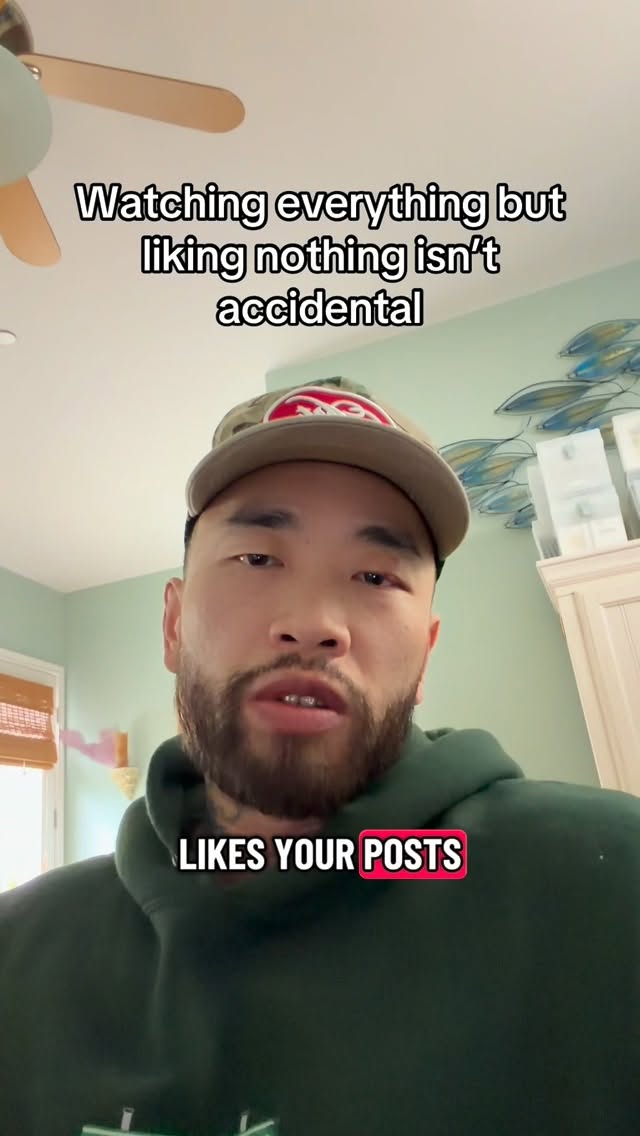
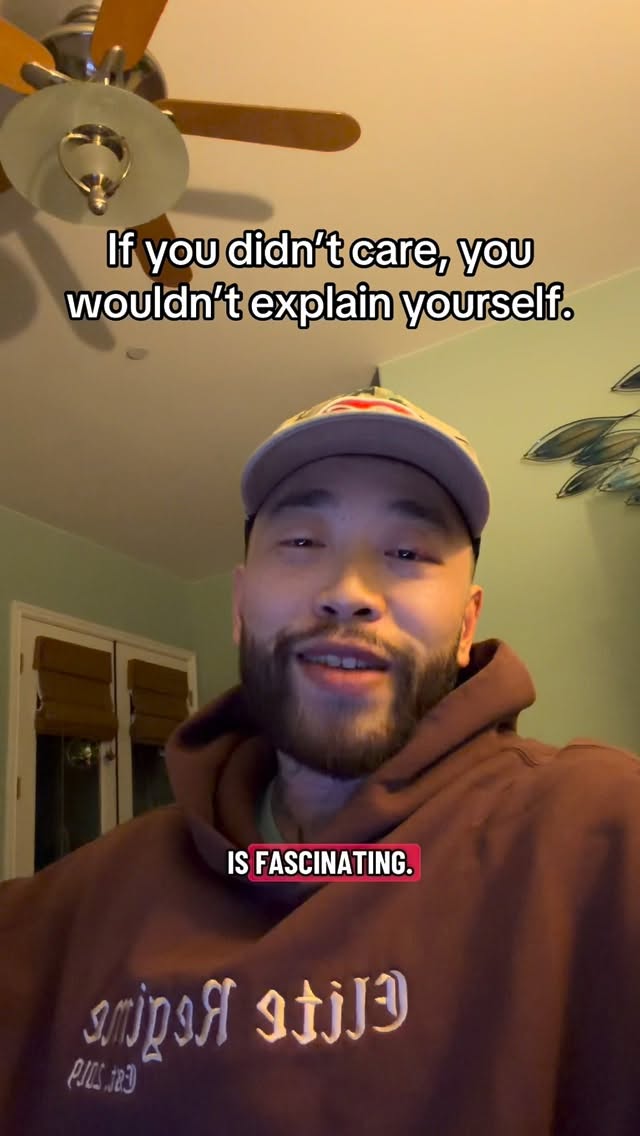
If you didn't care, you wouldn't explain yourself.

Verbal hook · 30%

Okay. Social media is fascinating.

Visual hook · 5%

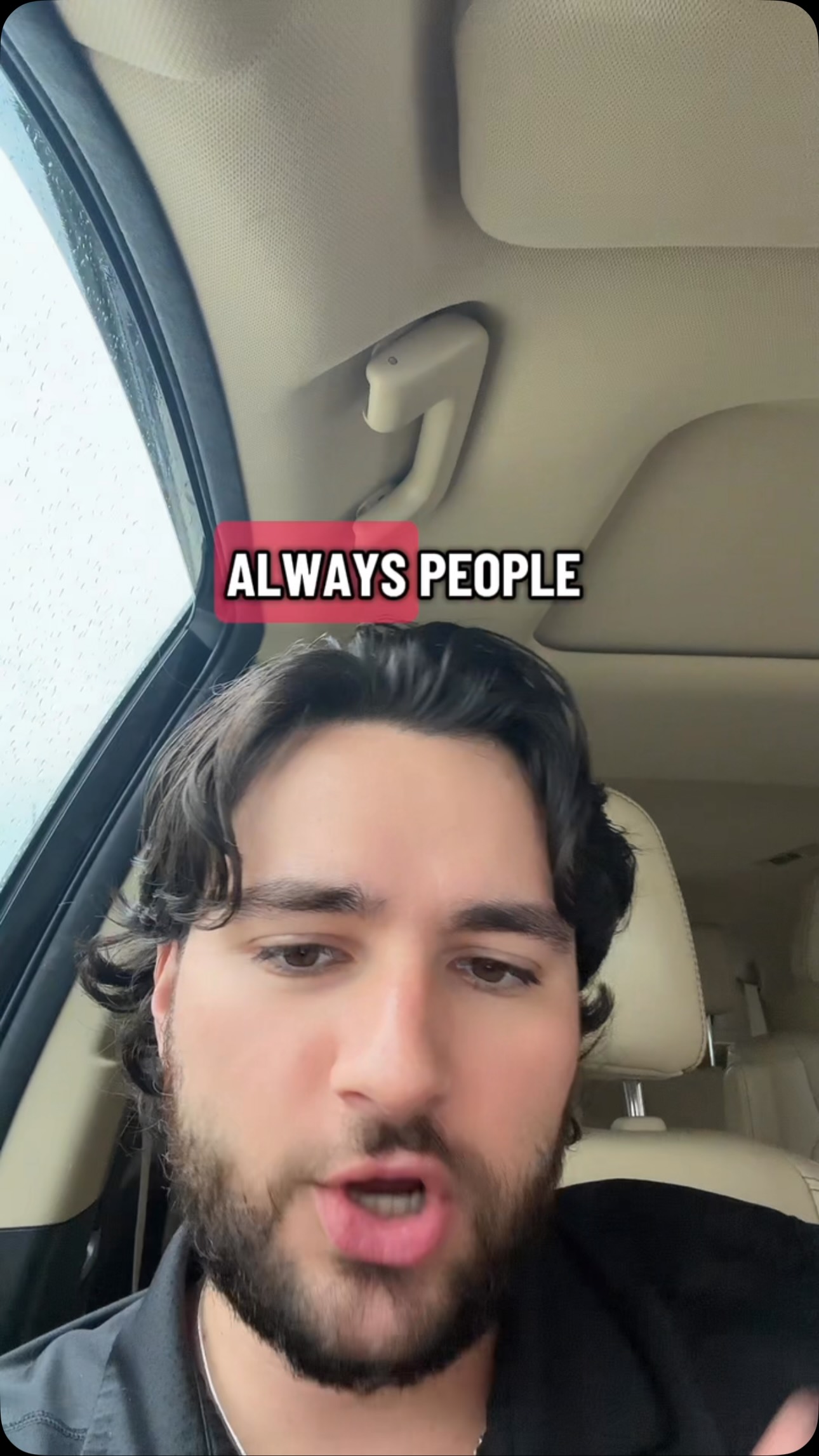
A direct-to-camera shot of the speaker from a slightly low angle, creating a personal and conversational feel.

[06]

Hook template

Steal this for your own video

If you didn’t care about [topic], you wouldn’t [defensive behavior].

  • — If you didn’t care about your fitness, you wouldn’t argue with every workout tip.
  • — If you didn’t care about your brand, you wouldn’t defend every bad review.
  • — If you didn’t care about your spending, you wouldn’t justify every purchase.

[07]

Hook and payoff

The promise the opener makes, and how the video pays it back

Hook

A bold, paradoxical statement about human behavior that immediately challenges the viewer's assumptions and creates intrigue.

Payoff

A final, ironic restatement of the initial hook, now presented as a proven conclusion. This creates a satisfying 'checkmate' moment, closing the argumentative loop and leaving the viewer feeling intellectually validated.

[08]

Narrative framework

The structural pattern this video runs on

Framework

The Reaction-Proof Thesis

To prove a controversial observation about human behavior by using the predictable, defensive reactions of an audience as the primary evidence of its validity.

  1. 1

    The Catalyst

    Introduce a specific, recent event or observation that triggered a public or predictable response. This grounds the abstract argument in a concrete example.

  2. 2

    The Contradiction Showcase

    Present the audience's defensive or contradictory reactions as the central problem to be solved. Quote or describe the exact behaviors that seem to disprove the initial hook.

  3. 3

    The Core Principle Declaration

    State a simple, counter-intuitive axiom about human nature that will serve as the lens for re-interpreting the contradictory evidence.

  4. 4

    The Psychological Autopsy

    Deconstruct the 'why' behind the audience's reaction. Re-frame their behavior not as disagreement, but as an unconscious psychological defense mechanism (e.g., rationalization, ego-defense).

  5. 5

    The Validation Loop

    Explicitly state how the defensive reactions, once viewed through the psychological lens, do not refute the initial observation but instead serve as the strongest confirmation of it.

Themes

  • Cognitive dissonance
  • Self-perception
  • Online behavior
  • Defensiveness

Techniques

  • Direct address
  • Anecdotal evidence
  • Psychological analysis

Post caption

i made an observation. i didn’t ask anyone to change. i didn’t say it was good or bad. and somehow that turned into a lot of explanations about why people “don’t care.” here’s the thing. people who don’t care don’t clarify. they don’t justify. they don’t announce their indifference. they scroll. the comments weren’t disagreement. they were rationalizations. not because anyone was attacked, but because something felt personally relevant. this wasn’t about likes. it was about patterns. and the reactions did more explaining than i ever could

Text overlays

  • title · throughout

    If you didn't care, you wouldn't explain yourself.

Transcript

Okay. Social media is fascinating. So something super interesting happened recently when one of my videos kinda went viral. It was the, watching everything better liking nothing video. Simple observation, I didn't say it was bad. I didn't say it was a change. I didn't say I really cared. And a lot of people felt the need to explain themselves in the comments. Things like, I don't care. This is insecure. I worst for me. Why would anyone think this hard? And here's the thing. People who truly don't care don't announce it. They just they just scroll. Right? So what you're seeing in those comments is not disagreement. It is their attempts to rationalize their behavior. So when an observation feels personally relevant and threatens someone's self image, the nervous system moves to defend it. So people reframe. They normalize or they moralize. So not because they were attacked, but because they felt seen. If tier statement didn't didn't apply to them, there will not be anything to defend. Right? No explanation needed. And it's not about likes, it's about patterns. And the moment you point out a pattern people recognize themselves, they rush to tell you why it's actually fine, healthy, and mature. And that response doesn't invalidate the observation. It confirms it. I didn't expose insecurity. I exposed awareness. And the irony is people insisting that they don't care cared enough to comment. That's all this was, an observation, and the reactions did the rest.

Analyzing defensive social media comments | Viral Hooks