@umichlaw
TikTok · Speaker address
@umichlaw A new A2Z Q&A dropped on YouTube today! We’ll be sharing each of the questions here on TikTok but you can watch the entire episode over on YouTube now.

@umichlaw
TikTok · Speaker address
@umichlaw A new A2Z Q&A dropped on YouTube today! We’ll be sharing each of the questions here on TikTok but you can watch the entire episode over on YouTube now.
Performance
Video #16613 · Speaker address
[01]
A law school representative reads a question from a prospective student who is considering taking the LSAT for a third time after seeing a score increase from 159 to 164. She analyzes the situation, explaining that a significant score jump to 170+ would likely not be a red flag, but cautions that such large increases are rare. She concludes by advising the student to be cautious and only retake the test if they have a strong, evidence-based reason to believe they can achieve a much higher score, as multiple similar scores could be perceived negatively.
[02]
[03]
 1MPersonal story of SAT score transformation@ultimateivyleagueguide · Origin Story
 78.3K5×Expert reframes low GPA story@umichlaw · Q&A Response
 89.8K16.3×Law school application case study@umichlaw · Case Study Breakdown
 154.2K14.4×Expert answers law school GPA question@umichlaw · Q&A Response
 154.1K8.6×Viral story drives newsletter CTA@harnidhk · Anecdotal Philosophy
 119.7KExpert uses news to warn@guacandpico · Trendjacking
 2.8M2.3×Interview clip about fame's backlash@nytmag · Ask an Expert
 716K53×Creator breaks down study findings@itsmariahbrunner · Breakdown
 1.6M59.2×Lawyer explains dating age gaps@nycdivorcelawyer · Anecdotal Philosophy
 369.9K8.6×Anecdote about high dating standards@thekatieromero · Anecdotal Philosophy
 4.2M99.1×Dating red flag also applies to interviews@codiesanchez
 81.1K2.9×Podcast clip about bipolar disorder@middlebrowpod · Vulnerable Monologue
[04]
[05]
What stops the scroll in the first 3 seconds
Title hook · 75%
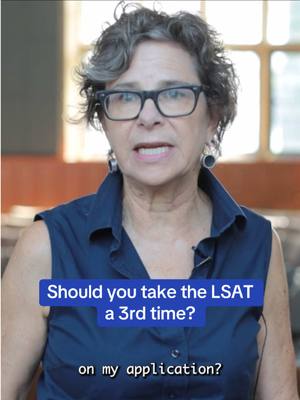
Should you take the LSAT a 3rd time?
Verbal hook · 10%
Here's another really great question.
Visual hook · 15%
A woman in a professional setting with glasses looks directly into the camera, holding papers, establishing immediate authority and preparing to answer a question.
[06]
Steal this for your own video
Should you a time?
[07]
The promise the opener makes, and how the video pays it back
Hook
A direct, on-screen text question that voices a common dilemma for a specific niche audience, followed by the speaker reading a detailed user-submitted version of that question to establish immediate relevance and context.
Payoff
The viewer receives a sophisticated, balanced answer that respects their intelligence and provides a clear framework for their own decision-making, rather than a simplistic command.
[08]
The structural pattern this video runs on
Framework
The 'Yes, But...' Advisory Framework
Addressing a common, high-stakes user question by first validating the desired outcome, then introducing a realistic complication or risk, and finally delivering a nuanced, conditional verdict that empowers the user to make an informed decision.
The Best-Case Validation
The speaker addresses the question by first outlining the ideal scenario where the user's desired action leads to a positive outcome, confirming that it's a valid and potentially successful goal.
The Statistical Reality Check
The speaker immediately pivots to introduce a critical counterpoint, often based on data or probability, that complicates the ideal scenario and grounds the advice in realism, questioning the likelihood of success.
The Risk Definition
The speaker explicitly defines the negative consequence or 'red flag' of pursuing the action without achieving the ideal outcome, making the stakes of failure clear.
The Empowered Verdict
The speaker concludes not with a simple yes/no, but by providing a clear set of conditions and a final piece of cautionary advice, placing the responsibility of the final judgment on the viewer.
A new A2Z Q&A dropped on YouTube today! We’ll be sharing each of the questions here on TikTok but you can watch the entire episode over on YouTube now.
title · beginning
Should you take the LSAT a 3rd time?
Here's another really great question. I'm considering taking the LSAT for a third time. I received a one fifty nine on my first attempt and one sixty four on my second attempt. Would it be a red flag to you if you saw three attempts on my application even if I got a one seventy plus? So this is a complicated question. If you were to take it a third time and you were to score significantly higher than the one sixty four, I don't think anybody any school would hold that against you. Right? They might be curious about what happened between the one fifty tier, the one sixty four, and the one seventy one, but I don't think they would hold it against you. If you have an explanation, you should certainly include it. But more to the point from my point of view is the chances that you're gonna get that one seventy plus are kind of thin. Right? Like, I don't know what about you makes you think you're gonna do so much better. But in general, you've already had one great boost. You good five points more. That's unusual right there. Most people get two or three points. And the higher you go, the less likely you are to score, you know, with five or six more points. So I would say be very cautious because if you take it three times and the scores are quite similar, that is a little bit of a red flag. It says you're not self assessing correctly. So only you good really answer, you know, the issue of whether you have a reasonable chance of of scoring that higher score. But don't do it just to roll the dice. Only do it if you really think there is a reason to do it.