@glass__museum
TikTok · Yap
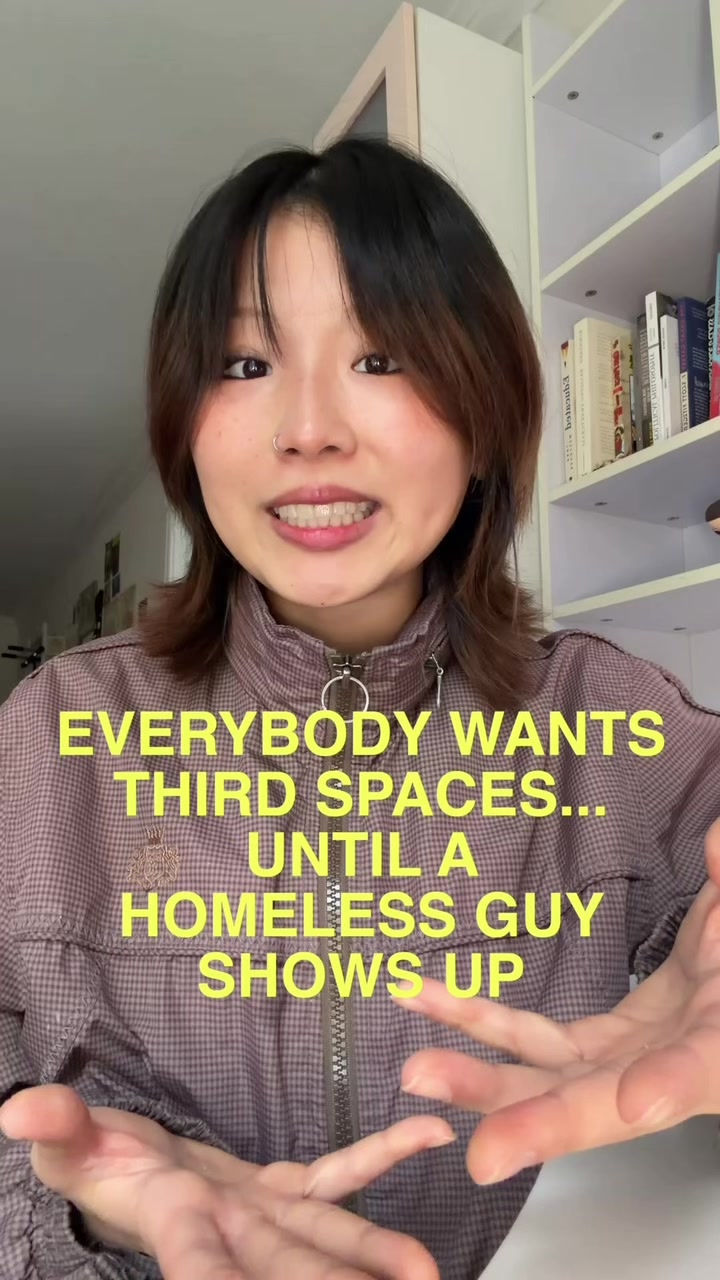
@glass__museum On homelessness, public space, and freedom #politics #leftism #homelessness #thirdspace #philosophy

@glass__museum
TikTok · Yap
@glass__museum On homelessness, public space, and freedom #politics #leftism #homelessness #thirdspace #philosophy
Performance
Video #22294 · Yap
[01]
The creator delivers a sociological and philosophical breakdown of 'third spaces' and homelessness, using Jeremy Waldron's essay to explain the difference between positive and negative freedoms and how laws disproportionately restrict the unhoused in public areas.
[02]
[03]
 713.1K3.4×Walking monologue on class and race@ethanareynolds · Cultural Rant
 135.6K6.9×Walking monologue on class experience@ethanareynolds · Cultural Rant
 268.6K8.1×Political commentary with image overlays@womp_tomp · Cultural Rant
 322.6K1.9×Explaining surveillance state via pop culture@pleasedontmakemefocus · Breakdown
 179.5K5.7×Explaining economic systems with memes@womp_tomp · Breakdown
 84K1.4×Philosophical argument against pursuing happiness@glass__museum · Breakdown
 862.9K198.9×Explaining the decline of spontaneity@ashi.branding
 310.2KDeconstructs the simple life fantasy@orenmeetsworld · Breakdown
 309K9.4×Political commentary rant from car@womp_tomp · Cultural Rant
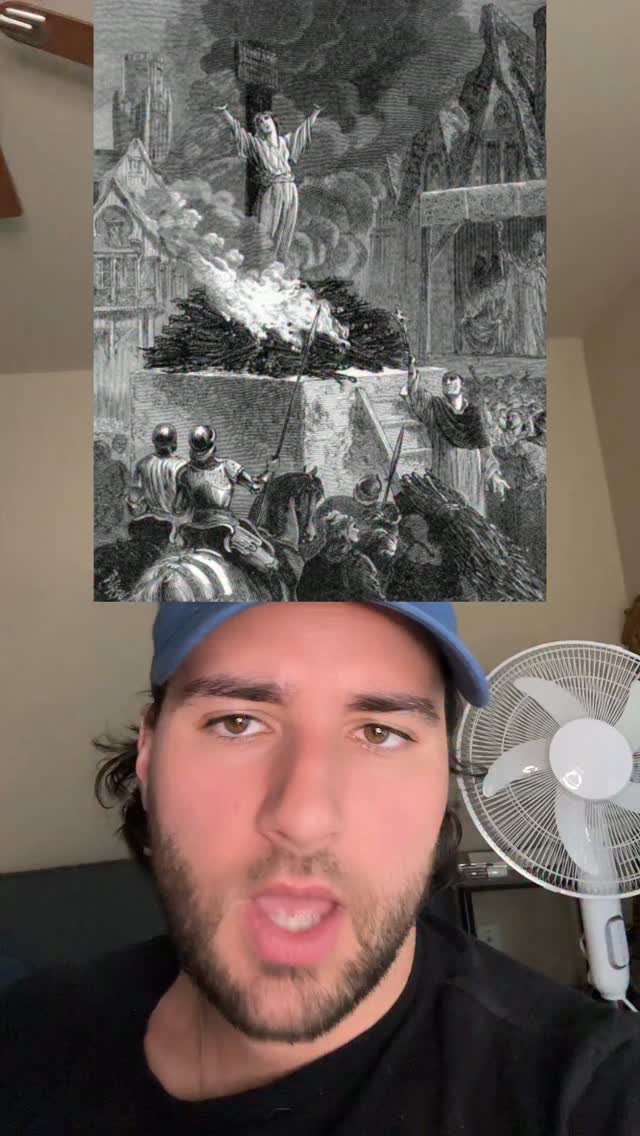 264.2K6.4×Political rant on modern outrage@womp_tomp · Cultural Rant
 290.9K12.5×Sarcastic monologue on being single@jrp.co · Relatable Skit
 163.3K7.8×Philosophical travel vlog about identity@j.g.fall · Vulnerable Monologue
[04]
[05]
What stops the scroll in the first 3 seconds
Title hook · 55%
Everybody wants third spaces until a homeless guy shows up
Verbal hook · 40%
Everybody wants third spaces until a homeless guy shows up.
Visual hook · 5%
Close-up talking head shot with direct eye contact, immediately establishing an intimate and authoritative tone while delivering a controversial opening statement.
[06]
Steal this for your own video
Everybody wants until shows up.
[07]
The promise the opener makes, and how the video pays it back
Hook
The Disruptive Trend Hook: State a universally agreed-upon cultural desire or trend, then immediately disrupt it by introducing the marginalized group that society actively excludes from that desire.
Payoff
The Enlightened Return: Bring the complex systemic argument back to the simple original hook, demanding the viewer apply their newly acquired perspective to the initial trend.
[08]
The structural pattern this video runs on
Framework
The Trojan Horse Video Essay
Leveraging a popular internet discourse as a familiar entry point to deliver a deep, academic sociological critique, ultimately forcing the viewer to re-evaluate their original stance through a systemic lens.
The Trend Validation
Briefly validate the popular discourse to align with the viewer's initial interest and establish common ground before the pivot.
The Scope Expansion
Ask a critical, overarching question that shifts the narrative focus from a privileged, mainstream perspective to a marginalized one.
The Academic Anchor
Introduce a specific formal theory, essay, or scholar to elevate the argument from personal opinion to credible structural analysis.
The Concept Deconstruction
Break down complex academic terminology into easily digestible, binary definitions using simple, relatable language.
The Real-World Application
Apply the newly defined concepts to real-world scenarios, demonstrating exactly how systemic rules inherently disadvantage the subject group.
The Contradiction Cascade
Present a rapid-fire list of societal hypocrisies and double standards that prove the marginalized group is trapped in a systemic no-win scenario.
On homelessness, public space, and freedom #politics #leftism #homelessness #thirdspace #philosophy
title · beginning
Everybody wants third spaces until a homeless guy shows up
informational · middle
Homelessness and the Issue of Freedom by Jeremy Waldron
informational · middle
Positive vs Negative Freedom
Everybody wants third spaces until a homeless guy shows up. Now there's a lot of talk about third spaces for a reason. We need places to form community beyond just home and work, but that begs the question of who gets to be a part of our communities. You want more parks, more libraries, but then you complain when these public infrastructures are, well, public. For the unhoused, the importance of public spaces isn't just a matter of wanting somewhere to chill with friends. It's a matter of existence and freedom. In his landmark essay, Homelessness and the Issue of Freedom, Jeremy Waldron argues that the freedoms of the poor are disproportionately restricted under the law, since their material conditions coerce them into a state in which they must choose between survival and the violation of the law. She writes that freedom exists for the homeless only to the extent that our society is communist. Now before your yes scare ass starts a hemorrhage over the c word, let me explain. But first, let's define our terms. Specifically, let's distinguish between positive and negative freedoms. While positive freedom is the capacity to act according to one's free will, negative freedom is the capacity to act free from the coercion of others. So things like loitering laws, public indecency violations. So they apply to the rich and poor alike, they apply disproportionately to those who possess no private property of their own and thus who exist solely in the collective space. And so while a homeless person may possess the positive freedom to say physically lay down in a park, they have their negative freedom restricted since they'll be forcibly removed for doing so because of the regulation placed on public spaces that prohibits certain actions that are typically relegated to tier private. Best sleeping, kissing, showering, all these actions are natural and necessary and yet they're prohibited in the public space. And this limitation is no problem for owners of private property since the public is conceived of as being complimentary to the private. However, as Waldron notes, this complementarity works only for those who have the benefit of both sorts of places. No if you're homeless, you're stuck in a situation where you're forced to violate the law in order to survive. Because in order to exist, one needs somewhere they can exist. There's oftentimes a contradiction with how people consider the homeless, if they even consider them at all. People don't want them pissing in the streets, but they also don't want them pissing in the McDonald's bathroom. People don't want encampments, but they also oppose the construction of affordable public housing. There seems to be a desire for increased public life, but only a certain kind of public. But if we want to advocate for community building, then we need to reconsider who gets to be a part of our community.