Post caption
I have been thinking about this study for three days and I genuinely cannot let it go. an AI looked at 4 million recipes and rebuilt the map of human civilisation from them, and the people who built that data, recipe by recipe, were our grandmothers. 🙆🏻♀️
paper by @josef_chen and Jakub Radzikowski at @kaikaku.ai
comment EPICURE for the link.
[epicure ai, food ai model, ai cuisine map, kaikaku ai, ai food research, recipes as literature, women’s writing, women’s invisible labour, indian cuisine, south asian food, ai and culture, ai and women, generative ai, ai research, machine learning food, computational gastronomy, food embeddings, cultural data, food and identity, cooking and culture, mothers and]
Transcript
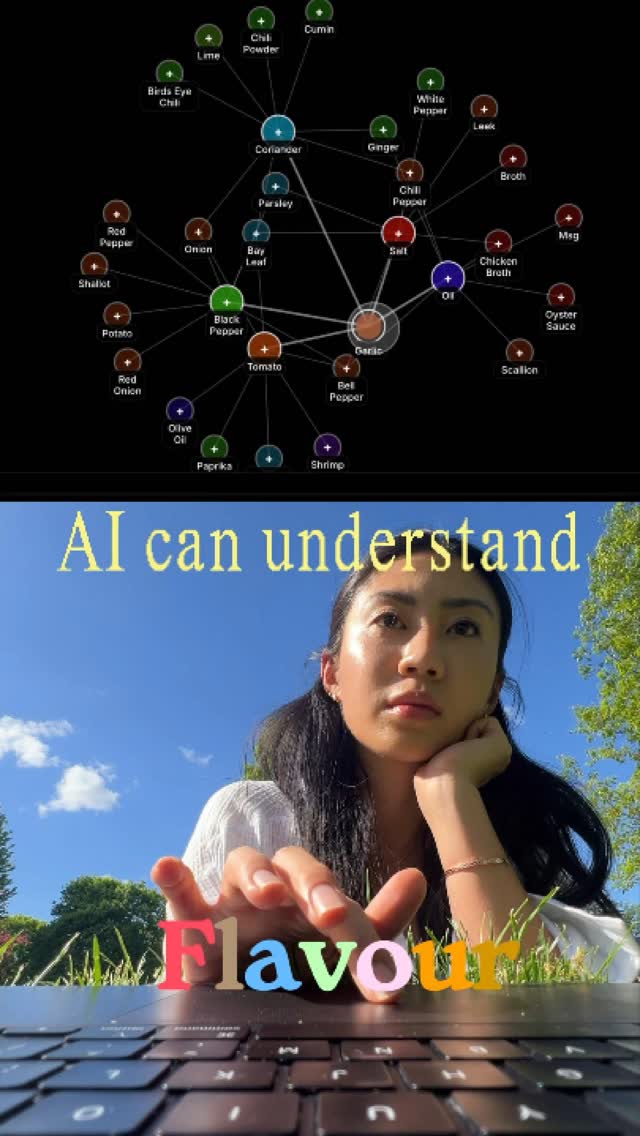
Two researchers fed 4,000,000 recipes into an AI model to see what would happen and it accidentally rediscovered the geography of the human civilization. Jakub Radovski and Joseph Chen, at a company called Taikaku, took 4,100,000 recipes written in seven different languages and fed them to an AI model. They didn't tell the AI anything about the cuisines or the cultures or the geography or the country. They just asked one question, which ingredient tends to show up next to which? Saffron showed up next to cardamom and basmati, and it almost never showed up next to soy sauce. Multiply that by 4,000,000 recipes, and every ingredient gets a kind of statistical fingerprint of the company that it usually keeps. And then they plotted these fingerprints on a chart to see what would happen. What came out, generally, was a map of the worse. South Asian spices clustered with other South Asian spices. Mediterranean ingredients sat where you would put the Mediterranean if you were drawing it from memory. I want you to zoom out for a second. Let's talk about the data they used. Recipes were the first form of women's writing in almost every single culture on this planet. They were copied by hand from mother to daughter, written in the margins of household ledgers, traded between neighbors over fences. They were called instructions, not literature, and the women who wrote them down were never given PhDs or better prizes for what they were doing. We dismissed them for centuries as housework, not real writing. And then 4,000,000 of these recipes got fed into a machine, and what came out was a map of the human civilization itself. Every region we belong to, every cuisine that we call home, every culture that ever felt distinct from one another, it was all sitting there in what our grandmothers, aunts, great grandmothers, mothers wrote down, waiting for someone to connect the dots. If that doesn't make you want to call your mum tonight and ask her how she makes her special dal that doesn't taste the same anywhere else, I genuinely don't know what to tell you. Comment epicure and I'll send you the link to play with the map yourself.