@var.aunevik I just started reading East of Eden by Steinbeck, and as with any book that gets incredibly hyped up on the internet, I get a bit skeptical.
BUT, I promise you this deserves every single mention out there, because what? I am only 160 pages in, and completely sold already.
I came across this one chapter where he spoke about the creative spirit and «free, independent thought», and am still not over it, so I am making a video about it.
So yes, I would recommend it. It is not overhyped.
The creator explains a philosophical concept from John Steinbeck's "East of Eden," quoting passages that warn against how mass production can lead to mass thinking. She connects this 1952 idea to modern productivity culture and the potential dangers of AI, concluding that convenience can "disarm" free thinking without actively destroying it.
Did you know John Steinbeck was scared of mass produced bread, or kind of.
Visual hook
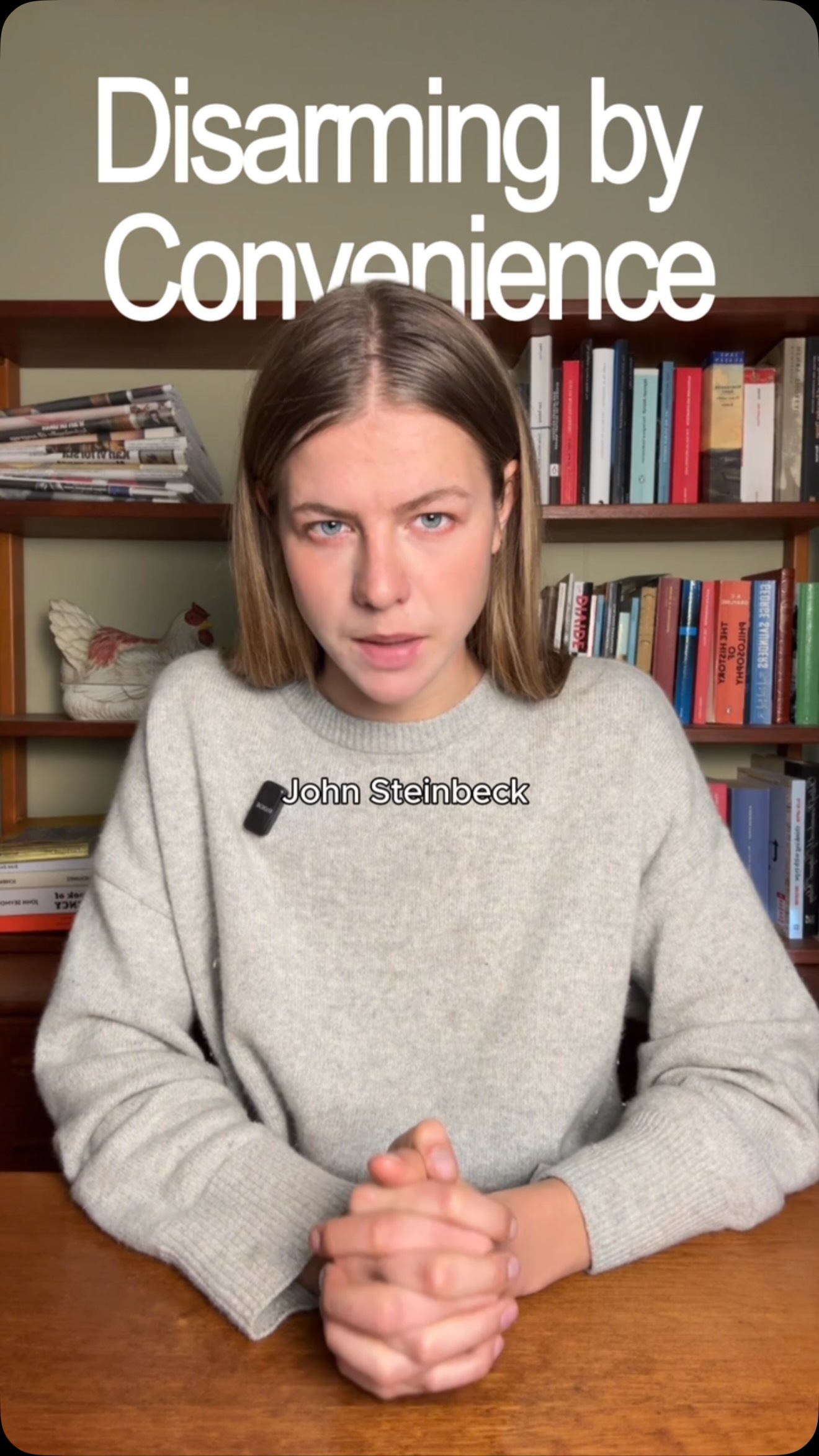
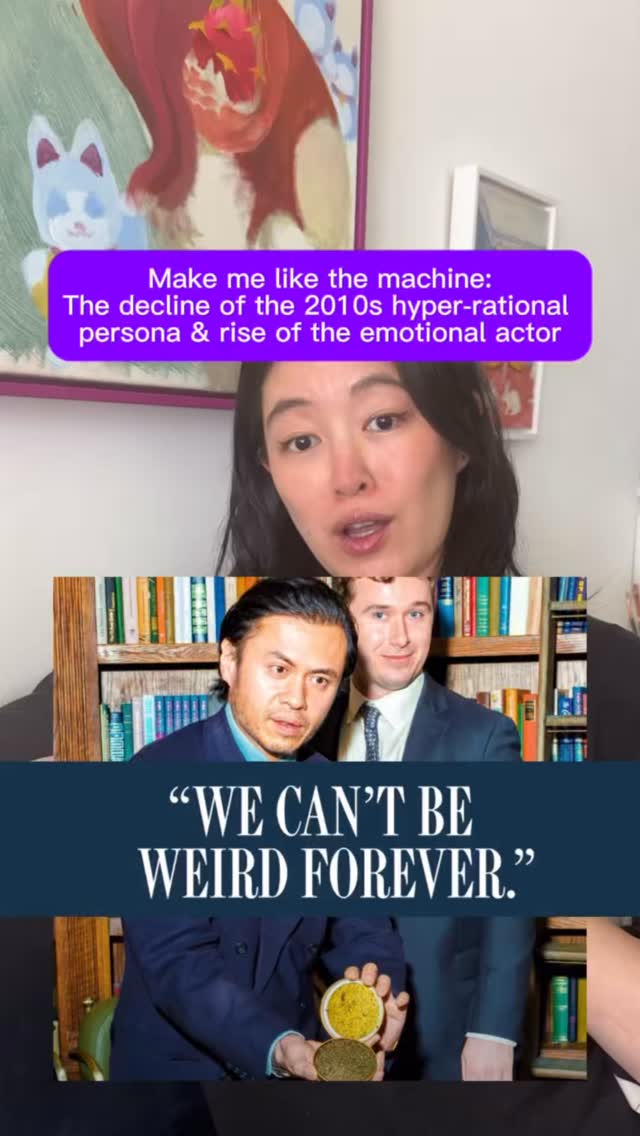
A medium shot of the speaker addressing the camera directly with a serious expression, set against a background of bookshelves to establish an intellectual context.
[06]
Hook template
Steal this for your own video
Did you know [famous person or authority] was scared of [everyday thing], or kind of.
— Did you know Benjamin Franklin was scared of sleeping in, or kind of.
— Did you know Steve Jobs was scared of cheap plastic phones, or kind of.
— Did you know Julia Child was scared of microwaves, or kind of.
[07]
Hook and payoff
The promise the opener makes, and how the video pays it back
Hook
A counterintuitive or surprising question about a historical figure's belief, creating immediate curiosity about a seemingly mundane topic.
Payoff
Synthesize the entire argument into a concise, memorable, and unsettling new term or phrase that redefines the modern problem, leaving the viewer with a powerful, lingering thought.
[08]
Narrative framework
The structural pattern this video runs on
Framework
The Historical Echo
Using a prescient historical idea or quote from a respected figure to reframe a contemporary issue, making it feel both timeless and urgent.
1
The Foundational Evidence
Present a direct quote or primary source from the historical figure that proves the hook's premise and establishes the core argument.
2
The Prophetic Interpretation
Translate the historical evidence into a broader, more abstract principle, explaining its deeper meaning and highlighting its predictive power beyond its original context.
3
The Modern Resonance
Connect the abstract principle to a specific, recognizable contemporary behavior or trend, using visual aids to make the connection undeniable and relevant to the viewer's life.
4
The Future-Facing Escalation
Project the historical principle onto a current or future high-stakes issue (e.g., new technology, social change), raising the perceived importance and urgency of the argument.
5
The Philosophical Deepening
Introduce a second, more profound piece of evidence from the same source that elevates the argument from a practical observation to a philosophical statement about a fundamental conflict (e.g., freedom vs. control).
Themes
Individualism vs. Conformity
Technology's impact on humanity
Dangers of convenience
Techniques
Literary analysis
Historical context
Trends
AI commentary
Post caption
I just started reading East of Eden by Steinbeck, and as with any book that gets incredibly hyped up on the internet, I get a bit skeptical.
BUT, I promise you this deserves every single mention out there, because what? I am only 160 pages in, and completely sold already.
I came across this one chapter where he spoke about the creative spirit and «free, independent thought», and am still not over it, so I am making a video about it.
So yes, I would recommend it. It is not overhyped.
Text overlays
title · beginning
Disarming by Convenience
informational · middle
"A group can build automobiles quicker and better than one man and bread from a huge factory is cheaper and more uniform when our food and clothing and housing are all born in the complication of mass production mass method is bound to get into our thinking and to eliminate all other thinking."
informational · middle
"I can understand why a system built on a pattern must try to destroy the free mind for that is the one thing which can by inspection destroy such a system"
Transcript
Did you know John Steinbeck was scared of mass produced bread, or kind of. In Best of Eden he wrote, a group can build automobiles quicker and better than one rank, and bread from a huge factory is cheaper and more uniform. When our food and clothing and housing are all born in the complication of mass production, mass method is bound to get into our thinking and to eliminate all other thinking. Already in 1952, he saw that mass production was not gonna stay inside the factories. Because after a while the factory gets into our heads and we start thinking like one, hyper productive and exactly like everyone else. So you can only imagine what he would have thought about AI. He also wrote that I can understand why a system built on a pattern must try to destroy destroy the free mind for that is the one thing which rank by inspection destroy such a system. Only a free mind can destroy systems built on patterns, which is what I believe is the danger of AI, a sort of disarming by convenience. Because you don't actually have to destroy free thinking. You just have to make it feel like too much effort.