Viral Hooks
Trending short videosExplaining surveillance's psychological effect
V

@var.aunevik

Instagram · Talking Head Edit

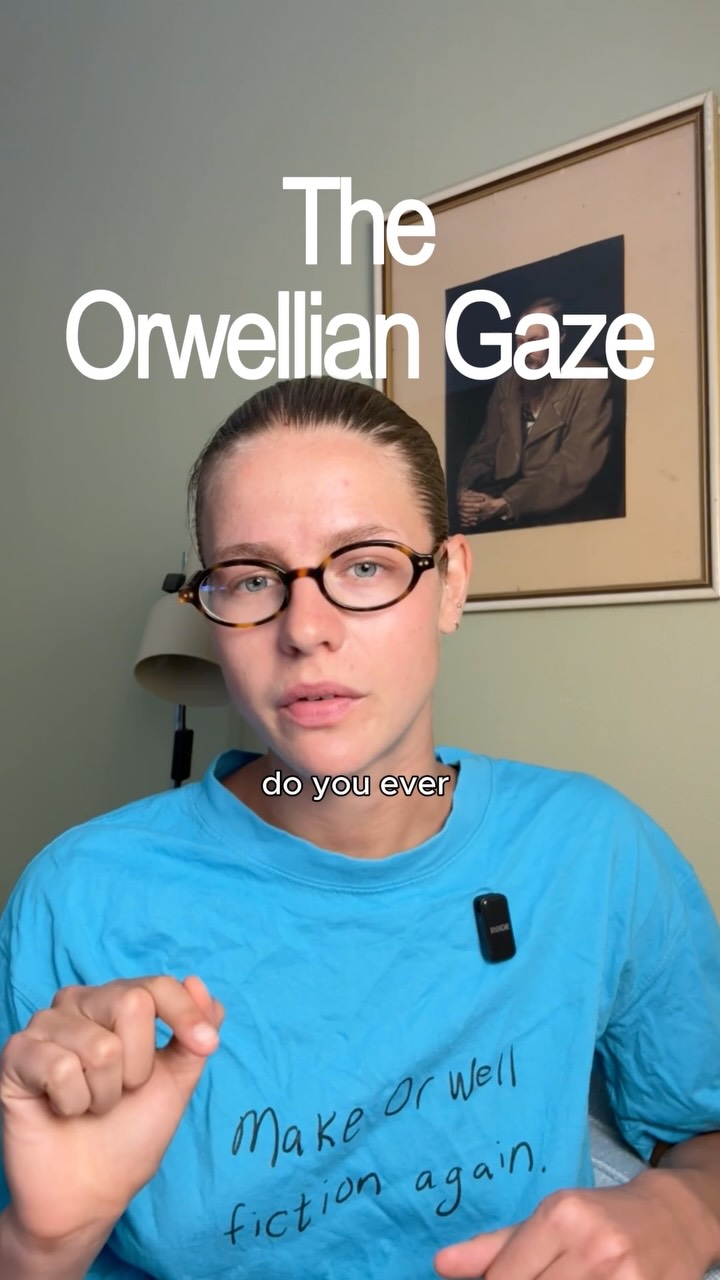
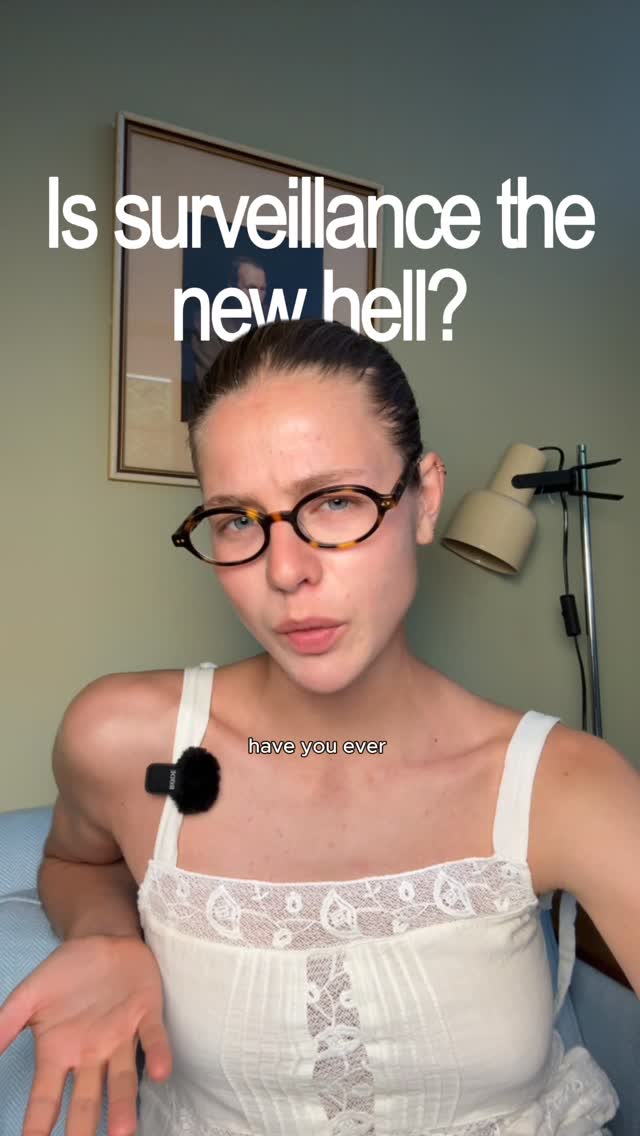
@var.aunevik Is surveillance the new hell? Have you ever wanted to see what the dark web actually looks like? just out of curiosity, but then stopped because it felt… risky? This video is not about the dark web itself, but the way being watched (or thinking you might be) can influence the way we search and read on the internet. Michel Foucault used the Panopticon to explain this self-monitoring. It can also be seen in the decline of traffic to certain wikipedia articles after the Snowden leaks in 2013. And maybe it sounds dramatic, maybe you don’t feel like you are monitoring on a daily basis, but that is the scary part. because maybe you are, you’re just already doing so unconciously. sources: https://papers.ssrn.com/sol3/papers.cfm?abstract_id=2769645 https://www.abc.net.au/news/2016-04-27/wikipedia-terrorism-traffic-fell-after-snowden-leaks/7364088 https://www.vice.com/en/article/snowdens-surveillance-leaks-made-people-less-likely-to-read-about-surveillance

View original on Instagram

The edit1 shot · 9 text
Shots Text1:35

Performance

Views
862.1K
Likes
53K
Comments
202
Engagement
6.2%
Outlier
35.3×
Length · 12 Jun 2026
1:35

Video #33787 · Talking Head Edit

Explaining surveillance's psychological effectfrom @var.aunevik

[01]

Overview

The creator explains the concept of the Panopticon effect, where the possibility of being watched leads to self-monitoring. She uses Foucault's theory, the aftermath of the Snowden leaks, and the rise of AI to illustrate how this "chilling effect" limits free inquiry online, ultimately comparing modern surveillance to the role of hell in Christianity as an invisible, ever-present force that shapes behavior.

[02]

Simple outline

  1. 1Pose relatable fear
  2. 2Introduce historical framework
  3. 3Provide modern proof
  4. 4Deliver powerful analogy
  5. 5State final consequence

[03]

Related videos

[04]

Classification

Concepts
BreakdownCase Study BreakdownAnalogical Definition
Elements
B-Roll CutawayText OverlayArchival Footage

[05]

Hook analysis

What stops the scroll in the first 3 seconds

Title hook · 65%

Is surveillance the new hell?

Verbal hook · 25%

Have you ever wondered what the dark web looks like?

Visual hook · 10%

A direct-to-camera medium shot of the speaker, establishing an immediate and personal connection with the viewer.

[06]

Hook template

Steal this for your own video

Is [familiar system] actually [unsettling reframe]?

  • — Is social media actually a digital panopticon?
  • — Is productivity culture actually self-imposed surveillance?
  • — Is the algorithm actually controlling your beliefs?

[07]

Hook and payoff

The promise the opener makes, and how the video pays it back

Hook

Start with a provocative question that taps into a common, unspoken anxiety or curiosity (e.g., the dark web), immediately framing a problem the viewer feels personally: the fear of being watched or 'flagged'.

Payoff

Conclude by explaining the profound psychological consequence of the central thesis: the erosion of authentic selfhood and free thought, as individuals begin to conform to what they believe is 'allowed' rather than who they truly are.

[08]

Narrative framework

The structural pattern this video runs on

Framework

The Thesis-Proof-Analogy Framework

To persuade the audience of a complex, counter-intuitive idea by grounding it in a historical concept, validating it with modern data, and sealing the argument with a powerful, memorable analogy.

  1. 1

    The Foundational Theory

    Introduce an established academic or historical concept (Foucault's Panopticon) that provides a lens through which to understand the initial problem. This gives the argument intellectual weight and a clear framework.

  2. 2

    The Real-World Evidence

    Connect the abstract theory to a concrete, recent event and a specific data point (Snowden leaks causing a drop in Wikipedia traffic for sensitive topics). This acts as the 'proof,' making the theory tangible and relevant.

  3. 3

    The Proleptic Rebuttal

    Briefly acknowledge and dismantle a likely counter-argument ('Isn't it good if terrorists stop reading?'). This strengthens the creator's authority and preempts viewer skepticism.

  4. 4

    The Modern Escalation

    Introduce a new, contemporary factor (AI and algorithmic pattern recognition) that complicates and intensifies the original problem, raising the stakes and making the threat feel current and inescapable.

  5. 5

    The Core Metaphor

    Deliver the video's central thesis in the form of a bold, unforgettable analogy that compares the modern problem to a universally understood, high-stakes concept ('surveillance is the new hell').

Themes

  • Privacy vs. Security
  • Self-Censorship
  • Technology and Society
  • Power and Control

Techniques

  • Historical Analogy
  • Philosophical Argument
  • Case Study Example

Post caption

Is surveillance the new hell? Have you ever wanted to see what the dark web actually looks like? just out of curiosity, but then stopped because it felt… risky? This video is not about the dark web itself, but the way being watched (or thinking you might be) can influence the way we search and read on the internet. Michel Foucault used the Panopticon to explain this self-monitoring. It can also be seen in the decline of traffic to certain wikipedia articles after the Snowden leaks in 2013. And maybe it sounds dramatic, maybe you don’t feel like you are monitoring on a daily basis, but that is the scary part. because maybe you are, you’re just already doing so unconciously. sources: https://papers.ssrn.com/sol3/papers.cfm?abstract_id=2769645 https://www.abc.net.au/news/2016-04-27/wikipedia-terrorism-traffic-fell-after-snowden-leaks/7364088 https://www.vice.com/en/article/snowdens-surveillance-leaks-made-people-less-likely-to-read-about-surveillance

Text overlays

  • title · beginning

    Is surveillance the new hell?

  • contextual · beginning

    (how i imagine the dark web)

  • contextual · beginning

    Foucault spoke

  • contextual · middle

    to the Panopticon

  • contextual · middle

    a prison design

  • informational · middle

    Traffic to Wikipedia terrorism entries plunged after Snowden revelations, study finds

  • informational · middle

    SAN FRANCISCO (Reuters) - Internet traffic to Wikipedia pages summarizing knowledge about terror groups and their tools plunged nearly 30 percent after revelations of widespread Web monitoring by the U.S. National Security Agency, suggesting that concerns about government snooping are hurting the ordinary pursuit of information.

  • contextual · end

    hell did

  • contextual · end

    in Christianity

Transcript

You ever wondered what the dark web looks like? Like how do you even get on there? What are people actually doing? You keep wondering, but you still don't go because what if you're flagged? Foucault spoke about this in relation to the Panopticon. The Panopticon was originally a prison design with one tower in the middle. So you never knew if you were actually being watched. The result would be that inmates started monitoring their own behavior because the possibility of being watched was enough. And you can see the same pattern after Snowden. When Edward Snowden revealed mass surveillance of ordinary internet users in 2013, traffic to certain Wikipedia articles about terrorism dropped by around 20 to 30%. It is not illegal to read about terrorism, but it felt risky. Someone might say, but what if terrorists actually tier reading about it? Isn't that good? Best terrorists don't become terrorists because they read a Wikipedia summary. Those pages are mostly for the rest of us trying to make sense of the world. And now with AI, it gets even more confusing because it's all about patterns and combinations. Most of us don't know which mix of searches, locations, and clicks makes us look suspicious. So we can only guess. Maybe even start over correcting, rounding off more corners than probably is necessary. And I don't wanna sound dramatic, but I think surveillance tech today plays a similar role to what hell did in Christianity. You can't actually see it, but you sense that it is tier. Invisible better somehow always watching you. So you adjust your behavior best in case. You don't want to go to hell. Being able to explore ideas freely, even the ones that you don't agree with, is part of how you form your own judgment. If you're always being watched or feel like you are, that process shrinks. You become not who you are, but who you think you're allowed to be.

Explaining surveillance's psychological effect | Viral Hooks