@var.aunevik All major AI companies have hired philosophers. Which is mainly because AI stopped being a pure technical tool (long time ago), and is now making decisions about honesty, harm, conciousness, and legitimately everything else.
What I find difficult to understand is how much power a philosopher inside a corporation like Open AI or Anthropic ACTUALLY has. Like when it boils down to finances... does a philosopher really have that much to say? Asking big questions, but what about the answers? Will those be acted upon?
Maybe it is actually AI safety. But maybe it also is ethics-washing? Either way, I do feel better knowing there are philosophers included.
Explaining AI ethics-washing trendfrom @var.aunevik
[01]
Overview
The creator analyzes the trend of AI companies hiring philosophers by first explaining their role in teaching AI morals, then introducing the critical perspective that corporate philosophy is an oxymoron. She defines the term 'ethics-washing' by comparing it to green-washing, and concludes by questioning whether for-profit companies will prioritize ethics over investor interests, leaving the audience with a final thought-provoking question.
Why are all major AI companies now hiring philosophers?
Visual hook · 10%
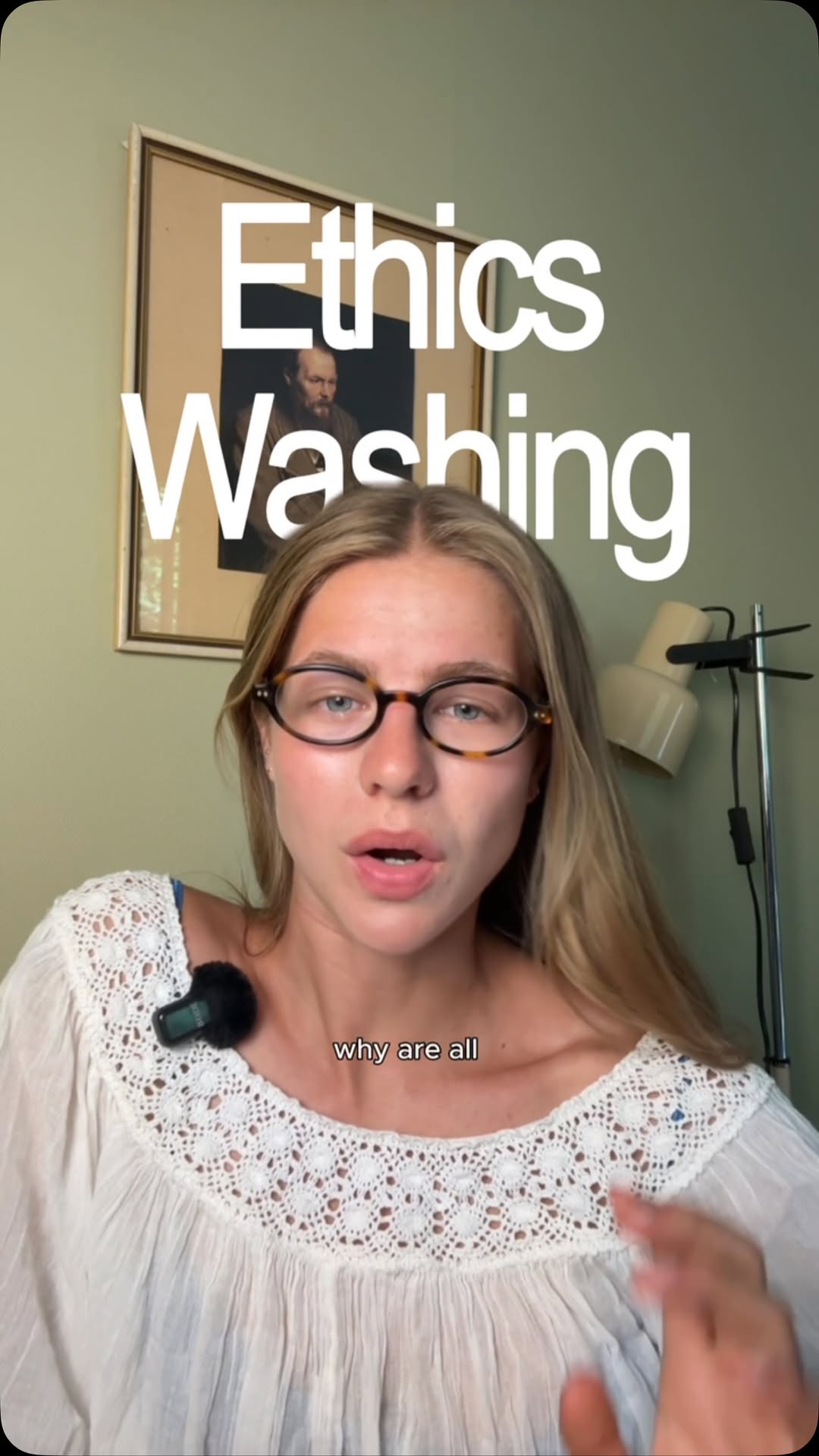
Direct-to-camera medium shot of the speaker with a large, bold title text overlay immediately establishing the video's core theme.
[06]
Hook template
Steal this for your own video
Why are all [industry] companies suddenly hiring [unexpected expert type]?
— Why are all major banks suddenly hiring trauma therapists?
— Why are all fast food companies suddenly hiring environmental scientists?
— Why are all pro sports teams suddenly hiring behavioral economists?
[07]
Hook and payoff
The promise the opener makes, and how the video pays it back
Hook
Pose a surprising, counter-intuitive question about a current trend that makes the audience curious for the explanation.
Payoff
The Concluding Dilemma. Acknowledge the high stakes of the situation and pose a final, unresolved question back to the audience, forcing them to choose between the imperfect options presented and stimulating discussion.
[08]
Narrative framework
The structural pattern this video runs on
Framework
The Critical Reframe
Present a seemingly positive or straightforward trend, introduce a critical counter-argument that reframes it negatively, and conclude by posing a dilemma to the audience, forcing them to weigh the two conflicting perspectives.
1
The Utopian Narrative
Describe the surface-level, positive interpretation of the trend, often through a specific, idealized example that makes it seem beneficial and logical.
2
The Critical Counterpoint
Introduce a 'but' or a contradictory idea that fundamentally challenges the initial positive framing, creating narrative tension.
3
The Inherent Contradiction
Explain the core reason why the positive and negative interpretations are in conflict, often by referencing a fundamental principle or historical context.
4
The Cynical Definition
Introduce and define a specific, memorable term (a '-washing' or similar neologism) that encapsulates the negative interpretation of the trend.
5
The Relatable Analogy
Compare the abstract negative concept to a more familiar, widely understood phenomenon to solidify the audience's understanding and make the critique feel more grounded.
6
The Ultimate Reality Check
State the underlying, unchangeable reality (e.g., financial incentives, power structures) that supports the negative interpretation and limits the positive one.
Themes
Corporate Ethics
Technology and Society
AI Safety
Techniques
Direct Address
Rhetorical Questions
B-Roll Illustration
Trends
AI Ethics Discussion
Post caption
All major AI companies have hired philosophers. Which is mainly because AI stopped being a pure technical tool (long time ago), and is now making decisions about honesty, harm, conciousness, and legitimately everything else.
What I find difficult to understand is how much power a philosopher inside a corporation like Open AI or Anthropic ACTUALLY has. Like when it boils down to finances... does a philosopher really have that much to say? Asking big questions, but what about the answers? Will those be acted upon?
Maybe it is actually AI safety. But maybe it also is ethics-washing? Either way, I do feel better knowing there are philosophers included.
Text overlays
title · beginning
Ethics Washing
title · middle
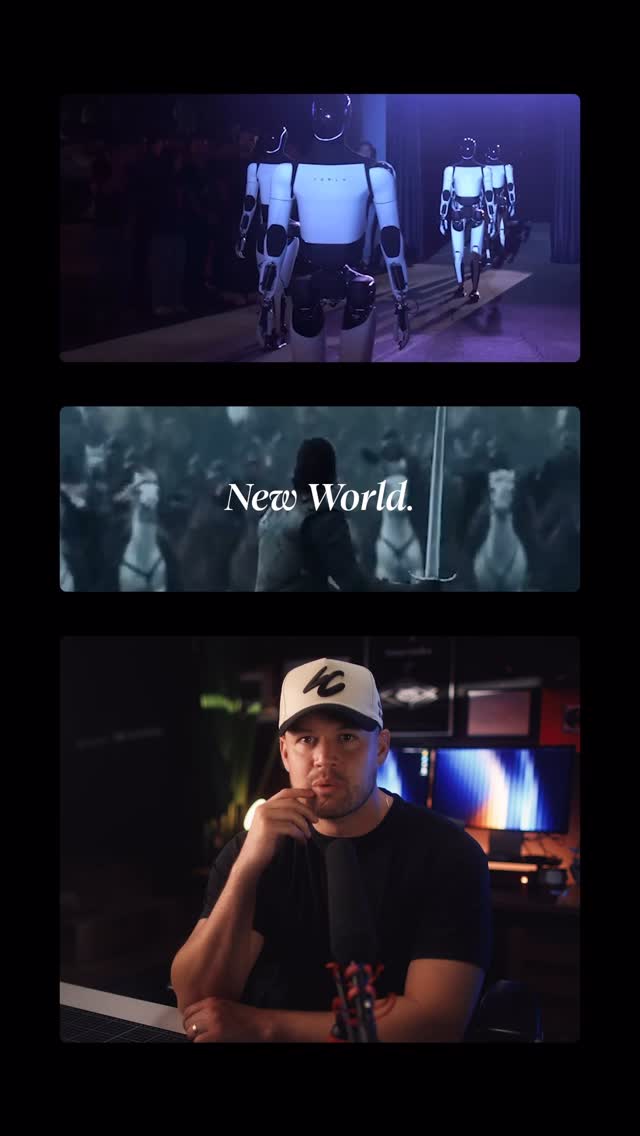
Claude's Constitution
informational · middle
philosophers who are willing to entertain the idea of an artificial mind and 'the Big Tech executives who are the beneficiaries of hype.' To practice philosophy from inside a business is almost an oxymoron, Leslie argues. 'You want to ask the big questions,' he says. 'But if you're a philosopher working for a big tech company, your problem space is delimited.'
title · middle
Ethics-Washing
contextual · end
I KANT TAKE IT ANYMORE
Transcript
Why are all major AI companies now hiring philosophers? Someone finishes a philosophy Tier, eight years in moral philosophy. They graduate and instead of the usual adjunct position, they get a call from Silicon Valley. Six figures, the job is to have conversations with AI. Decide what it says when you tell it you're sad. Write the document that teaches it right from wrong. Anthropics philosopher Amanda Eskell did that. The Wall Street Journal called it teaching Claude how to be good. And it's important worse, no doubt. But I read something interesting in Wired recently, that a philosopher inside a corporation is almost an oxymoron, because the questions you're allowed to ask are kind of decided before you even arrive. Philosophy survived without being useful because it had no employer. It could look at power and say, this is wrong. If you put that on a payroll, something changes. There's even a term for what it can become, ethics washing. Hard questions being asked without the answers needing to go anywhere inconvenient. It's the same move as printing conscious on a green label. And even with a philosopher in the room, for profit companies answer to investors, not to their ethicists. But these companies are building the most consequential technology in history. So would you rather have a philosopher or not?