@kolbykirschner
Instagram · Talking Head Edit
@kolbykirschner A series for the people who want skills and ways of thinking from other industries Today is scientists

@kolbykirschner
Instagram · Talking Head Edit
@kolbykirschner A series for the people who want skills and ways of thinking from other industries Today is scientists
Performance
Video #41698 · Talking Head Edit
[01]
The creator explains the two-part thinking process used by great scientists to solve complex problems. He first introduces 'reductionism,' the act of breaking a problem down into its fundamental parts, using Isaac Newton as an example. He then explains the limitation of this approach and introduces the second part, 'systems thinking,' which involves zooming out to understand how those individual parts interact to create the whole. The creator concludes by synthesizing the two concepts into a complete strategy: zoom in to understand the mechanism, and zoom out to understand the outcome.
[02]
[03]
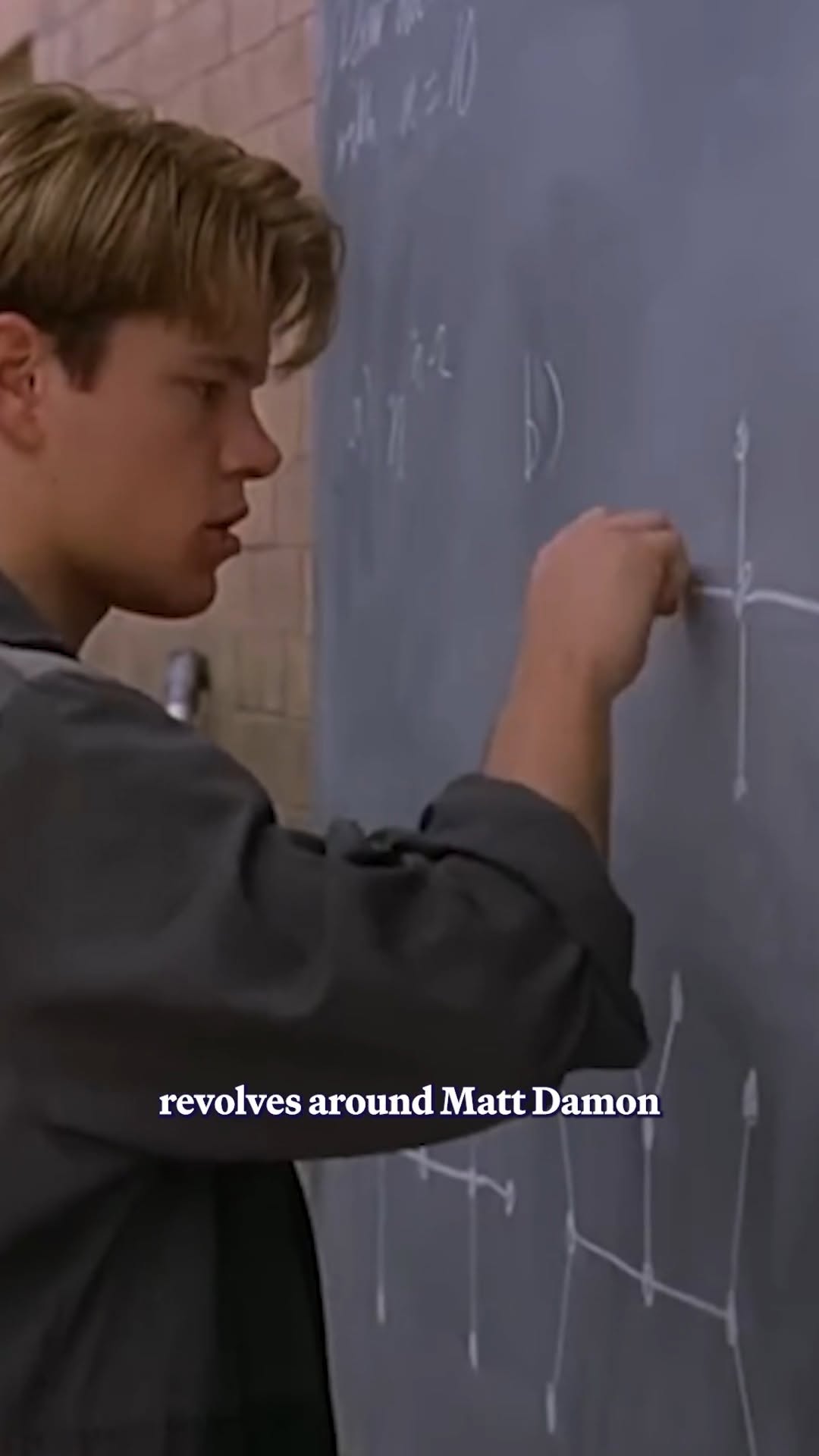 4.2M71.1×Explaining a famous movie problem@scientific_american · Breakdown
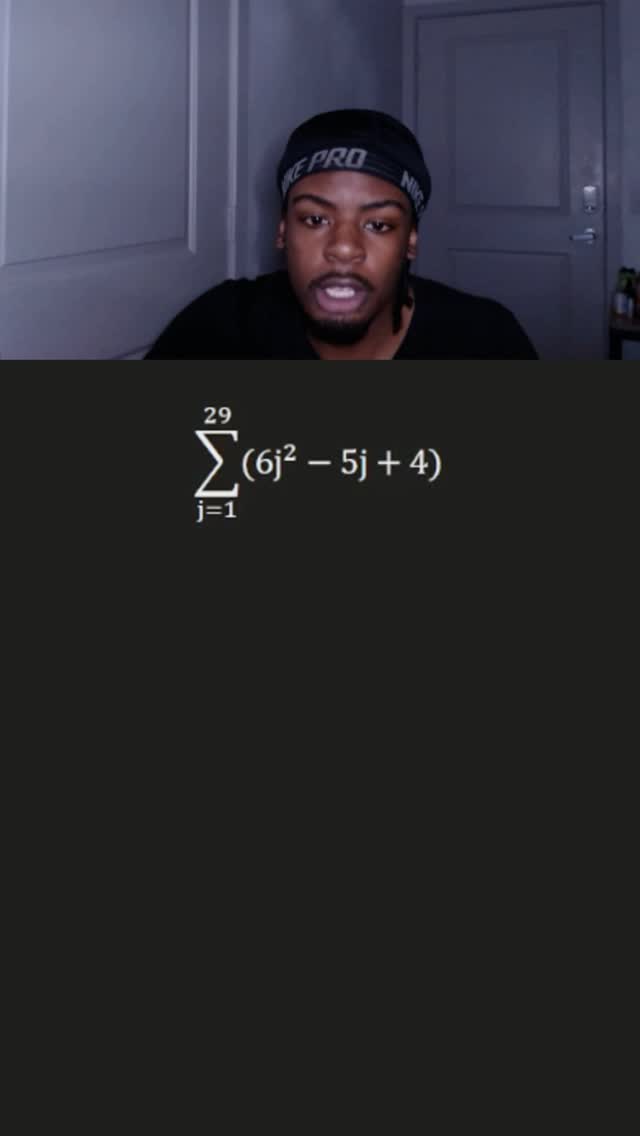 586.7K1.8×Math problem solved step-by-step@arrionknight · Tutorial / How To
 478.9K1.4×Explaining a principle with examples@wacomo · Origin Story
 351.2K88.3×Greenscreen legacy tech system breakdown@maxxrosenblum · Breakdown
 234.3KTwo-step guide to learn cybersecurity@node.io · Breakdown
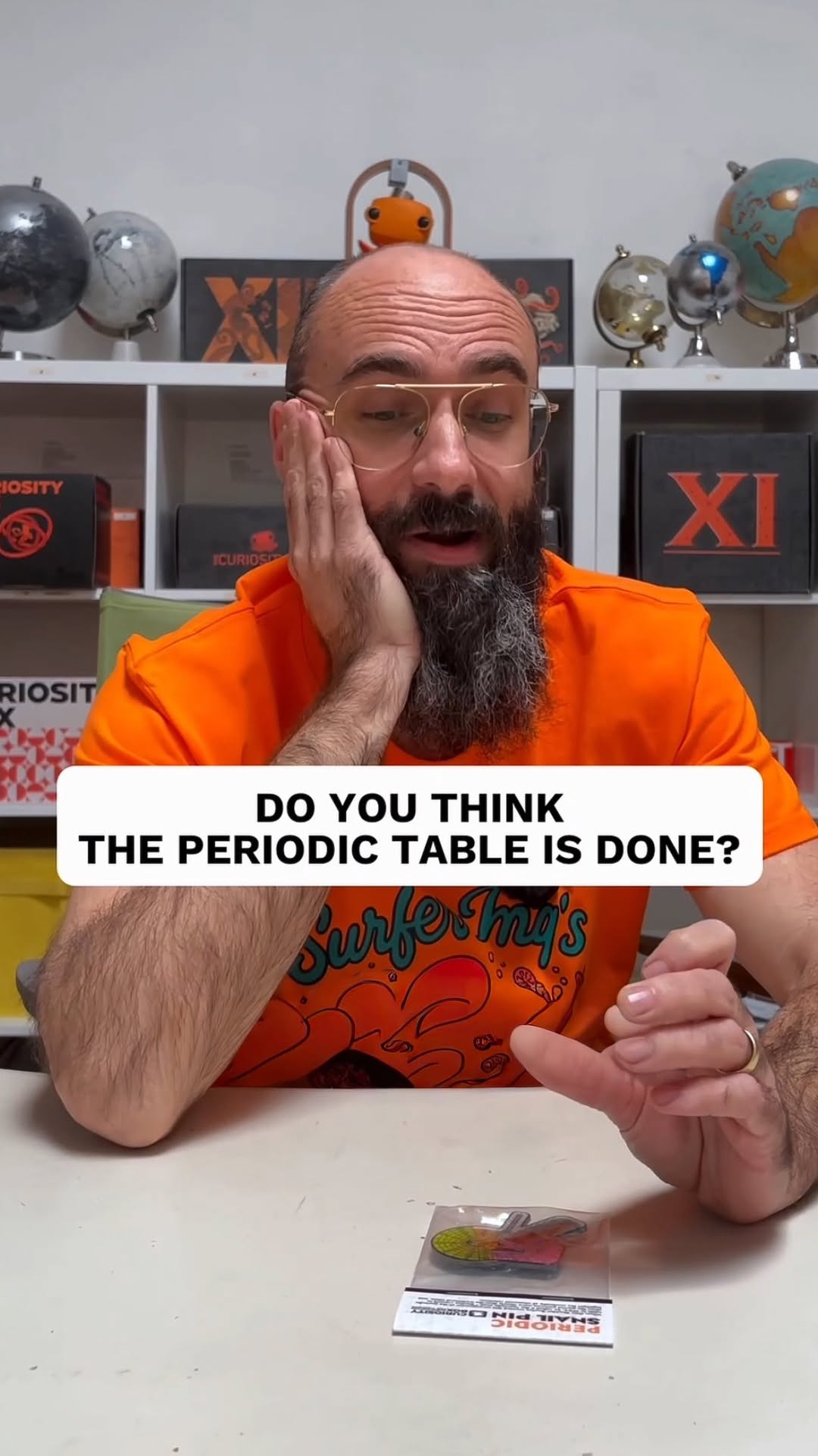 156.8KCreator answers question about science@thecuriositybox · Q&A Response
 552.1K120.3×Explaining a hidden financial crisis@maxxrosenblum · Breakdown
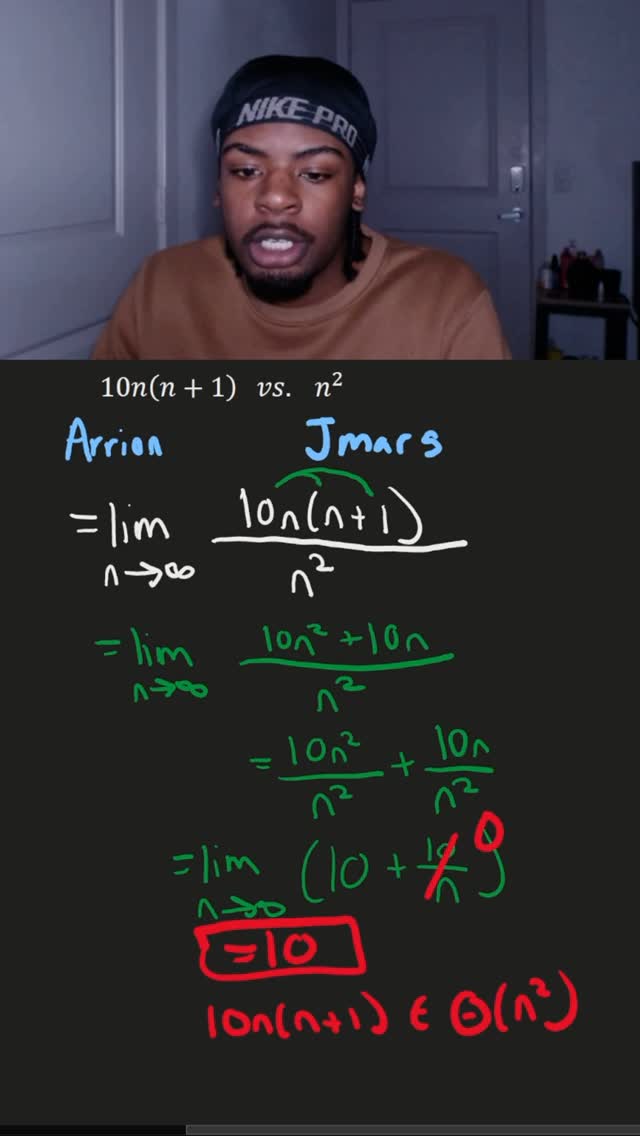 155KHood math explains calculus limit.@arrionknight · Breakdown
 1.1M1.7×SQL tutorial using trap analogy@arrionknight · Tutorial / How To
 120.1K2.6×Explaining how banks create money@womp_tomp · Breakdown
 129.8K39.3×Creator ranks student research ideas@lumiere_edu · Rapid Fire Listicle
 203.8K7.3×Creator defends a coding trend@angus.sewell · Hot Take
[04]
[05]
What stops the scroll in the first 3 seconds
Title hook · 15%
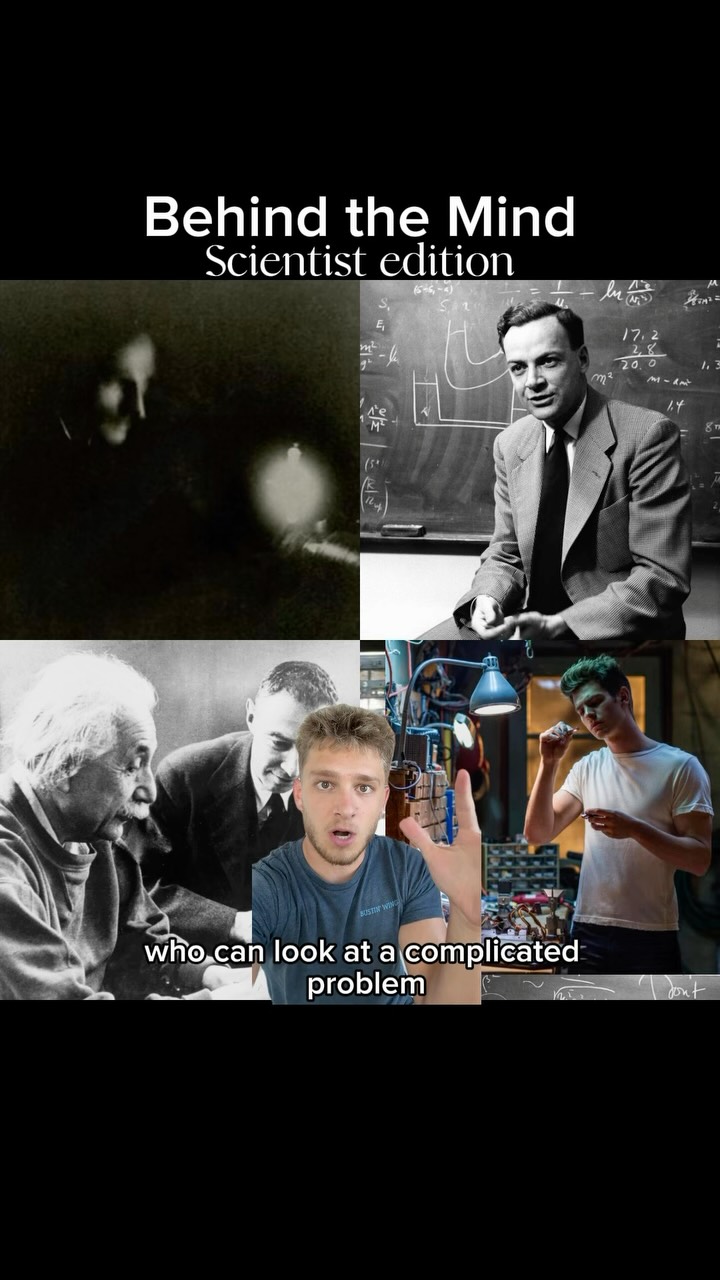
Behind the Mind Scientist edition
Verbal hook · 75%
If you wanna become the kind of person who can look at a complicated problem and see what everyone else is missing, then steal this way of thinking from scientists.
Visual hook · 10%
A four-panel grid of visually distinct images: a dark, blurry photo, a black-and-white photo of Richard Feynman, a photo of Einstein and Oppenheimer, and a still of Andrew Garfield as Spider-Man in a workshop.
[06]
Steal this for your own video
If you wanna become the kind of person who can , steal this way of thinking from .
[07]
The promise the opener makes, and how the video pays it back
Hook
The video opens with an aspirational promise, targeting a universal desire for deeper insight and problem-solving ability, framing the content as a secret to be 'stolen' from high-status experts.
Payoff
The entire lesson is distilled into a simple, memorable, two-part mantra that summarizes the core actions, providing a clear and satisfying takeaway that the viewer can easily recall and use.
[08]
The structural pattern this video runs on
Framework
The Synthesis Method
The video introduces a powerful concept, reveals its inherent limitation to create a knowledge gap, and then presents a second, complementary concept that resolves the initial flaw, synthesizing both into a complete, actionable framework.
The Central Paradox
A seemingly simple but contradictory idea is presented as the core method of experts. This creates immediate intrigue and a puzzle the viewer wants solved.
Principle 1: The Breakdown
The first half of the paradox is explained and validated using a powerful, historical example. This makes the abstract concept feel concrete, credible, and significant.
The 'How-To' Application
The first principle is translated into a direct, actionable command for the viewer, making the information feel immediately useful.
The Inversion: The Limitation
The narrative pivots by revealing a critical flaw in the first principle, creating new tension and demonstrating that the initial explanation was incomplete.
The Proof of Limitation
A rapid-fire series of relatable analogies is used to prove the limitation is real and universal, solidifying the need for a better solution.
Principle 2: The Reassembly
The missing piece of the puzzle is introduced by name, positioned as the necessary 'other half' that resolves the previously established flaw.
The Synthesis
The video explains how the two opposing principles are not contradictory but complementary, showing how they integrate to form a superior whole.
The Universal Application
The scope of the framework is expanded beyond its original context, empowering the viewer to apply this new mental model to any area of their life.
A series for the people who want skills and ways of thinking from other industries Today is scientists
title · beginning
Behind the Mind Scientist edition
title · beginning
Behind the Mind
informational · middle
Reductionism is a way of understanding a complex thing by breaking it into simpler parts and studying how those parts work. In science, it helps you look beneath a big problem to find its underlying mechanisms.
informational · middle
Systems thinking + Reductionism
contextual · end
The full strategy:
informational · end
What are the parts of this?
informational · end
How are the parts interacting to make the whole?
You wanna become the kind of person who can look at a complicated problem and see what everyone else is missing, then steal this way of thinking from scientists. Welcome to behind the mind. If you wanna design like an artist, build like an engineer, strategize like a CEO, this is the series for you. The best scientists do something that sounds simple, but they're contradictory. They break things apart, then they put them back together. No looked at something as enormous as the motion of the universe and reduced it down to a few variables, mass, force, distance, motion. This principle they use is called reductionism. When something feels too complicated to understand, go down a level. Break it into parts, find the variables, and look for the mechanism that is underneath it. But understanding every part doesn't necessarily mean you understand the whole. A business isn't just sales, marketing, product, people. A human isn't just a collection of organs. A great song isn't explained by studying every individual note. So scientists also need the other half, which is systems thinking. You zoom back out and rank, how are each one of these parts interacting to create an outcome that none of them could have created alone? So combined, it looks like this. Zoom in and rank, what are the parts? What is actually happening? Then zoom out and ask yourself how are these parts interacting? You can do this with human behavior, art, businesses, anything. Beduce and break it down to understand the mechanism. Zoom out to understand the outcome.