@thejaunt_
Instagram · Single Take
@thejaunt_ Old money fashion

@thejaunt_
Instagram · Single Take
@thejaunt_ Old money fashion
Performance
Video #45969 · Single Take
[01]
The creator delivers a monologue explaining that true 'old money' fashion is not about wearing expensive brands head-to-toe, but about a deliberate, messy style called 'sprezzatura.' He uses Jeffrey Epstein and his own boarding school experiences as examples, contrasts this with how 'new money' emulates the style incorrectly, and analyzes the underlying social signals of being high-status enough to break fashion rules.
[02]
[03]
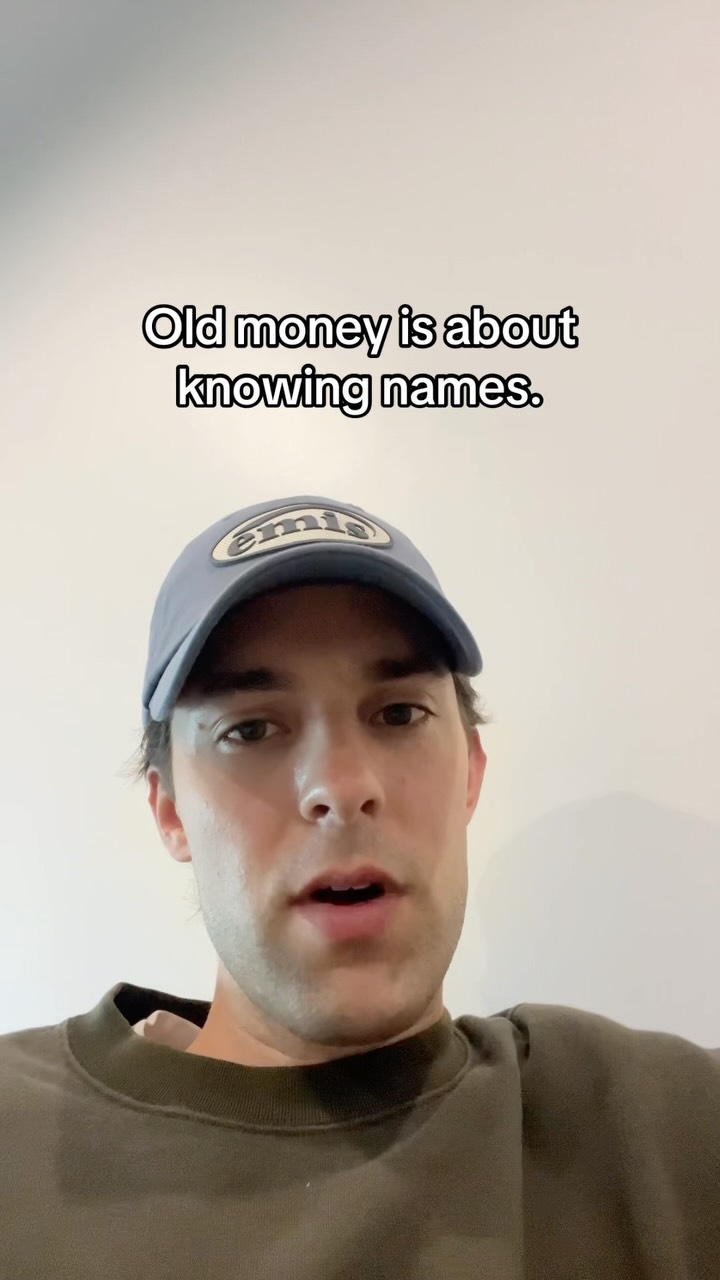 703K64.8×Explaining old money through experience@thejaunt_ · Anecdotal Philosophy
 1.3M115.8×Monologue on confidence and style@thejaunt_ · Anecdotal Philosophy
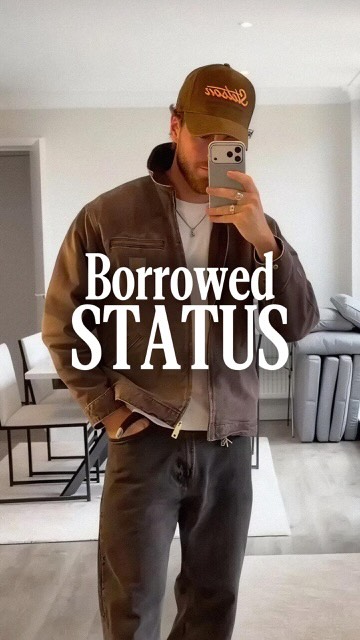 316K53.5×Explaining why rich people dress poor@peter_reitano · Breakdown
 1.1M14.2×Creator lists cheap-looking fashion trends@stylehard · Anti-Recommendation List
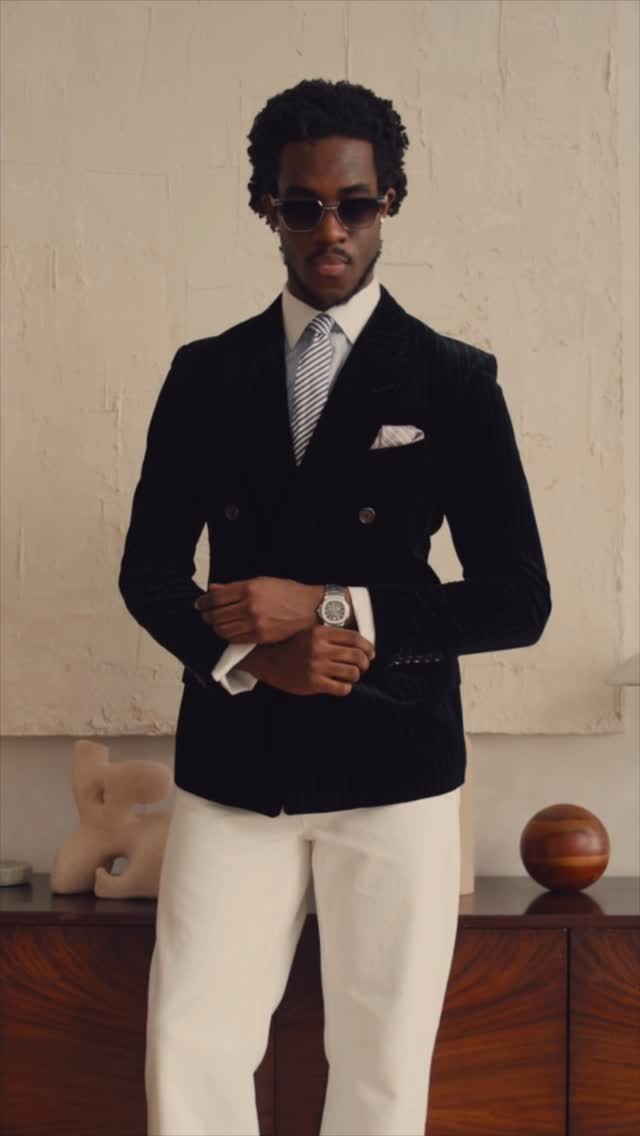 6.2M2×Storytime with fashion B-roll cutaways@wisdm
 4.7M50.3×TV character fashion style breakdown@henrythekidd_ · Breakdown
 6M9.1×Sociological breakdown of elite taste codes@maisonrickie · Breakdown
 359K3.9×Explaining Paul Mescal's 'quiet style'@henrythekidd_ · Case Study Breakdown
 724.5K380.7×Contrasting fashion consumer archetypes@alexgreifeld · Breakdown
 192.9KPodcast clip debating fashion trends@middlebrowpod · Hot Take
 114.6K1.2×Creator explains fashion's art problem@ghostinthesam · Breakdown
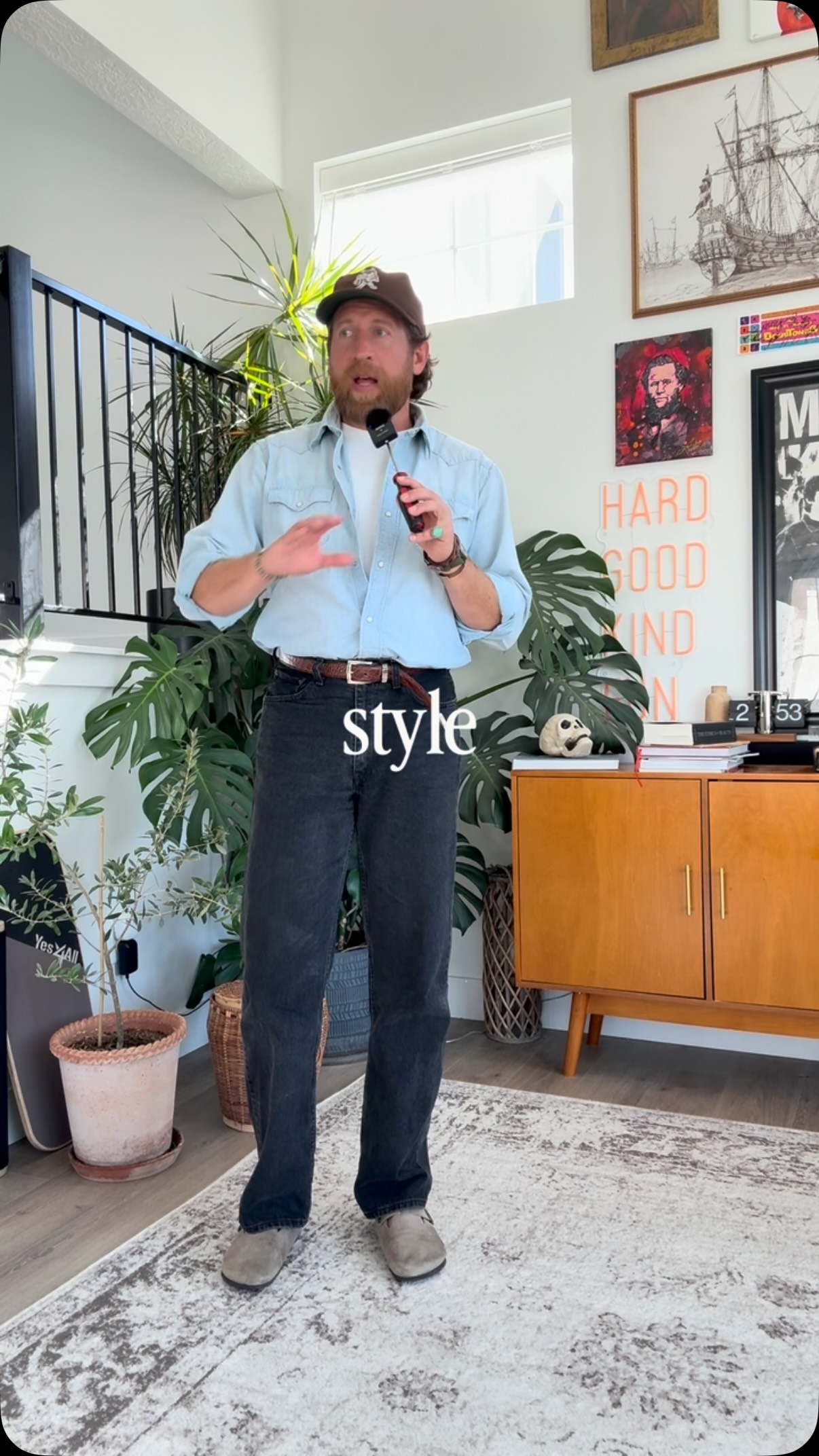 155.9KDemonstrates good vs bad styling@tannerguzy · Good vs Bad
[04]
[05]
What stops the scroll in the first 3 seconds
Title hook
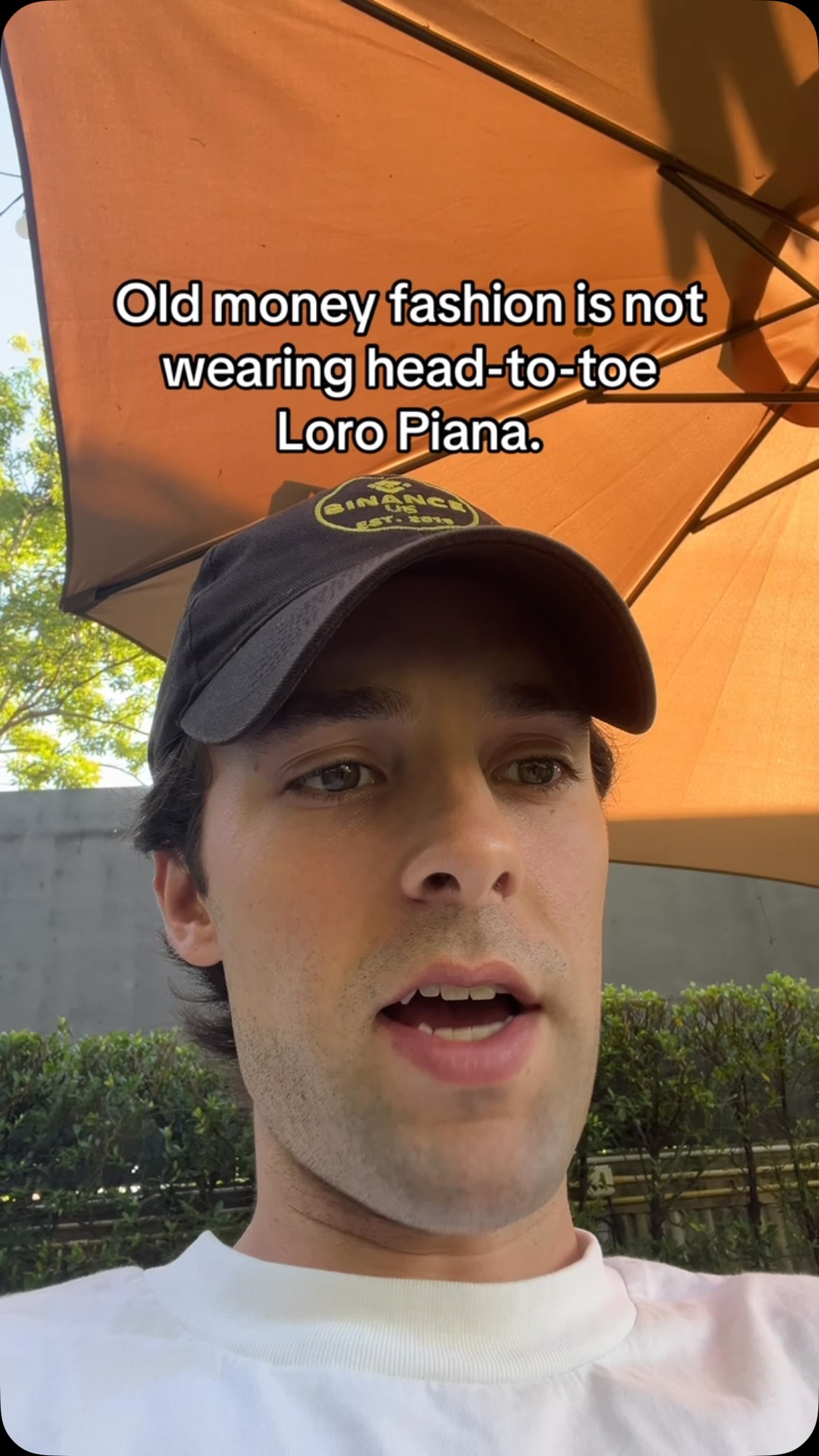
Old money fashion is not wearing head-to-toe Loro Piana.
Verbal hook
Old money fashion is not wearing head to toe Loro Piana.
Visual hook
A low-angle, direct-to-camera shot of the speaker, framed by a large orange patio umbrella that fills the top of the screen.
[07]
The promise the opener makes, and how the video pays it back
Hook
A bold, counter-intuitive statement that directly challenges a popular trend or belief within a niche, creating immediate intrigue.
Payoff
The viewer feels intellectually satisfied and armed with 'insider knowledge' that separates them from the uninformed majority, reinforcing their connection to the creator's perspective.
[08]
The structural pattern this video runs on
Framework
The Insider's Thesis
To deconstruct a popular misconception by revealing the 'true' underlying principle, contrasting it with the common error, and thereby positioning the viewer as an insider.
The Provocative Case Study
An unexpected or controversial example is introduced to illustrate the initial thesis in a memorable and intriguing way, making the viewer question their assumptions.
The Credibility Anchor
The creator establishes authority by referencing personal, firsthand experience (e.g., 'When I was at boarding school...'), grounding the abstract argument in real-world observation.
The Concept Codification
A specific, often sophisticated or foreign term ('sprezzatura') is introduced to name the phenomenon, giving the argument an intellectual framework and making the viewer feel they are learning a legitimate concept.
The Psychological Reveal
The deep, underlying reason for the behavior is explained, connecting the aesthetic choice to a higher-level social signal like status, confidence, or insider knowledge.
The Foil's Fallacy
The common, incorrect approach is presented as a caricature or a fundamental misunderstanding, creating a clear dichotomy between the 'insider' and the 'outsider' approach.
The Thesis Reaffirmed
The argument comes full circle by restating the initial hook, now framed as a proven conclusion, and providing a clear, corrected example that reinforces the new 'insider' understanding.
Old money fashion
title · beginning
Old money fashion is not wearing head-to-toe Loro Piana.
informational · beginning
If you've perused any of the photos of Jeffrey on his island, you probably noticed his strange outfits.
informational · beginning
Sometimes he'd have on a merino wool pullover paired with wrestling sweatpants and loafers or tuxedo slippers on his feet.
informational · beginning
A total mishmash of preppy and casual.
informational · beginning
But I think this is deliberate.
informational · middle
Jeffrey, by the way, is not technically old money, but he was immersed enough to emulate it.
informational · middle
When I was at boarding school, I saw lots of this preppy/casual mashing of style.
informational · middle
People would throw a baseball cap on when they're wearing a jacket and tie, or a sweatshirt under a Barbour jacket.
informational · middle
It's sort of like they'd add in a dash of messiness to an otherwise clean outfit.
informational · middle
The Italians have a term for this, sprezzatura.
informational · middle
effortful effortlessness.
informational · middle
It's almost like deliberately making little mistakes with your fashion so that people think you didn't put in a lot of effort.
informational · end
Leaving the tail of your tie showing, layering strange combinations of shirts, having a clean haircut, but styling it a bit messy.
informational · end
In a weird way, it signals that you're high status because you know the rules and are insulated enough from them that you can afford to break them.
informational · end
In contrast with many new money people, when they try to emulate old money fashion, they will emulate what they think old money fashion is, but it really isn't. They will emulate a caricature.
informational · end
They'll go to Loro Piana and buy the whole catalogue, and then they'll dress head-to-toe in Loro Piana because they think that's peak classiness.
informational · end
But no, wearing the whole catalog is not old money.
informational · end
Wearing a Loro Piana pullover with sweatpants and some worn down loafers is closer to old money.
Old money fashion is not wearing head to toe Loro Piana. If you've perused any of the photos of Jeffrey on his island, you probably no best strange outfits. Sometimes he'd have on a merino wool pullover paired with wrestling sweatpants and loafers or tuxedo slippers on his feet. A total mishmash of preppy and casual. But I think this is deliberate. Jeffrey, by the way, is not technically old money, but he was immersed enough to emulate it. When I was at boarding school, I saw lots of this preppy slash casual mashing of style. People would throw a baseball cap on when they worse wearing a jacket and tie or a sweatshirt under a barber jacket. It's sort of like they'd add in a dash of messiness to an otherwise clean outfit. The Italians have a term for this, effortful effortlessness. It's almost like deliberately making little mistakes with your fashion so that people think you didn't put in a lot of effort, leaving the tail of your tie showing, layering strange combinations of shirts, having a clean haircut better styling it a bit messy. In a weird way, it signals that you're high status because you know the rules and are insulated enough from them that you can afford to break them. In contrast with many new money people, people, when they try to emulate old money fashion, they will emulate what they think old money fashion is better it really isn't. They will emulate a caricature. They'll go to Loro Piana and buy the whole catalog and then they'll dress head to toe in Loro Piana because they think that's peak classiness. But no, wearing the whole catalog is not old money. Wearing a Loro Piana pullover with sweatpants and some worn down loafers is closer to old money.