Viral Hooks
Trending short videosExplaining why rich people dress poor
P

@peter_reitano

Instagram · Greenscreen Talking Head

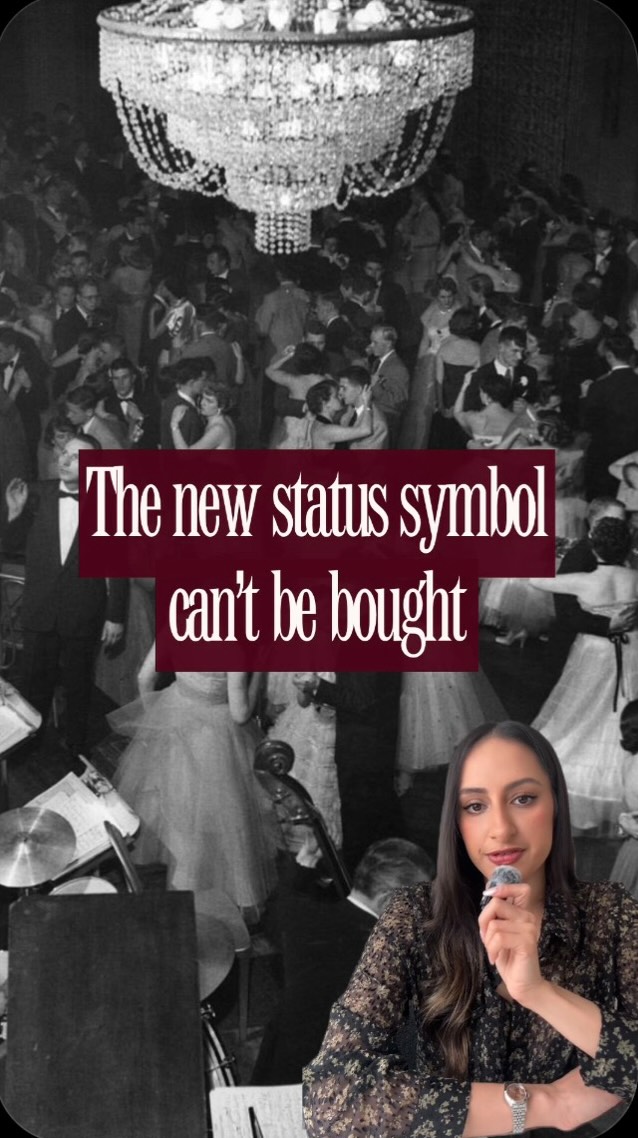
@peter_reitano Why do rich people abandon status symbols when everyone else can afford them, but love dressing like the working class? Limousines, jacuzzis and waterbeds went from aspirational to embarrassing. Meanwhile, Carhartt, vintage metal T-shirts and distressed clothing became luxury fashion. There’s a term for part of this: *prole drift*. And it says something fascinating about status, class and the psychology of consumption. When you’re poor, looking poor is a disadvantage. When you’re rich, looking poor is a personality. #ProleDrift #StatusSymbols #ConsumerPsychology #Luxury #CulturalTrends

View original on Instagram

The edit1 shot · 1 text
Shots Text2:44

Performance

Views
316K
Likes
15.8K
Comments
205
Engagement
5.1%
Outlier
53.5×
Length · 27 Oct 2026
2:44

Video #47649 · Greenscreen Talking Head

Explaining why rich people dress poorfrom @peter_reitano

[01]

Overview

The creator explains the sociological reasons behind two contradictory behaviors of the wealthy: abandoning status symbols when they become mainstream and adopting working-class fashion aesthetics. He uses examples like limousines and jacuzzis to illustrate the former, and Carhartt workwear and vintage band t-shirts for the latter, a phenomenon he identifies as 'prole drift.' Citing sociologists Georg Simmel and Pierre Bourdieu, he argues that taste is a form of social distinction and that the wealthy borrow the aesthetics of different classes to signal status, without experiencing the associated economic constraints.

[02]

Simple outline

  1. 1State a cultural paradox.
  2. 2Prove the first half.
  3. 3Introduce the contradiction.
  4. 4Explain the contradiction's logic.
  5. 5Deliver a memorable summary.

[03]

Related videos

[04]

Classification

Concepts
BreakdownCase Study Breakdown
Elements
Picture-in-PictureMontage EditingArchival FootageDynamic Word-by-Word CaptionsGreen Screen CompositeTitle Text Hook

[05]

Hook analysis

What stops the scroll in the first 3 seconds

Title hook · 25%

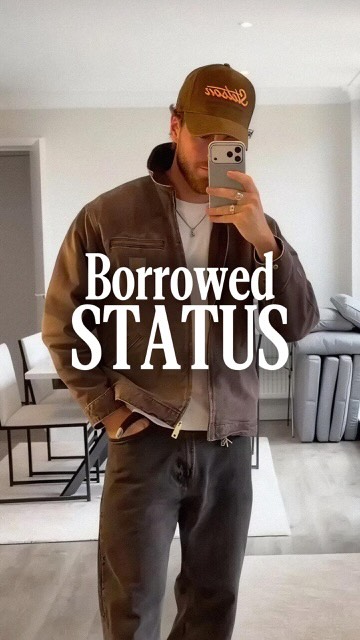
Borrowed STATUS

Verbal hook · 65%

Why do rich people stop liking things when poor people can afford them, but love dressing like poor people?

Visual hook · 10%

A picture-in-picture of the narrator is overlaid on a full-screen image of celebrity Channing Tatum dressed in worn-out work pants and a simple t-shirt, visually representing the video's core theme.

[06]

Hook template

Steal this for your own video

Why do [privileged group] stop [valuing or doing thing] the second [outsider group] can [access it], but love [adopting the outsider group's style or habit]?

  • — Why do wealthy people stop loving a restaurant the second regular people can get a reservation, but love ordering the cheap street-food version of the same dish?
  • — Why do tech founders stop using an app the second the general public can download it, but love going back to flip phones and paper notebooks?
  • — Why do fitness influencers stop recommending a workout the second beginners can do it, but love bragging about training like broke old-school gym rats?

[07]

Hook and payoff

The promise the opener makes, and how the video pays it back

Hook

A provocative, counter-intuitive question that frames a social paradox, creating an immediate knowledge gap the viewer wants to solve.

Payoff

A concise, powerful, and ironic summary that reframes the entire argument into a memorable, tweetable aphorism, providing a satisfying and definitive-feeling conclusion.

[08]

Narrative framework

The structural pattern this video runs on

Framework

The Paradox Resolution

To present a counter-intuitive cultural paradox, validate both conflicting sides with evidence, and then resolve the tension by introducing a deeper, unifying sociological or psychological principle, culminating in a memorable, aphoristic summary.

  1. 1

    The 'Status Decay' Gauntlet

    Presents a rapid-fire series of relatable examples that prove the first, more obvious half of the initial paradox, establishing a baseline of agreement with the viewer.

  2. 2

    The Academic Anchor

    Introduces a formal theory or historical concept (e.g., from a sociologist) that gives intellectual weight and credibility to the initial observation.

  3. 3

    The Narrative Pivot

    Explicitly signals a turn in the argument with a transition like 'But...' to introduce the contradictory, less obvious half of the paradox, re-engaging curiosity.

  4. 4

    The Contradiction Showcase

    Provides a series of visual examples that prove the second, contradictory part of the thesis, often introducing a specific term for the phenomenon.

  5. 5

    The Deeper Framework

    Introduces a second, more nuanced academic concept to explain how the two contradictory truths can coexist, setting the stage for the resolution.

  6. 6

    The Central Revelation

    Explicitly states the core insight that resolves the paradox, often framed as 'the key' or 'the real reason.' This beat explains the underlying mechanism that makes both sides of the paradox possible.

  7. 7

    The Motive Reveal

    Explains the psychological or cultural 'why' behind the behavior, adding a layer of human motivation to the abstract theory (e.g., the search for 'authenticity').

Themes

  • Social class
  • Consumerism
  • Authenticity
  • Cultural appropriation

Techniques

  • Picture-in-picture
  • Visual essay
  • Archival footage integration

Post caption

Why do rich people abandon status symbols when everyone else can afford them, but love dressing like the working class? Limousines, jacuzzis and waterbeds went from aspirational to embarrassing. Meanwhile, Carhartt, vintage metal T-shirts and distressed clothing became luxury fashion. There’s a term for part of this: *prole drift*. And it says something fascinating about status, class and the psychology of consumption. When you’re poor, looking poor is a disadvantage. When you’re rich, looking poor is a personality. #ProleDrift #StatusSymbols #ConsumerPsychology #Luxury #CulturalTrends

Text overlays

  • title · beginning

    Borrowed STATUS

Transcript

Why do rich people stop liking things when poor people can afford them, but love dressing like poor people? Limousines were once the ultimate symbol of wealth and celebrity, but no, there's something you rent with 11 friends for a bachelorette party. Jacuzzis once conjured images of the Playboy Mansion, champagne, and beautiful women. Now it's an inflatable tub of bacterial soup in your neighbor's garden. Water better once the ultimate symbol of sexual liberation and bachelor pad sophistication. Now only one suggests you're either a swinger or you hadn't decorated since 1987. And bottle service, you're paying $1,200 for a $60 bottle of vodka no someone can carry it across a nightclub with sparklers. The moment everyone can imitate wealth, the symbols of wealth start losing their power. The German sociologist George Schimmel described this process over a century ago. The wealthy adopt something distinctive, everyone else imitates it, and eventually, the wealthy move on. But there's a fascinating contradiction. Sometimes, the wealthy actively imitate the working class. There's even a term for it, proldrift. Take Carhartt. Originally, they were making durable clothing for railroad workers, construction workers, and farmers. Now you'll find people wearing Carhartt rank expensive Brooklyn coffee shops whose closest encounter with manual labor was assembling an IKEA bookshelf, or the Kardashians wearing vintage Metallica Tier shirts. Music rooted in outsider subcultures become a fashion accessory for some of the most commercially successful celebrities on the planet. Counterculture becomes couture. Historically, upper class fashion was often designed to demonstrate that you didn't perform manual labor. Pale skin, delicate fabrics, impractical clothing, then a tan became a sign you could afford holidays. And no, wealthy people deliberately dress like manual laborers. We went from dressing to prove we didn't work to dressing like we work with our hands. The French sociologist Pierre Bourdieu argued that taste itself is a form of social distinction. The same object can communicate completely different things depending on who's consuming it. A construction worker wearing Carhartt is dressed for work. A wealthy creative director wearing Carhartt is expressing an aesthetic. And I think that's the key. The wealthy can adopt the aesthetics of poverty without experiencing the constraints of poverty. Someone wearing worn out jeans because they can't afford new ones is a very different position from someone paying $1,500 for jeans deliberately destroyed by a designer. There's also the appeal of authenticity, workwear, underground music, and outsider subcultures carry cultural meaning that luxury brands struggle to manufacture. So they borrow it, and eventually, even rebellion becomes something you can buy. When ordinary people rent limousines, they're borrowing the aesthetics of wealth. Rank when wealthy people wear carhart or vintage metal shirts, they're borrowing the aesthetics of working class life and outside a culture. Both are attempts to borrow status from somewhere else. And that's the irony. When you're poor, looking poor is a disadvantage. When you're rich, looking poor is a personality.

Explaining why rich people dress poor | Viral Hooks