Viral Hooks
Trending short videosExplaining the sociology of class culture
M

@maisonrickie

TikTok · Talking Head Edit

@maisonrickie Today, let’s talk about why the upper class feels the need to separate from everyone else. In Florida the next few days before I head out to NYC for the upcoming week! Still so much going on in the background 🙏 look out for updates

View original on TikTok

The edit1 shot · 5 text
Shots Text2:43

Performance

Views
587.3K
Likes
83.8K
Comments
546
Engagement
14.4%
Outlier
5×
Length · 15 Jan 2026
2:43

Video #16001 · Talking Head Edit

Explaining the sociology of class culturefrom @maisonrickie

[01]

Overview

The creator explains the sociological concept of 'cultural omnivorism,' detailing how the upper class consumes a wide range of culture to differentiate themselves. He then breaks down two primary reasons for this social separation: first, to justify their privilege by appearing more cultured and thus deserving, and second, for social reproduction, to pass down cultural capital that makes their children's inherited advantages seem naturally earned.

[02]

Simple outline

  1. 1Pose provocative social question
  2. 2Introduce explanatory concept
  3. 3Reveal two-part answer
  4. 4Synthesize the hidden mechanism
  5. 5Tease future revelation

[03]

Related videos

[04]

Classification

Concepts
Breakdown
Elements
B-Roll CutawayText OverlayJump Cut

[05]

Hook analysis

What stops the scroll in the first 3 seconds

Verbal hook · 75%

The upper class will always strive to maintain distance from everyone else.

Visual hook · 25%

A medium close-up shot of the speaker addressing the camera directly with expressive hand gestures, creating a personal and engaging connection.

[06]

Hook template

Steal this for your own video

The [privileged group] will always find new ways to maintain distance from [everyone else].

  • — The wealthy will always find new ways to maintain distance from everyone else.
  • — Luxury brands will always find new ways to maintain distance from ordinary shoppers.
  • — Elite universities will always find new ways to maintain distance from applicants without connections.

[07]

Hook and payoff

The promise the opener makes, and how the video pays it back

Hook

A provocative, generalized statement about a specific group's behavior, immediately followed by a direct question to the audience that creates a knowledge gap and promises an explanation.

Payoff

A grand synthesis that explains why the entire mechanism is so effective and powerful in modern society. It connects the abstract concept back to the initial provocative statement, closing the loop and leaving the viewer with a new, powerful perspective.

[08]

Narrative framework

The structural pattern this video runs on

Framework

The Academic Deconstruction

To take a complex or counter-intuitive societal phenomenon, introduce a core academic concept to explain it, and then break down the explanation into a structured, multi-part argument that reveals a hidden mechanism.

  1. 1

    The Conceptual Framework

    Introduces a single, powerful academic term or theory as the primary lens for analysis. This concept is then simplified into a clear binary (e.g., Group A vs. Group B) and illustrated with a highly relatable, everyday example to make the abstract idea tangible.

  2. 2

    The Central Mystery & Roadmap

    The initial hook question is restated with the new conceptual context, deepening the mystery. The narrator then explicitly states they will provide a multi-part answer (e.g., 'two interconnected reasons'), creating a clear structure for the viewer and building anticipation.

  3. 3

    Argument Part 1: The 'Why Now'

    Presents the first part of the explanation, focusing on the immediate justification or reason for the phenomenon. This beat often includes a clarifying disclaimer to add nuance and preempt counter-arguments.

  4. 4

    Argument Part 2: The 'Why Forever'

    Presents the second part of the explanation, focusing on the long-term, systemic, or reproductive function of the phenomenon. This is supported by a rapid montage of tangible examples that prove how the abstract concept is built over time.

  5. 5

    The Psychological Reveal

    Contrasts the internal perception of the subject group with the external reality of their situation. This creates the core 'aha' moment by exposing the underlying truth that is masked by the phenomenon.

Themes

  • Social class
  • Cultural capital
  • Inequality
  • Sociology

Techniques

  • Direct address
  • Academic concept explanation
  • Visual examples

Post caption

Today, let’s talk about why the upper class feels the need to separate from everyone else. In Florida the next few days before I head out to NYC for the upcoming week! Still so much going on in the background 🙏 look out for updates

Text overlays

  • informational · beginning

    Cultural omnivorism

  • informational · beginning

    "Highbrow"

  • informational · beginning

    "Lowbrow"

  • informational · middle

    Justification of Privilege

  • informational · middle

    Social Reproduction

Transcript

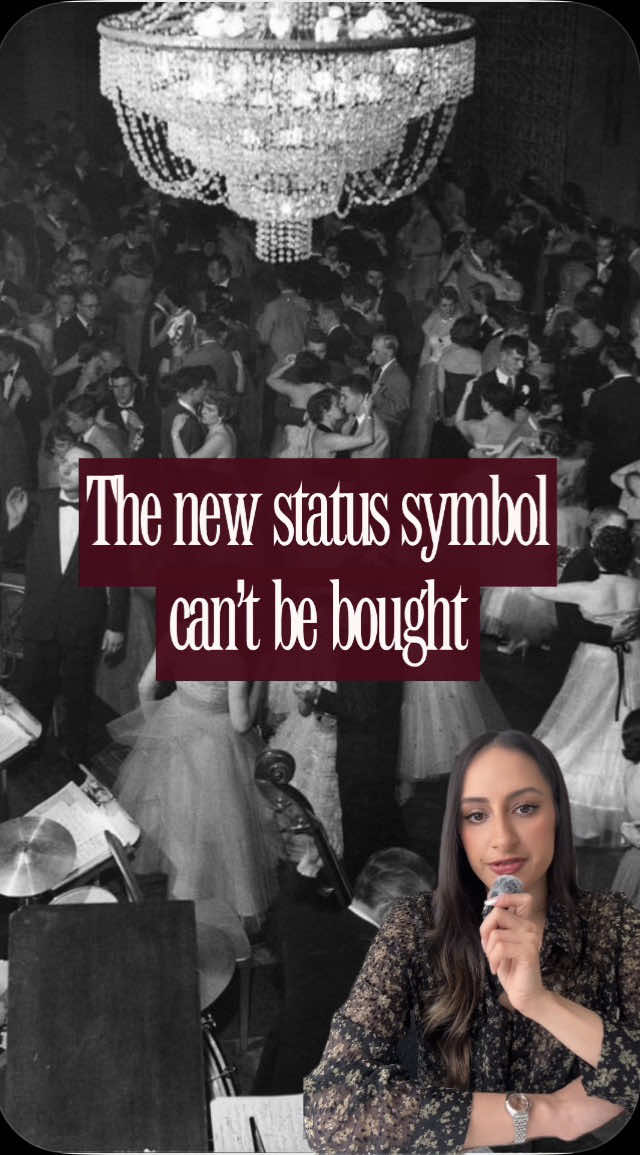
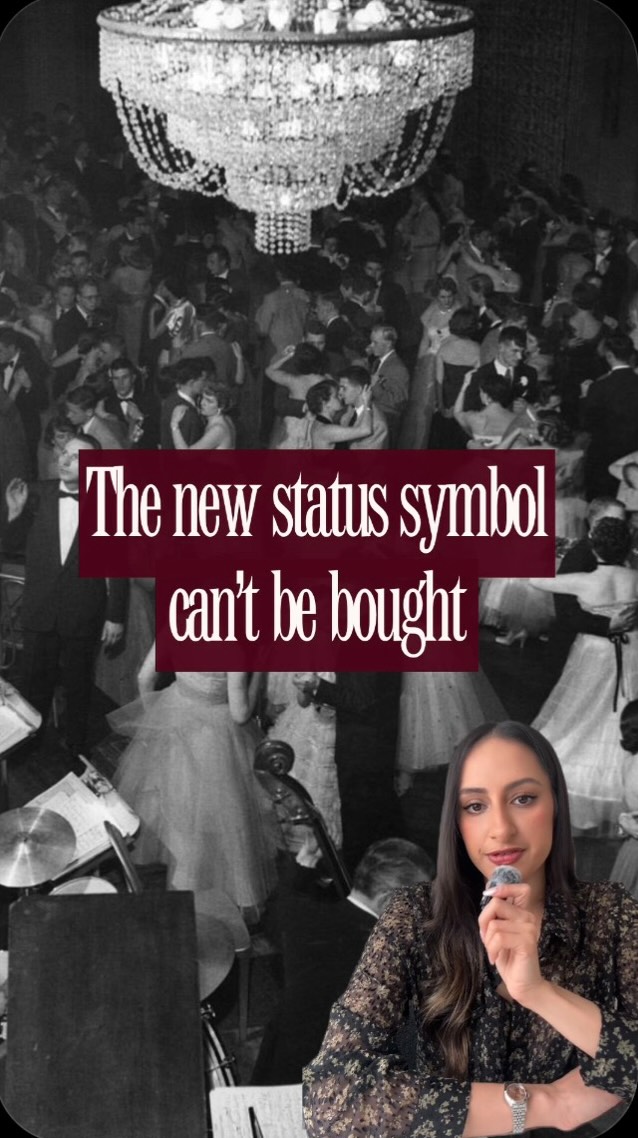
The upper class will always strive to maintain distance from everyone else. But have you ever asked yourself why? In a previous video, I spoke on American sociologist Richard Peterson's concept of cultural omnivoresism. Basically, the idea that the upper class's taste for culture has become a lot more eclectic. That high status Americans began consuming culture across many genres and categories. Tier were no longer just high brow and low brow forms of culture, but rather they liked everything. They liked the opera, and bluegrass, and indie rock. Whereas lower status groups were univores, consuming a narrower bad, usually within popular culture. The univore gets their morning coffee from Dunkin'. But the omnivore can also get their coffee from Dunkin', just ironically, while also being able to appreciate single origin pullover from a specialty roaster. I wanted to answer why this was the case and why separation is so important even when the upper class are consuming the same culture. And what I found were two interconnected reasons for the need of this kind of separation. The first one being the justification of privilege. In liberal democracies, the upper class must justify why they deserve more resources and status and power. They can't say because I was born rich. So in effect, they say because I'm more cultured, sophisticated, educated, and worldly. For them, it's not smart to admit their position came from structural advantage. So they use culture as a way to make their privilege appear earned and natural. And before some of you get mad at my comments, no one is saying this explicitly. This isn't an active thing, but rather it's unspoken. It's found between the lines. The second reason for why this separation is important is because of social reproduction. The upper class don't just need to justify their own privilege, but they also need to pass it to their children. But on the surface, in meritocratic societies, it's not always smart to just hand your children money and power. They need to appear qualified for elite positions. They need credentials, and network, and cultural competence to signal membership in elite circles. Cultural capital solves this problem because it can be transmitted through seemingly natural family life, and creates durable advantages that compound over time. And it's that massive cultural exposure that builds the breadth required for omnivorism. By age 18, an upper class child might have traveled to 10 plus countries, learned to speak multiple languages, learned musical instruments with private instruction, eaten at diverse restaurants across cuisines and price points, and met professionals across many fields through their parents' networks. By early adulthood, they have omnivorous best that feels natural, where they experience life as I'm just naturally curious and cultured, instead of my parents spend hundreds of thousands of dollars building my cultural capital. Omnivoreism works so well to achieve both the objectives of justification and reproduction because it's so effective at making privilege feel earned. Our current society generally expresses distaste towards explicit class hierarchy, which is why omnivoreism is so powerful. On the surface, it feels so democratic and inclusive, but it's the exact mechanism needed to do the work quietly. In a future video, I wanna get into just how expensive omnivoreism actually is. So if you want that, please like and follow and let me know what you think in the comments.


Explaining the sociology of class culture | Viral Hooks