Viral Hooks
Trending short videosSociological breakdown of good taste
M

@maisonrickie

TikTok · Talking Head Edit

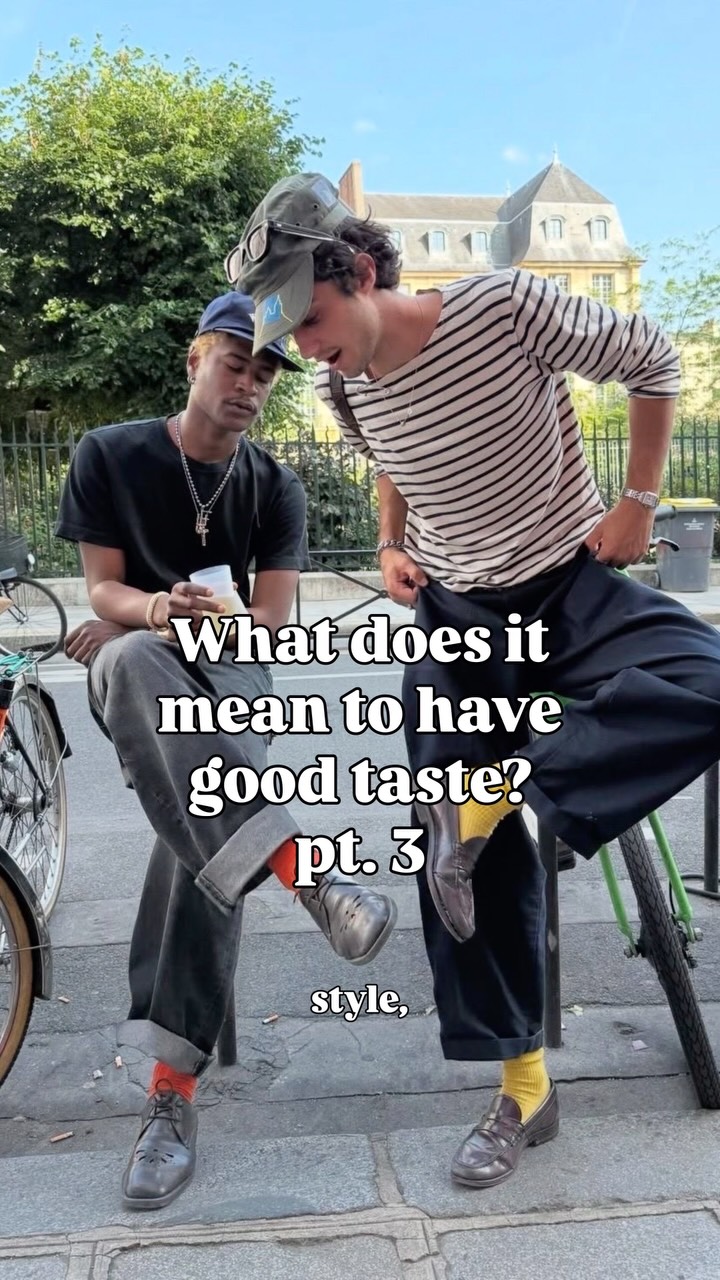
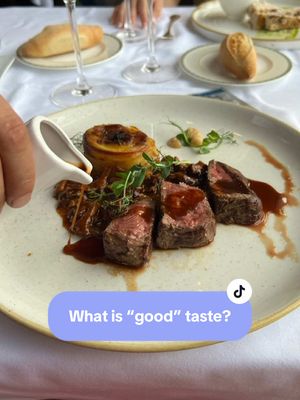
@maisonrickie What even is “good” taste as it’s commonly known? Is it as objective as we make it out to be? Today, we explore the answer to that question. There is so much more I need to cover so be sure to come back as I continue to post updates. This series has been incredibly fun and the way things are looking, I don’t know if I’m ever going to stop having things to talk about 😅

View original on TikTok

The edit1 shot · 5 text
Shots Text2:25

Performance

Views
230.3K
Likes
33.7K
Comments
431
Engagement
14.8%
Outlier
1.7×
Length · 22 Nov 2025
2:25

Video #10379 · Talking Head Edit

Sociological breakdown of good tastefrom @maisonrickie

[01]

Overview

The creator deconstructs the concept of "good taste" by applying Pierre Bourdieu's sociological theory of the "cultural arbitrary." He uses the historical elevation of French cuisine to illustrate how arbitrary preferences become legitimate culture through power dynamics, arguing that taste is a tool used by the upper class to maintain social hierarchies. He concludes by connecting this history to modern trends like "quiet luxury" and teases a future discussion on the societal implications.

[02]

Simple outline

  1. 1Challenge accepted reality
  2. 2Introduce expert theory
  3. 3Prove with history
  4. 4Reveal modern trap
  5. 5Tease future implication

[03]

Related videos

[04]

Classification

Concepts
Breakdown
Elements
B-Roll CutawayText OverlayImage Overlay

[05]

Hook analysis

What stops the scroll in the first 3 seconds

Title hook · 45%

Good taste

Verbal hook · 50%

Good taste isn't what you think it is.

Visual hook · 5%

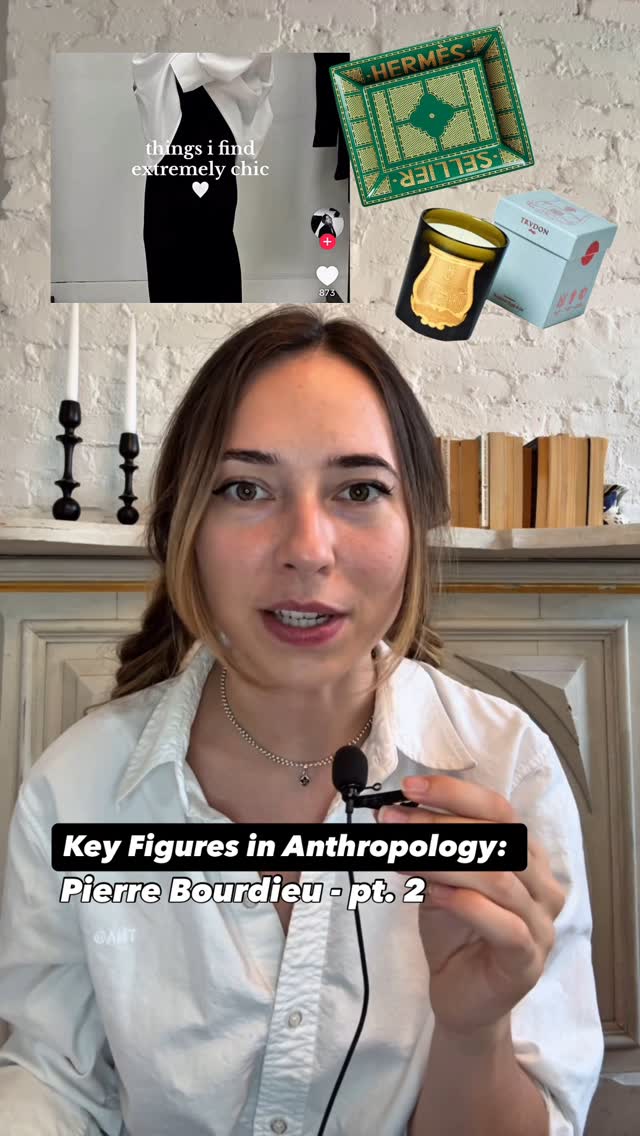
Speaker sitting on a couch directly addressing the camera with a prominent text overlay, followed quickly by cuts to luxury imagery.

[06]

Hook template

Steal this for your own video

[Widely respected concept] isn't what you think it is — it's actually [hidden power dynamic].

  • — Meritocracy isn't what you think it is — it's actually a system designed to justify who already has power.
  • — Organic food isn't what you think it is — it's actually a marketing category built to charge you more.
  • — Hustle culture isn't what you think it is — it's actually a way to keep workers competing instead of organizing.

[07]

Hook and payoff

The promise the opener makes, and how the video pays it back

Hook

The Contrarian Opener: A direct statement that invalidates the viewer's current understanding of a fundamental concept.

Payoff

The Cliffhanger Conclusion: Frames the social dynamic as a 'cruel game' and opens a narrative loop for a follow-up video.

[08]

Narrative framework

The structural pattern this video runs on

Framework

The Intellectual Deconstruction

Dismantles a widely accepted social norm by revealing its arbitrary origins through academic theory, historical proof, and modern application.

  1. 1

    The Academic Anchor

    Introduces a specific scholar or theory to lend immediate authority and vocabulary to the argument.

  2. 2

    The Illusion Breaker

    Demonstrates the lack of objective difference between 'high' and 'low' culture to destabilize the viewer's worldview.

  3. 3

    The Power Mechanism

    Explains the specific social machinery (power converting preference into standard) that creates the illusion of objectivity.

  4. 4

    The Historical Case Study

    Uses a universally recognized example (e.g., French Cuisine) to concretely prove how the mechanism functioned in the past.

  5. 5

    The Legitimacy Loop

    Describes how the arbitrary standard becomes self-perpetuating through institutions and training, erasing its origins.

  6. 6

    The Modern Trap

    Pivots to a contemporary example (fashion trends) to show how this system is currently rigged against the viewer.

Themes

  • Social Class
  • Cultural Capital
  • Subjectivity of Taste
  • Power Dynamics

Techniques

  • Historical Analysis
  • Comparative Examples
  • Sociological Theory Application

Trends

  • Quiet Luxury
  • Old Money Aesthetic
  • Video Essays

Post caption

What even is “good” taste as it’s commonly known? Is it as objective as we make it out to be? Today, we explore the answer to that question. There is so much more I need to cover so be sure to come back as I continue to post updates. This series has been incredibly fun and the way things are looking, I don’t know if I’m ever going to stop having things to talk about 😅

Text overlays

  • title · beginning

    Good taste

  • contextual · beginning

    Loro Piana

  • informational · beginning

    The Cultural Arbitrary

  • informational · middle

    haute cuisine

  • informational · end

    Bourdieu's key

Transcript

Good taste isn't what you think it is. This is a follow-up on a previous video I made talking about how the upper class will always be moving the goalpost in ways to benefit them and taste may be their most powerful tool. French sociologist Pierre Bourdieu called this the cultural arbitrary, which is getting at the fact that there is no inherent, no objective reason why certain cultural forms are considered superior to others. The example I used in a previous video was that classical music is not objectively better than pop music. That French cuisine is not objectively more sophisticated than soul food. But the deeper you look, you realize that these hierarchies are real and have real consequences. But they're socially constructed. How does that make sense? Well, it's because we believe these hierarchies to be natural, that they're self evident. But the only reason why this is the case is because the people who benefit from the system have made their preferences seem like universal standards, successfully turning arbitrary taste into legitimate culture. Let me give you an example using the elevation of French cuisine. In the seventeenth and eighteenth centuries, the French aristocracy developed an elaborate culinary culture. Complex sauces, precise techniques, formal service, and the cuisine became associated with power and sophistication. But there was nothing inherently superior about French cooking techniques. Italian cuisine had its own complexity. Chinese cuisine had centuries of refinement. But France had cultural dominance in Europe at the time. Thus their fashion set trends. Their art defined taste. French cuisine became haute cuisine, literally high cooking. It became the standard by which all other cuisines were judged. And once that standard becomes established, it becomes self perpetuating. Chefs train in French techniques. Serious food knowledge means knowing French terms, French preparations, French wine regions. The arbitrary becomes legitimate, and once it becomes legitimate, it stops looking arbitrary. Or just key claim in this context is that there is no universal best. There are no transcendent aesthetic values, both of which are controversial tier. That there are only socially constructed preferences that get elevated to universal standards by those who have the power to do so. And the coolest part about the cultural arbitrary is that it allows those in power to shift what's tasteful and what isn't. Often in ways that retroactively delegitimize the people who learn the old codes. You bought a logo belt from a designer brand? Well, I hope you kept the receipt because now things have pivoted to quiet luxury. And by the time you've caught up, things will shift again and you're left holding the old codes which now mark you as behind. It's a cruel game that's being played and in a future video I plan on touching what this means for our current society and why or if this stuff even matters in the first place. So if you want that video be sure to like and follow and leave me a comment below with your thoughts.

Sociological breakdown of good taste | Viral Hooks