@sakata.ken
Instagram · Talking Head Edit
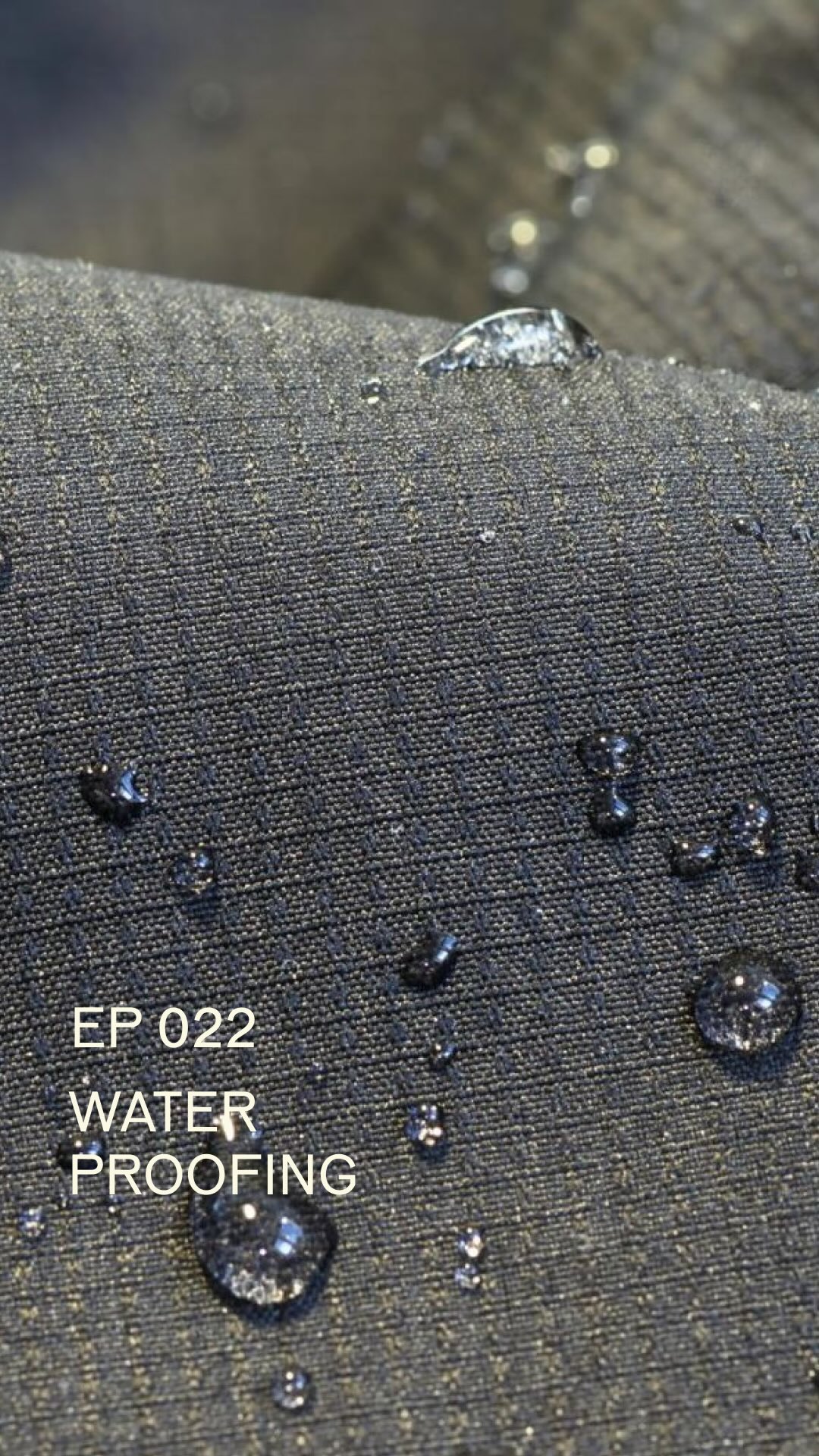
@sakata.ken Waterproofing and water resistance

@sakata.ken
Instagram · Talking Head Edit
@sakata.ken Waterproofing and water resistance
Performance
Video #15450 · Talking Head Edit
[01]
The creator begins by challenging the common belief that waterproofing is only about the fabric's coating. He then deconstructs the garment-making process, explaining how cutting fabric into panels and stitching them together creates seams, which are weak points for water entry. He traces the history of waterproofing from early rubber and wax coatings to the modern invention of seam-sealing tape, explaining the difference between fully-sealed and critically-sealed garments. Finally, he uses a coat he designed for Umbro as a case study to demonstrate how design choices like silhouette, pocket flaps, and full seam sealing are tailored to the garment's intended use.
[02]
[03]
 380.4K2.2×Explaining waterproof clothing design principles@frontoffice.co · Explainer
 247.7K5×Clothing quality check: understanding seams@gents.studios · Explainer
 590K2×Jacket design process breakdown@sakata.ken · Breakdown
 282.7KFabric history and modern reinvention@frontoffice.co · Explainer
 814.7K1.3×Designer explains jacket creation process@frontoffice.co · Origin Story
 354.8KDesigner shows jacket creation process@frontoffice.co · Origin Story
 269KBurberry's techwear origin story@frontoffice.co · Origin Story
 3.1M48.7×Historical explainer of an invention@fineasjackson · Origin Story
 1.6M1438.9×Documenting a DIY product invention@paulasojoro · Journey Documentation
 349KWhy durable clothes still create waste.@frontoffice.co · Breakdown
 156.4KExplaining sustainable fashion thread tech@alextwma · Breakdown
 1M3.1×How a mother-of-pearl trench coat is made from scratch@loewe · Process
[04]
[05]
What stops the scroll in the first 3 seconds
Verbal hook · 85%
Primarily, when people think about waterproofing, water resistance, they think about the coating.
Visual hook · 15%
A medium shot of the speaker in a well-lit, aesthetically pleasing room, gesturing directly to the camera to establish an immediate, personal connection and authority.
[06]
Steal this for your own video
When people think about , they focus on —but the real weak point is .
[07]
The promise the opener makes, and how the video pays it back
Hook
Challenge a widely held, simplistic belief about the topic to create an immediate information gap and promise a deeper, more nuanced understanding.
Payoff
Deliver a final, concise thesis that synthesizes all the points, reframing the topic as a holistic system of interconnected decisions. This solidifies the creator's authority and leaves the viewer with a new, comprehensive mental model.
[08]
The structural pattern this video runs on
Framework
The Expert Deconstruction
To establish authority by deconstructing a common topic, revealing hidden complexities and historical context, and then using a specific product or example as a case study to prove the newly taught principles.
The Misconception Hook
State the common, oversimplified understanding of the topic that the audience likely holds, then immediately signal that this view is incomplete.
The Deconstruction
Break the subject down into its fundamental components, revealing a layer of complexity the audience hadn't considered (e.g., fabric becomes panels, which creates seams).
The Core Problem Reveal
Isolate the fundamental, non-obvious flaw or challenge that arises from this new complexity (e.g., stitching seams creates holes).
The Historical Context
Provide a brief history of past attempts to solve this problem, establishing its significance and the limitations of previous solutions.
The Modern Solution
Introduce the key innovation or technique that represents the modern, superior solution to the core problem (e.g., seam sealing tape).
The Application Spectrum
Explain that the solution isn't monolithic by introducing different tiers or levels of application, from basic to expert-level, adding consumer value.
The Proactive Principle
Elevate the expertise by introducing a higher-level design or strategic principle that can mitigate the problem before it even starts (e.g., smart pattern making).
The Case Study Pivot
Transition from abstract theory to a concrete example, framing it as the practical application of all the preceding lessons.
The Feature-as-Proof Breakdown
Analyze the specific features of the case study, explicitly linking each one back to a principle that was just taught, thereby validating the entire lesson.
Waterproofing and water resistance
contextual · beginning
waterproofing
contextual · beginning
the coating
contextual · beginning
being water resistant
contextual · beginning
than just the coating
contextual · beginning
cut the fabric
contextual · beginning
you've got panels
contextual · beginning
and those seams
contextual · beginning
pathway for water
contextual · beginning
from the 20th century
contextual · middle
in paraffin wax
contextual · middle
the seams was
contextual · middle
a modern solution
contextual · middle
seam sealing tape
contextual · middle
seam sealed garment
contextual · middle
'critical' seam sealing
contextual · middle
the patterns also matter
contextual · end
raglan sleeve so you
contextual · end
away from the rain
contextual · end
waterproofing a technical
contextual · end
the Deadline Coat
contextual · end
short walks in the city
contextual · end
completely seam sealed
contextual · end
decisions working together
contextual · end
it's about construction
Primarily, when people think about waterproofing, water resistance, they think about the coating. Rubber, oil, paraffin wax, vortex, but something being water resistant is so much more than just a coating. Fabric isn't just like a square that floats above your head, right? You have to cut that fabric to fit your body and when you cut the fabric, you've got panels And when you join the panels together, you've got seams. And those seams need to be stitched together. And every time you run a needle through a fabric, you've created a pathway for water. The early trench coats from the twentieth century were coated in rubber. They're coated in paraffin wax and oil, which were really fantastic solutions. The seams was the weakness. A modern solution arrived in the sixties and seventies in the form of modern seam sealing tape. This was a thermoplastic tape that applied over the seams, and tier were sealed with heat. Really high grade applications like the military and outdoor wear required a fully seam sealed garment. But because that's quite laborious, quite time consuming, that was and is very expensive. So some brands opt for limited or critical seam sealing. So seam sealing just over the most exposed seams. And crucially, the shape, the patterns also matter. If you think ahead and you're smart, you will reduce the number of panels to reduce the number of seams. In technical outerwear, you may do a raglan sleeve, so you can orient a seam away from rain. Different genres of clothes will require different levels of water resistance, waterproofing. A technical outdoor garment will be pretty extreme, but something for city life will be much less. For example, this is a coat we designed for Umbro. It's called the deadline coat. It was inspired by historical picture advertising the very first collaboration Umbro ever did with Manchester United legend, Matt Busby. This coat is for short walks in the city, not for weeks in the Amazon. No we opted for a long silhouette no that water can come off the body? Our garment is completely seam sealed on the inside. Even the pockets have flaps so that water can run off and not in. So waterproofing, water resistance is a bunch of little decisions working together. It is about materials, yes, but it's also about silhouette, it's about construction, it's about small little details, it's about how everything fits together.