@frontoffice.co
TikTok · Talking Head Edit

@frontoffice.co Clothes and durability #fashiondesigner #SmallBusiness #sustainablefashion

@frontoffice.co
TikTok · Talking Head Edit
@frontoffice.co Clothes and durability #fashiondesigner #SmallBusiness #sustainablefashion
Performance
Video #8181 · Talking Head Edit
[01]
The creator begins by posing a question about how to make clothes last forever to solve waste in the fashion industry. He critiques the purely mechanical solution of hyper-durable clothing, using a '100-year hoodie' as an example, and argues this approach misses the real problem. He then introduces the concept of 'emotional durability,' explaining that people discard perfectly good clothes because they've lost their meaning, not because they've worn out. To illustrate his philosophy, he showcases a corduroy jacket he designed, which is dyed with natural indigo and intended to fade and change over time, thereby creating a unique personal history for the wearer and fostering a deeper connection.
[02]
[03]
 156.4KExplaining sustainable fashion thread tech@alextwma · Breakdown
 590K2×Jacket design process breakdown@sakata.ken · Breakdown
 278.1K19.4×Explain hoodie quality and pricing@fineasjackson · Breakdown
 2M5×Explaining hoodie design problem-solving@frontoffice.co · Breakdown
 814.7K1.3×Designer explains jacket creation process@frontoffice.co · Origin Story
 354.8KDesigner shows jacket creation process@frontoffice.co · Origin Story
 380.4K2.2×Explaining waterproof clothing design principles@frontoffice.co · Explainer
 1.1M4.2×Personal story behind washi jeans@sakata.ken · Origin Story
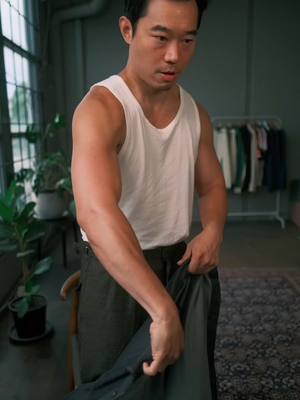 320.2KDesigner breaks down overshirt fabrics@frontoffice.co · Breakdown
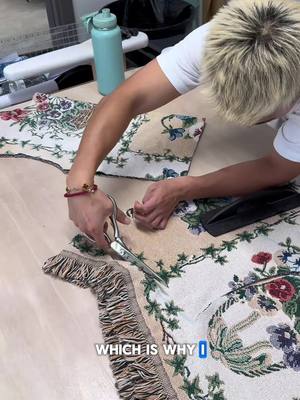 221.4K3.8×Making a custom hoodie gift@yitaigeng · Behind The Scenes
 210.4K27.3×Five hidden clothing quality signs@gents.studios · Breakdown
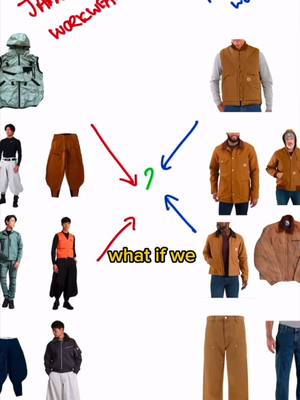 700.5K1.9×Deconstructing Japanese and American workwear@frontoffice.co · Breakdown
[04]
[05]
What stops the scroll in the first 3 seconds
Title hook · 35%
SO WE LOVE
Verbal hook · 60%
We love buying things, but we hate buying things again.
Visual hook · 5%
Direct-to-camera address with the speaker leaning forward over a desk and using expressive hand gestures to emphasize his point.
[06]
Steal this for your own video
We love , but we hate .
[07]
The promise the opener makes, and how the video pays it back
Hook
Begin with a universally relatable paradox or problem that immediately establishes a shared experience with the viewer, framing a common frustration.
Payoff
Explain how the tangible example's unique features create a deeper, more meaningful connection for the user, directly linking back to the new philosophy. Conclude by summarizing the argument and solidifying the value of the new paradigm over the old one.
[08]
The structural pattern this video runs on
Framework
The Paradigm Shift Argument
To deconstruct a commonly accepted solution to a problem and replace it with a more nuanced, philosophical alternative, using a tangible product or example as the ultimate proof.
The Conventional Answer
Present the most common, logical, or 'obvious' solution to the stated problem. Use a specific, extreme example to represent this conventional, engineering-focused thinking, setting it up as a straw man.
The Critical Reframe
Directly question the validity of the conventional solution. Pose a 'what if' question that pivots the audience's perspective, shifting the problem from a technical one to a psychological or philosophical one.
The New Philosophy
Introduce a new term or intellectual concept that defines this alternative way of thinking. Briefly explain the core tenets of this new philosophy, often citing an external source to build authority.
The Failure Analysis
Provide evidence for why the conventional solution fails, using the lens of the newly introduced philosophy. Use a concrete, relatable example to illustrate this failure in practice.
The Counter-Intuitive Embodiment
Introduce a tangible product, idea, or example that physically represents the new philosophy. Frame it as a direct result of adopting this new way of thinking, highlighting features that seem to contradict the initial, conventional solution.
Clothes and durability #fashiondesigner #SmallBusiness #sustainablefashion
title · beginning
SO WE LOVE
title · beginning
BUT WE HATE
title · beginning
BUYING THINGS AGAIN
title · beginning
LAST FOREVER
title · beginning
SOLUTION TO SUSTAINABILITY
title · beginning
SOLUTION TO WASTE
informational · middle
OF 'EMOTIONAL DURABILITY'
informational · middle
MANUFACTURER INTO LANDFILL
contextual · middle
ALMOST IMMEDIATELY
contextual · end
YOUR PERSONAL HISTORY
contextual · end
IN THIS JACKET
informational · end
TACKLING SUSTAINABILITY
We love buying things, but we hate buying things again. So how do we make clothes last forever? Is that the solution to sustainability? Is that the solution to waste? And at the most dedicated and extreme end, we've got brands like Volubanks. So check this out. They developed a hoodie they've called the hundred year hoodie. Fireproof, windproof, weatherproof, water repellent, like, ultra, ultra durable. It's a really interesting project. All this money, all this brainpower into durable fabrics, better construction. These are solutions to what we view as mechanical problem. Better what if it isn't? What if we're looking at the wrong thing? So this is a brilliant article by a menswear writer called Derek Gar. So about four years ago, he wrote this article about this concept of emotional durability. And I agree. He's right. We get rid of items that are perfectly fine. And the reason why we get rid of them is that they they're no longer interesting. They've lost their meaning in our lives. And we see it in the way that clothes are described on the internet. 100% cotton, 400 g s s. It's a laundry list of engineering solutions that may not necessarily engage your mind. So something that already reads boring will not be worn often, will not be passed out, and may not even be bought in the first place. So it goes straight from manufacturer into landfill better with all of its good intentions. Even though it's made out of good fabric and good construction. Bored. And thinking in this way has changed my practice. So as a bit of rank experiment, I've designed a jacket that is meant to wear away almost immediately. So this is a corduroy jacket. This is dyed in natural Japanese indigo. So it's almost purplish no, better, over a few weeks, I'll tend to a royal blue, and I'll stay at a royal blue for years. So over a few years, that royal blue in high use areas like over the arms here, maybe over the shoulders, will start to fade away very gradually. And because corduroy is a three-dimensional fabric, it will flatten off with areas that have high friction. So color wise, texture wise, it will start to change. It will start to adopt a unique look. So are you left handed? Are you right handed? Are you in the sun a lot? Do you keep things in which pocket? And you'll start to see your personal history in this jacket. And the thinking is that once you start to share your life with it, you will see yourself in the jacket. And if you have that attachment, you won't throw it away. Even if you do pass it down, you pass on a bit of your personality with it. And I think that no just thinking of engineering solutions, but thinking of clothes with meaning may be another way of tackling sustainability.