Post caption
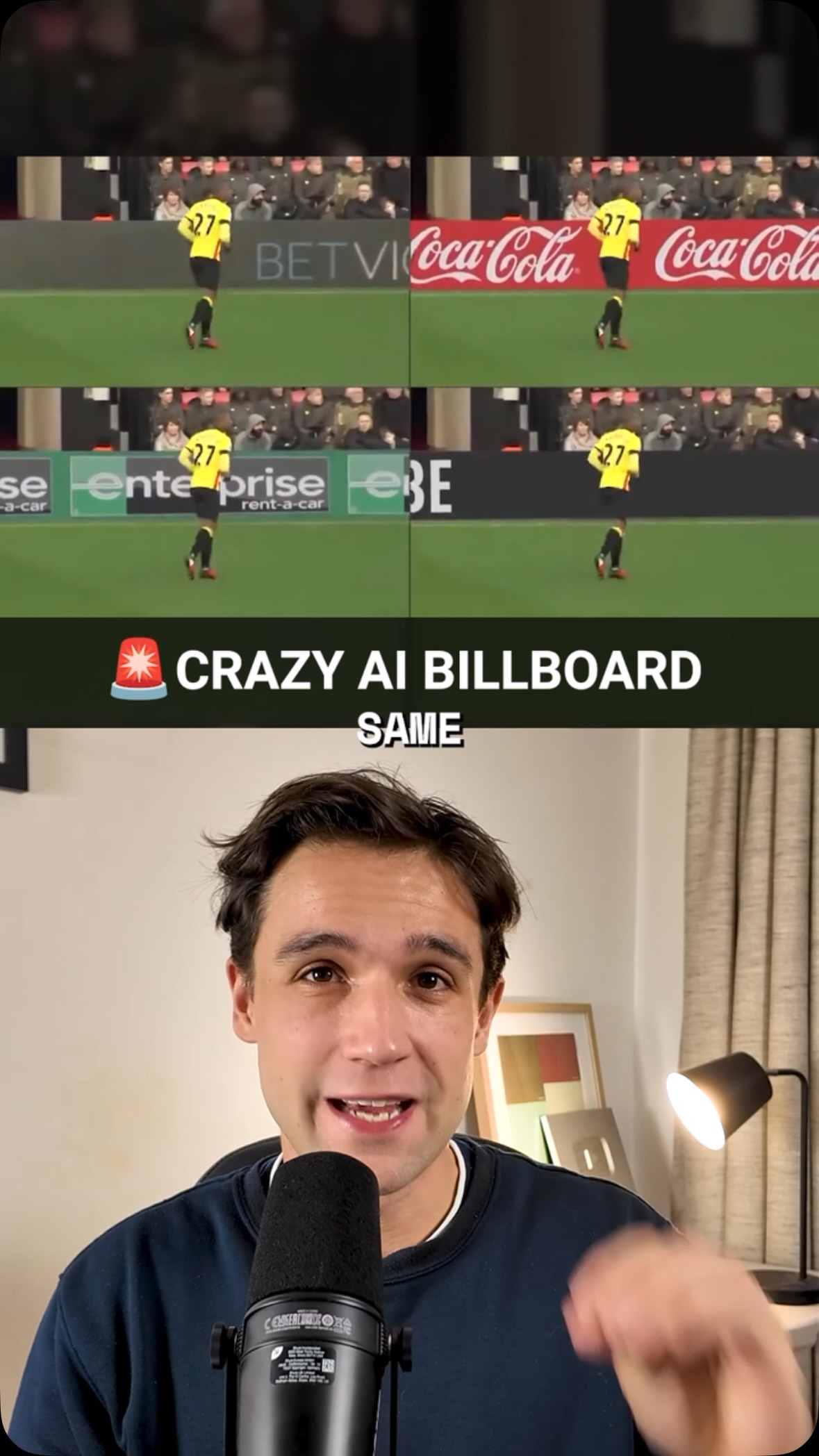
Four different countries. Four different ads. Same billboard, same match, same second.
Turns out the LED board is cycling through ads at 240 frames per second. Each broadcast camera is synced to grab a different set of frames, so Germany’s camera catches one ad, the UK’s camera catches another. Nobody watching at home has any idea.
Which means a stadium can now sell one physical billboard to five different brands at once, each one only shown in the market they actually want. The only people who don’t get a clean picture are the fans sitting right in front of it. To them it’s just a blur.
Transcript
These four clips are from the exact same football match, but each country is seeing a different ad on the exact same billboard. And it's not AI, it's not a green screen, and it's definitely not an edit. This is a a physical LED board that is cycling through multiple ads at 240 frames per second. Then each broadcast camera is synced to capture a different set of frames. So the feed shown in Germany might capture one ad, while the feed in The UK captures a completely different capture one ad, while the feed in The UK captures a completely different one. To everyone at home, it looks completely normal, but commercially, this is huge. Normally, that physical space can only be sold to one advertiser at a time. With this setup, the stadium can sell the same billboards separately in multiple countries to brands that only want to reach a specific market. So it's the same stadium, the exact same match, the exact same board, but multiple ad deals running at the exact same time. The only people who don't see a clean ad are the fans that are actually sitting at the stadium. But realistically, the percentage of people sitting at home watching it is far bigger than the people that are actually at the stadium. Follow me for cool marketing stories.