@fineasjackson
Instagram · Talking Head Edit
@fineasjackson Camo doesn't look like a forest. On purpose. But why?

@fineasjackson
Instagram · Talking Head Edit
@fineasjackson Camo doesn't look like a forest. On purpose. But why?
Performance
Video #50003 · Talking Head Edit
[01]
The creator introduces the visual paradox of camouflage patterns, then transitions into a historical narrative explaining how WWI aerial reconnaissance necessitated camo, leading to French artists and Cubists developing the first camouflage units.
[02]
[03]
 282.7KFabric history and modern reinvention@frontoffice.co · Explainer
 524.1K1.2×Invention's history and modern impact@frontoffice.co · Origin Story
 269KBurberry's techwear origin story@frontoffice.co · Origin Story
 590K2×Jacket design process breakdown@sakata.ken · Breakdown
 814.7K1.3×Designer explains jacket creation process@frontoffice.co · Origin Story
 12.7M3×Brainwave to product creation montage@kasefenley · Process
 5.6M5.8×Simple tie-dye versus complex art@dyesngoodvibes · Relatable Scenario
 278.6KVisualizing brainwaves as custom patterns@kasefenley · Origin Story
 79.2K2×Showcasing a niche clothing designer@readytowearfiend · Breakdown
 573.5K41.7×Relatable sewing thought vs. Dior@oliviasews_ · Good vs Bad
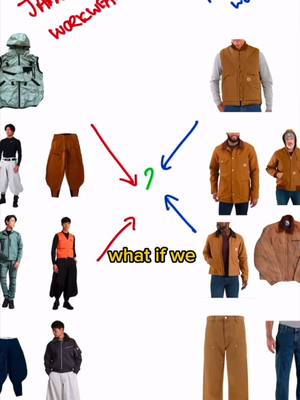 700.5K1.9×Deconstructing Japanese and American workwear@frontoffice.co · Breakdown
 153.2K1.4×Brand origin story and product showcase@iamnotyethome · Origin Story
[04]
[05]
What stops the scroll in the first 3 seconds
Title hook · 50%
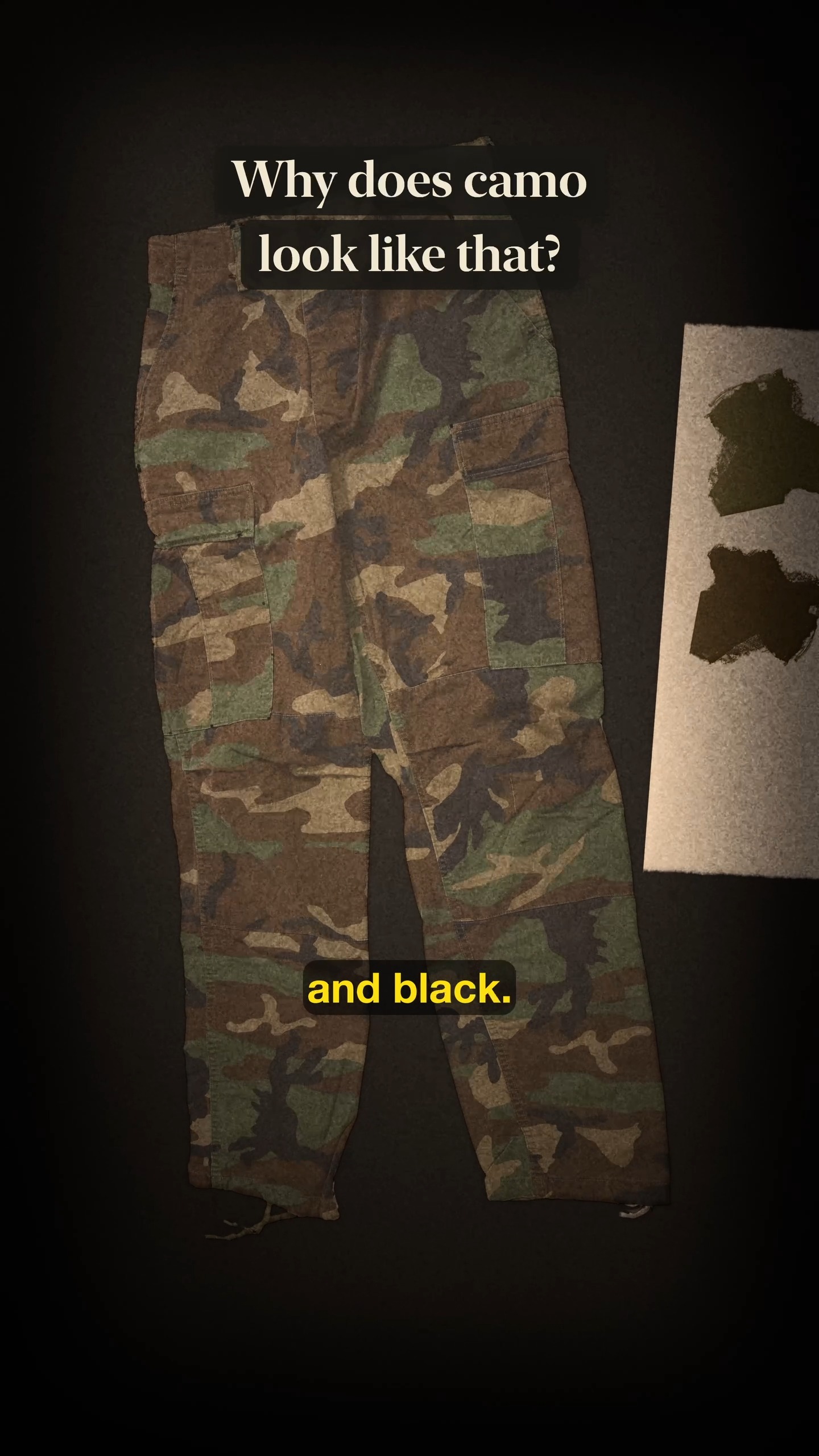
Why does camo look like that?
Verbal hook · 45%
Look at these pants. Green, brown, and black.
Visual hook · 5%
Close-up of the speaker talking directly to the camera, followed immediately by an isolated image of camo pants with a color palette breakdown.
[06]
Steal this for your own video
Why does look like that?
[07]
The promise the opener makes, and how the video pays it back
Hook
Deconstruct a familiar object to highlight a visual contradiction, proving that its design shouldn't logically achieve its intended purpose.
Payoff
Reveal how the initial successful test scaled into a larger movement, introducing a final surprising element or group that became involved in its evolution.
[08]
The structural pattern this video runs on
Framework
The Paradoxical Origin Story
Presenting a common object that defies logical sense upon close inspection, then traveling back in time to explain the surprising historical problem and unlikely innovator that created it.
The Paradox Presentation
Visually break down the subject's components to emphasize how they contrast with the environment they are meant to interact with, establishing the core contradiction.
The Core Question
Explicitly state the mystery generated by the paradox, transitioning the viewer from observation to active curiosity.
The Catalyst Event
Shift the narrative to a specific historical era, introducing a novel technological or environmental problem that forced a change in the status quo.
The Unlikely Innovator
Introduce the individual who solved the problem, specifically highlighting their unexpected background or profession to add narrative intrigue.
The First Iteration
Describe the initial, rudimentary application of the innovator's idea, showing how the concept was first tested in reality.
Camo doesn't look like a forest. On purpose. But why?
title · beginning
Why does camo look like that?
contextual · middle
SEPTEMBER 1914
contextual · middle
LUCIEN-VICTOR GUIRAND DE SCÉVOLA
contextual · middle
FEBRUARY 1915
Good at these pants. Green, brown, and black. Blobs with hard edges. They don't look like leaves or bark. Nothing in a forest looks like this. Yet in the woods, they can make you nearly impossible to spot. So how does a pattern that looks like nothing actually hide you? This is Chasing Best episode 97 and today tier looking at camouflage. The birth of camo actually starts in the sky. In Worse War one, armies had a new problem. The airplane. Now the enemy could fly over your lines and look straight down on you. If they could spot the position of your cannon from above, their artillery could destroy it. In September 1914, a French gunner named Lucien Victor Jorin de Sevilla had an idea. Before the war, he'd been a better, making soft pretty pictures in pastel. He hit a gun under a canvas painted to blend in with the ground. In February 1915, the French army set up its first camouflage unit. By the end of the year, Sevola was in charge, and he filled the unit with artists, including Cubists. Cubism was the strangest art in Paris.