@frontoffice.co
TikTok · Talking Head Edit

@frontoffice.co Jacquard weaving and its influence if computers and modern fashion

@frontoffice.co
TikTok · Talking Head Edit
@frontoffice.co Jacquard weaving and its influence if computers and modern fashion
Performance
Video #8175 · Talking Head Edit
[01]
The speaker tells the story of the Jacquard loom, starting in the 1800s by explaining the problem of creating complex patterned fabrics. He then introduces the invention, explains how its punch-card system worked as a precursor to binary code, and connects its influence to Charles Babbage and the first computers. Finally, he brings the concept to the present, showing how high-fashion brands and sports teams use Jacquard weaving to embed their logos into fabric, symbolizing heritage and authenticity.
[02]
[03]
 282.7KFabric history and modern reinvention@frontoffice.co · Explainer
 531.8K2.1×Explaining hyper-local fabric origins@sakata.ken · Breakdown
 1.6M2×Explaining luxury t-shirt manufacturing process@alextwma · Opportunity Explainer
 490.9K3.4×Explaining Japan's inefficient craftsmanship culture@frontoffice.co · Case Study Breakdown
 156.4KExplaining sustainable fashion thread tech@alextwma · Breakdown
 278.1K19.4×Explain hoodie quality and pricing@fineasjackson · Breakdown
 79.2K2×Showcasing a niche clothing designer@readytowearfiend · Breakdown
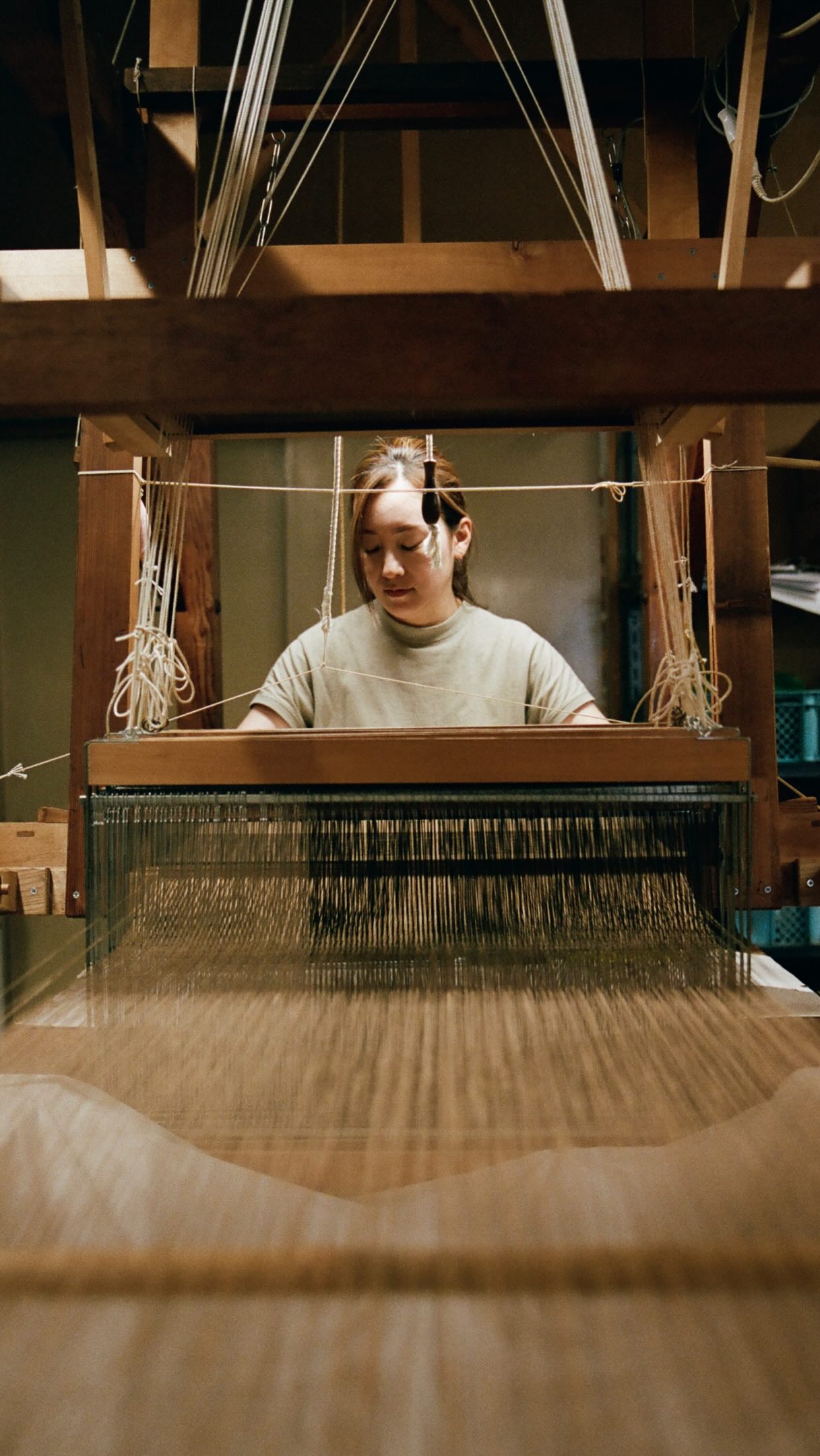 1M18.6×Japanese factory de-modernizes for quality@sakata.ken · Origin Story
 830.7K1.1×Collaborative tie-dye art process reveal@dyesngoodvibes · Process
 1.3MFast facts about cotton production@johndeere · Rapid Fire Listicle
 1.6M4.9×Cultural trait explains niche manufacturing@sakata.ken · Strange but True
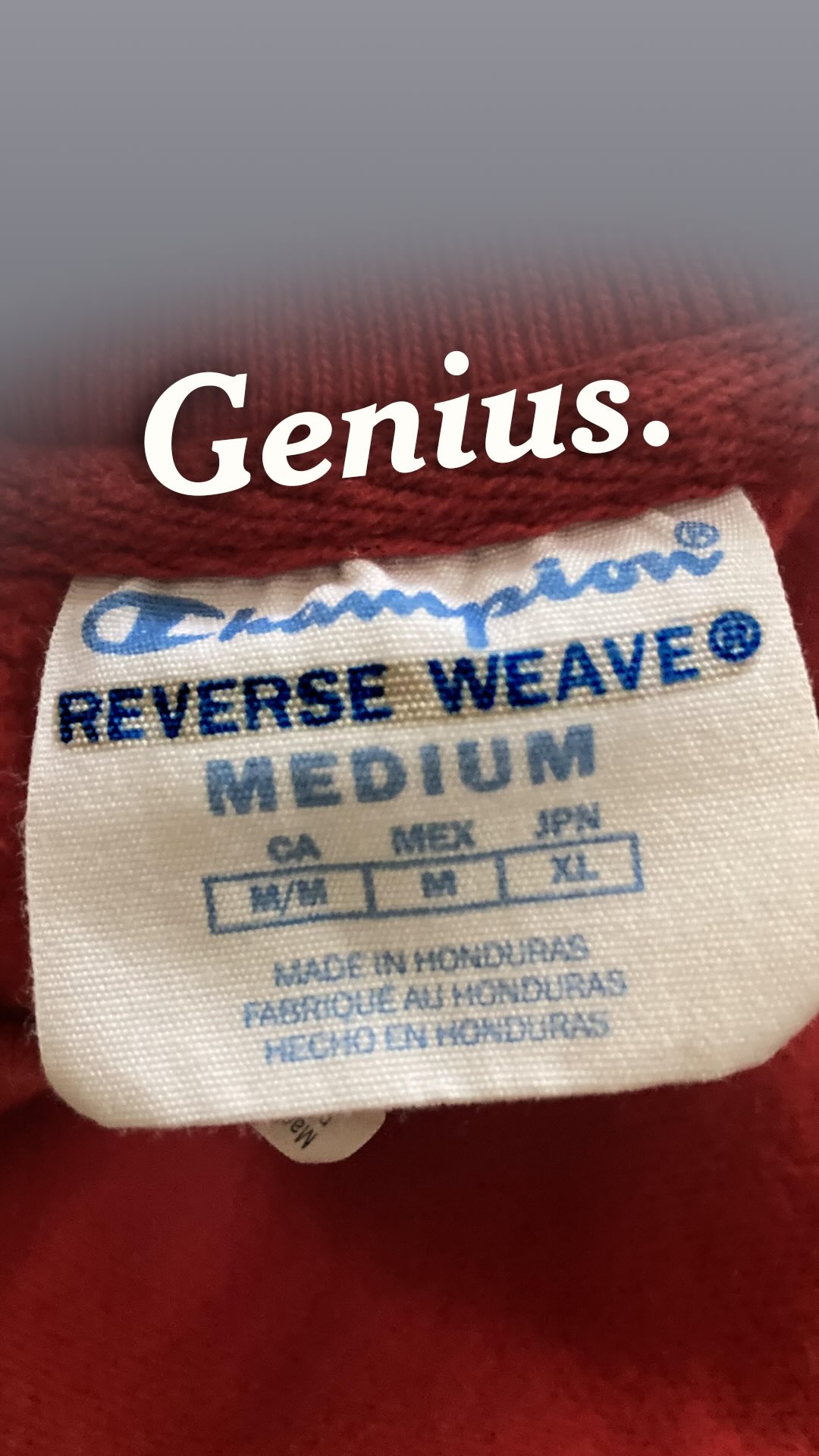 823.1K1×Explaining a famous clothing innovation@alextwma · Origin Story
[04]
[05]
What stops the scroll in the first 3 seconds
Verbal hook · 35%
Alright. I'll tell you a story.
Visual hook · 65%
A quick cut from the speaker to a visually striking, ornate 18th-century purple velvet suit, immediately establishing the historical context.
[06]
Steal this for your own video
Quick-cut from the speaker to a visually striking that reveals the origin of .
[07]
The promise the opener makes, and how the video pays it back
Hook
Directly addresses the viewer, placing them within a historical context to establish a relatable problem or desire that feels unattainable.
Payoff
Empowers the viewer with a simple heuristic or 'secret knowledge' to identify the concept in their own lives, transforming them from a passive observer into an informed connoisseur.
[08]
The structural pattern this video runs on
Framework
The Historical Lineage
Tracing the unexpected, world-changing legacy of a single historical invention, connecting it to familiar modern-day concepts and objects to give the viewer a new lens on their world.
The Obstacle Definition
Establishes the high value and difficulty of a desired outcome by detailing the complex, inefficient, and costly 'old way' of doing things.
The Revolutionary Pivot
Introduces a singular invention or idea as a disruptive solution, framing it not as a mere improvement but as a fundamental paradigm shift.
The Mechanical Deconstruction
Explains the core mechanics of the new solution in simple, accessible terms (e.g., using analogies like binary logic), demystifying the innovation for the audience.
The Historical Leap
Reveals the invention's surprising and far-reaching influence by connecting it to a completely different, significant field (e.g., weaving to computing), creating a 'mind-blown' moment of insight.
The Modern Relevance Proof
Bridges the past to the present by showcasing how the invention's legacy is embedded in familiar, contemporary, and often high-status objects or ideas (e.g., luxury fashion, sports memorabilia).
Jacquard weaving and its influence if computers and modern fashion
Alright. I'll tell you a story. So it's 1,800, and you're a young worse. And you wanna buy a suit, a dress made out of this type of fabric. Woven silk with an intricate pattern in it. Here's the problem. You can't. It is way too expensive. Each piece takes two people. A skilled weaver and his assistant called a drawboy. And they work together on a loom to manage the warp and the weft. Tier have to mechanically lift the thread to go up and down to create a better. And it's slow, meticulous work. It is very difficult to replicate exactly. But then in eighteen no four something new is invented. So it doesn't just improve on this process, it transforms it entirely. Joseph Marie Jacquard invents a Jacquard loom. So if we were to imagine the design as rows of threads that's replaced by cardboard punch tier, Each particular punch card tells the machine to pull up the warp or knot. Binary. Yes or no. And if you chain the punch cards better, you have the instructions to weave a very complicated pattern. It allows one worse, unaided, to produce fabrics that have unlimited complexity, unlimited length. And if you still have the series of punch cards, you can redo it as often as you like. Better that's really small picture stuff making fabric easier to do. There is like a bigger picture behind this. The rows of punch cards becomes a programming language that enables you to talk to a mechanical machine. Jacquard's machine is hugely influential on Charles Babbage. Charles Babbage originates the concept of a digital programmable computer. Able to incorporate that as part of your design vocabulary can be really useful. Like, that's why you see so many fashion houses where their logos are repeats in a jacquard, not a print. Because they're trying to tell you about identity, heritage, longevity. That's why you see so many football kits with the club logos being woven into the fabric of the jersey. Because it tells people that this is literally the fabric of our club. Subconsciously, they're trying to express heritage authenticity. If you know what to look for, you can see it everywhere. Where the pattern isn't done to a fabric, but the pattern is the fabric, there's a good chance that that is a jacquard effect. That was made on our jacquard loom.